


Puragen discusses the UK’s new PFAS Plan, what it means for businesses, and the actions still needed to improve PFAS risks.
The long-awaited UK PFAS Plan, whilst broadly welcomed by the environmental sector, has left many experts critical of its lack of clear timelines, enforceable limits and delivery mechanisms.
While the EU has led the way on PFAS regulation, the UK has been widely perceived as lagging, with a slower and less coordinated approach to both guidance and regulation. The key question is whether this Plan meaningfully addresses those concerns.
The PFAS Plan: Meeting the long-term vision for phase out
The government states that “this Plan acts as a first step to meet our longer-term vision”, describing the actions as an initial set of proposals to be built upon. In practice, this makes the document feel more like a plan for a plan. It also notes that transitioning away from PFAS and implementing new regulations will take time, citing trade-offs and regulatory complexity.
While not unfounded, these concerns contrast sharply with those of countries such as Denmark and France, which have already moved ahead of the EU’s proposed universal PFAS restriction by phasing out certain industrial uses before the anticipated 2026/27 EU ban.
The Plan is structured into three sections. Below, we focus on what each means for industry, highlighting where progress has been made and where decisive action is still lacking, and comment on our thoughts on how to progress.
Section 1: Understanding PFAS sources
Section 1 of the PFAS Plan acknowledges the scale of PFAS contamination: PFAS are present in around 80% of surface waters, approximately 50% of groundwater samples, and all fish samples tested.
It recognises significant gaps in analytical capacity and the high cost of environmental monitoring, noting the need to reduce government monitoring costs. However, it does not explicitly acknowledge that these same barriers deter industry from proactive testing, as PFAS sampling and analysis remain expensive and capacity-limited, with long turnarounds.
Puragen has made a significant investment in state-of-the-art analytical capabilities, including LC-MS, that enable us to analyse customers’ samples and select a bespoke PFAS treatment solution based on the results.
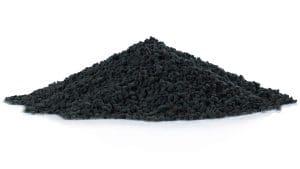
Our CH range of surface-modified carbons is designed for optimised uptake of PFAS, especially targeting previously hard-to-remove short-chain molecules. Along with our mobile filter solution, this forms the search and capture part of our ‘Search, Capture and Destroy’ methodology. We visit our destruction technology later on in Section 2.
Seven initial actions are outlined, including a commitment that, by the end of 2026, the Environment Agency’s PFAS Prioritisation Map will be available to all public sector bodies in England to support environmental risk assessment and decision-making. Actions also include increased monitoring of PFAS in soils and a comprehensive multi-year assessment of PFAS contamination in estuarine and coastal environments, due by February 2028.
Overall, this section focuses on building evidence and strengthening the case for future regulation, rather than setting new requirements. However, once contamination is clearly identified, the regulatory and liability implications for source producers become increasingly difficult to avoid under existing legislation.
Section 2: Tackling PFAS pathways
The Plan states that interventions should address the full lifecycle of PFAS, but much of this section centres on problem recognition rather than immediate intervention. Key measures remain exploratory, with regulatory action framed largely as future consideration.
The government cites the “critical functions” of certain PFAS uses as justification for avoiding a class-based regulatory approach like that being pursued in the EU. Under EU REACH, PFAS are treated as a single problematic class, with phase-out assumed unless uses are deemed “essential”. Under UK REACH, PFAS regulation remains substance-specific or use-specific.
While the Plan commits to reforming UK REACH to align more closely with the EU and key trading partners by December 2028, near-term actions remain limited but include:
Considering restrictions on PFAS in firefighting foams following HSE’s final opinion.
Progressing additional PFAS species onto the UK REACH Candidate List of Substances of Very High Concern, subject to consultation.
Determining the implementation of obligations under the UN Stockholm Convention for the additional PFAS added to the Persistent Organic Pollutants (POPs) list, which since May 2025 includes further PFAS on top of the existing PFOS, PFOA and PFHxS.
A common justification for this approach is that not all the 14,000+ PFAS compounds exhibit the same level of acute toxicity as PFOS, PFOA or PFHxS. However, this argument is increasingly challenged by concerns of breakdown by-products; unbanned long-chain PFAS and precursor compounds transform in the environment into other persistent and mobile PFAS, including shorter-chain acids like PFOS and PFOA. Some scientists believe that the high environmental persistence alone is sufficient to justify managing PFAS as a single class of chemicals, and that mobility is of equal concern to bioaccumulation.
References to cost-of-living and public awareness show the government is wary of blanket bans that could raise costs for industry and consumers, instead relying on transparency and public awareness to let consumers drive demand for safer alternatives.
In the subsection on reducing emissions from industrial sites, the plan acknowledges that elements of the current regulatory framework are outdated. Actions 2.10–2.13 seek to address this, with Action 2.12 standing out as one of the strongest commitments: the development of scientifically robust environmental thresholds for emissions to air, land and water.
This could help stabilise the regulatory uncertainty faced by those taking a proactive approach, provided thresholds are realistic and achievable. Progress on reducing PFAS emissions will stall if permitting requirements set an unworkable path to compliance.
This is also reflected in Action 2.13, which references the use of Best Available Techniques (BAT) to prevent or minimise PFAS emissions and environmental impacts. While BAT are essential, a one-size-fits-all approach risks missing the site-specific nature of PFAS challenges, leading either to overly restrictive permits or insufficient environmental protection.
Landfills are identified as a key pathway for PFAS release, with recognition that most sites are not equipped to manage PFAS-containing leachate. It also addressed the problem of PFAS in landfill gas. Puragen already has experience with gas-phase PFAS abatement – with great success. Our mobile filter solution has also been invaluable to landfill sites for gas cleanup to support gas-to-grid and engine protection, where fixed filters are often unsuitable.
The Plan stops short of proposing a ban on landfilling PFAS waste; in practice, the ability to do so increasingly depends on permitting conditions. It does acknowledge the need for action beyond containment, stating that this will include research and engagement with industry on emerging technologies, assessment of appropriate destruction and disposal methods, and building on recent Environment Agency research into the effectiveness of incineration.
Our contribution to this work came into the spotlight on the day the paper was published, when we were proud to host Emma Hardy MP, Defra Minister for Water and Flooding, with the BBC at our Immingham reactivation plant. This facility sits at the core of the “Destroy” stage of our Search, Capture and Destroy methodology, enabling in-house testing, removal and destruction of PFAS.
The Plan itself underlines why this investment in research and development is critical. While granular activated carbon (GAC) is recognised as a best available technique for PFAS removal, it presents a significant environmental challenge when the only end-of-life options are landfill or costly incineration. As the only activated carbon company currently proven to destroy all PFAS post-reactivation, we can reactivate GAC heavily laden with PFAS and close this gap. We are also the only UK reactivator able to handle ‘amber list’ spent carbon from industrial/environmental purification applications such as wastewater treatment, landfill leachate, groundwater remediation and air purification.
Section 3: Reducing ongoing exposure to PFAS
Section 3 focuses on PFAS in food, water quality, PFAS in sludge and legacy contamination.
Currently, there is only one statutory Environmental Quality Standard (EQS) for PFAS, specifically for perfluorooctane sulfonate (PFOS), but monitoring data show that other PFAS are also present in water bodies at concerning levels. Actions 3.7 and 3.8 commit to developing toxicological thresholds and improved testing methods for persistent, mobile and toxic substances, which may support new Environmental Quality Standards (EQS).
The Plan also references PFAS in food and food contact materials and identifies bottled water, which is regulated as a food product, as an area requiring further evidence. By contrast, the drinking water sector is already subject to stringent regulation and active monitoring for PFAS, and Puragen has been working closely with water companies to support effective removal.
PFAS are present in treated sewage sludge, which is widely recycled onto agricultural land, creating a potential long-term pathway into soils, water, and food systems. Government monitoring has shown variable levels of PFOS and PFBS, and further investigation is underway, alongside trials of new treatment technologies. The Plan signals increased scrutiny of sludge spreading, including consultation on bringing agricultural use of sludge into the Environmental Permitting Regime.
Legacy contamination is addressed through the Environment Agency’s National Risk Screening Project, which is expected to identify over 10,000 potentially contaminated sites in England. Scotland and Wales will consider adopting similar approaches. Enforcement of contaminated land will continue under Part 2A of the Environmental Protection Act 1990, supported by updated guidance for local authorities.
While the Plan does not address long-standing funding and capacity issues within Part 2A, the National Risk Screening process removes plausible deniability around unknown contamination, creating a clear pipeline for land remediation. Further pressure may come indirectly from water quality standards, as new EQS could trigger upstream investigations and remediation.
Action 3.16 commits to developing technical guidance on managing land affected by legacy PFAS across planning, voluntary remediation, Environmental Permitting Regulations (EPR) and Part 2A by 2027. While EPR cannot apply where no permit holder exists, it could drive remediation at operational sites where PFAS emissions or leaching continue.
By emphasising voluntary remediation and existing permitting tools, the Plan signals that PFAS cleanup will be selective and site-specific, not a comprehensive remediation programme. The challenge will be addressing legacy sites where no regulatory lever currently applies. However, action can still be driven by commercial, legal and contractual pressures such as third-party claims.
Puragen’s experience across complex PFAS remediation projects – from pump-and-treat systems, soil stabilisation, to landfill leachate, and off-site contaminated water treatment works – positions it well to support industry in navigating an increasingly demanding regulatory environment.
A clearer path moving forward
The UK’s PFAS Plan represents an important acknowledgement of the scale and complexity of PFAS contamination, but it remains cautious in both ambition and enforcement. Rather than introducing new, decisive regulation, it focuses on evidence-building, future reform, and the selective use of existing regulatory tools.
For industry, this creates a period of continued uncertainty, but in some ways a clear direction of travel.
Several commentators have highlighted the urgency of acting at source, noting that upstream controls on PFAS production and use would reduce downstream impacts across drinking water, rivers, coastal environments, and sewage sludge applied to agricultural land.
As monitoring expands, standards tighten, and legacy contamination is mapped more comprehensively, PFAS risks will become harder to ignore.
Action may not be mandated across the board, but it will increasingly be driven by permitting, redevelopment, water quality compliance, and corporate responsibility.
Organisations that act early – investing in testing, source control, capture, and destruction – will be better positioned to manage regulatory risk, protect the environment, and maintain operational resilience.
Source link
