

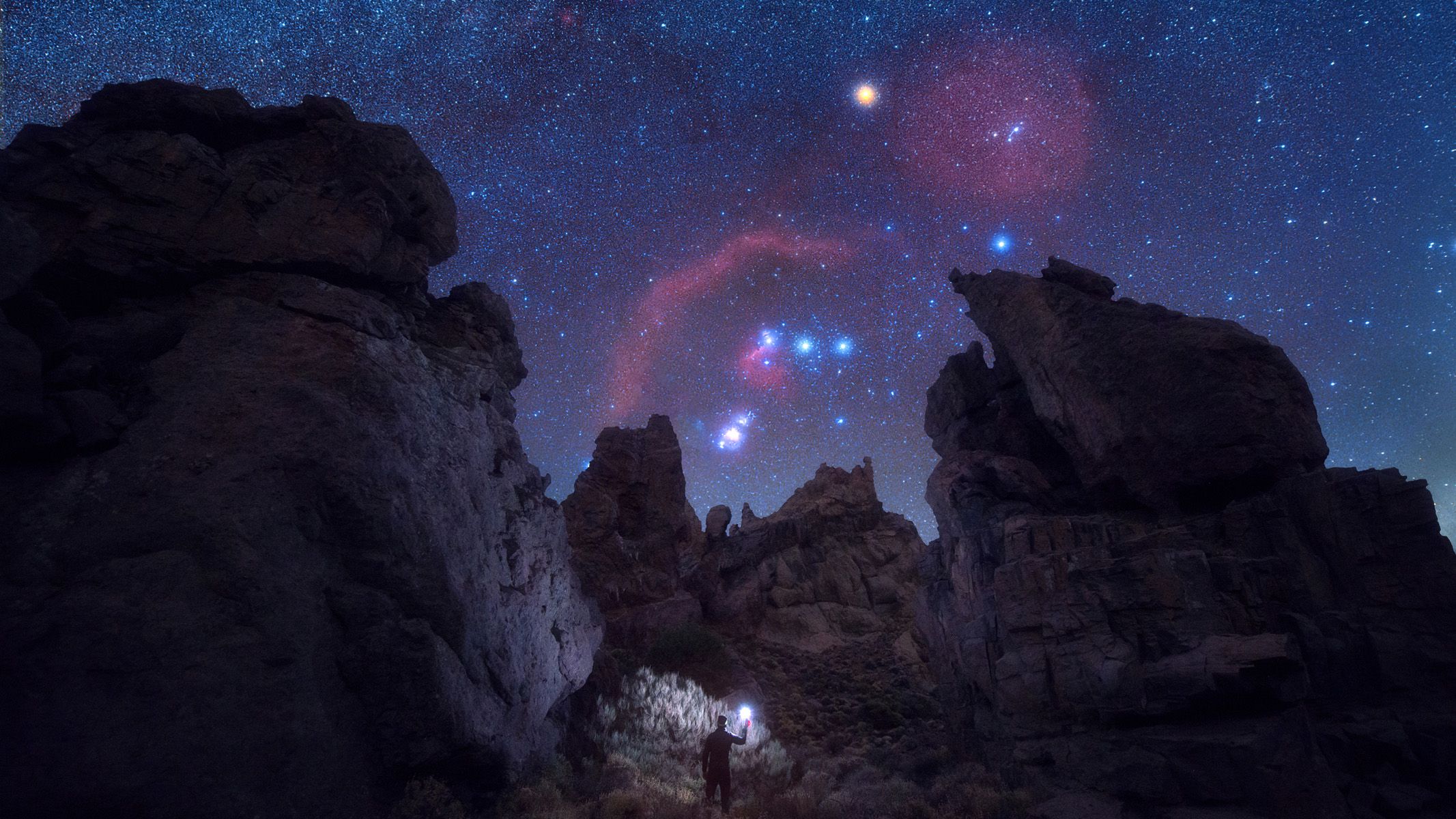
On a clear winter night, the sky looks like a starry blanket, but it’s not a blanket, it’s a map. Constellations are signposts to the stars, simple stick figures that turn randomly scattered points of light into things you can recognize, remember, and navigate. Just learn a few things and the whole winter sky will start to fall into place.
December is the perfect time to start stargazing in the Northern Hemisphere. Yes, it’s cold, but the nights are long so you can leave early and spend hours in the dark. On the other hand, the northern winter sky is full of bright and simple patterns. The constellation Orion dominates in the southeast, followed by Taurus above and Gemini, which together form a vast winter ring of bright stars. Above, the curved W of Cassiopeia and the great square of Pegasus point the way to the Andromeda galaxy and the rich Milky Way fields of Perseus and Auriga.
No tools needed to get started. Just be patient, dress warmly, and keep your head up for more than a few seconds. But you can go even deeper with the best binoculars, best telescopes, or smart telescopes for stargazing. They transform faint smears into clusters, clouds, and galaxies, giving you a reason to come back again and again.
you may like
When you observe some winter constellations, the universe becomes less abstract and a place where you can actually learn your way around. Introducing constellations that are easy to spot even for beginners in the Northern Hemisphere’s winter night sky.
1. Orion, Hunter

Hidden Target: M42 (Orion Nebula)
In the evenings of December and January, Orion is the most recognizable winter landmark, as it rises early in the morning and dominates the southern sky by mid-evening. Look to the southeast and look for Orion’s belt, which consists of three bright stars in a short straight line, or three equidistant stars Alnitak, Alnilam, and Mintaka.
Above is the reddish Betelgeuse, below is the pale Rigel. On the Rigel side of the star of the belt, there is a fuzzy spot that appears bright when viewed slightly from the side. This is Orion’s sword. If you point your binoculars or small telescope at its center, you’ll see the Orion Nebula (M42) as a glowing cloud lit by newborn stars.
Take a closer look


2. Taurus, the bull
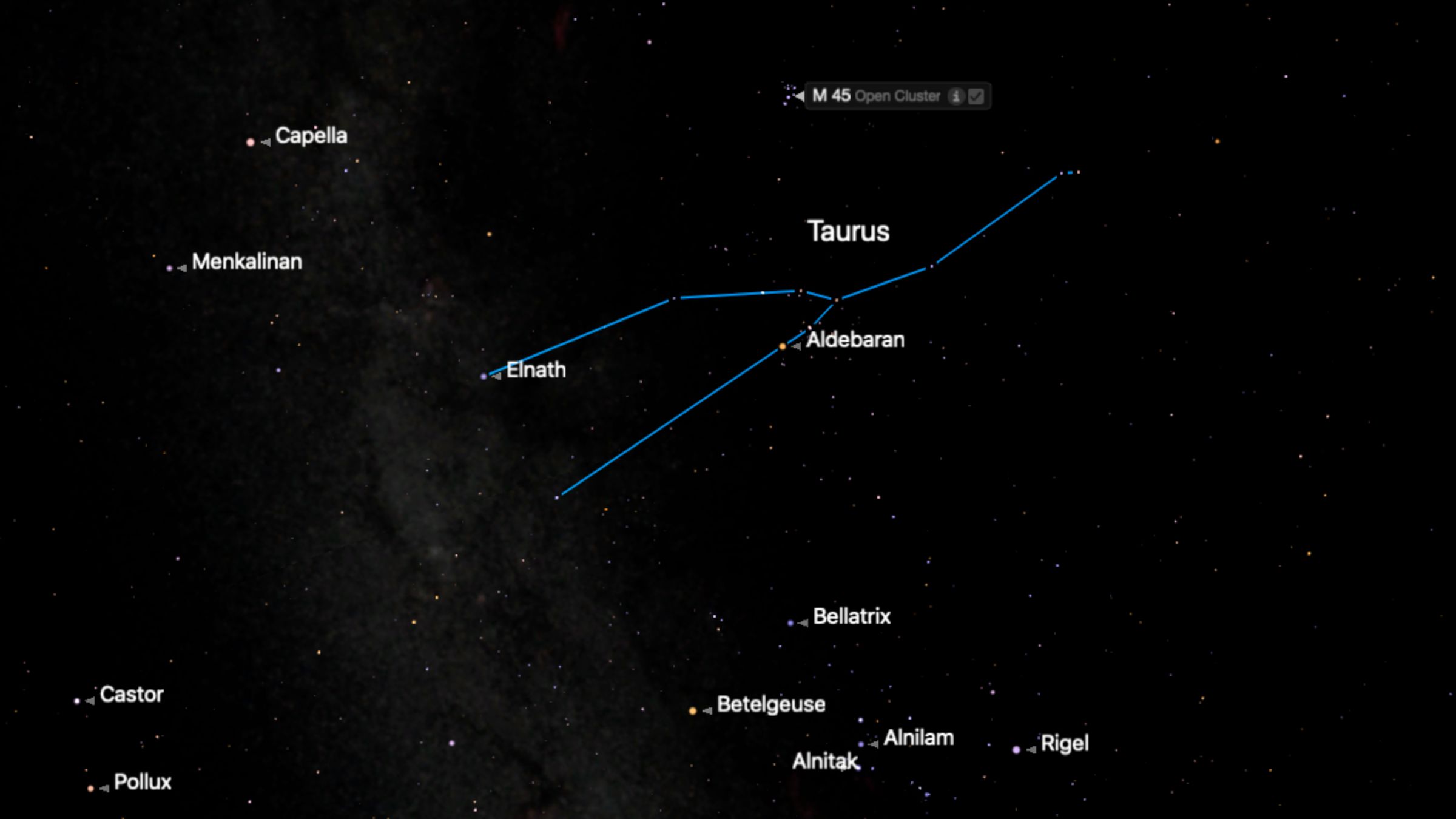
Hidden Target: M45 (Pleiades)
After dark, look above the constellation Orion in the east and look for the orange Aldebaran, the eye of Taurus. It is located in a V-shaped star cluster (the Hyades open cluster) that marks the face of a bull. Below are its horns, extending to the stars Elnas and Tianguan.
Above Taurus is a small patch of fog that looks like a miniature dipper. The Pleiades star cluster, also known as the “Seven Sisters” and M45. One of the easiest star clusters to see with the naked eye, the Pleiades looks just like most skywatchers do when viewed through binoculars. This is the most beautiful object in the night sky.
you may like
Take a closer look

3. Gemini, twins
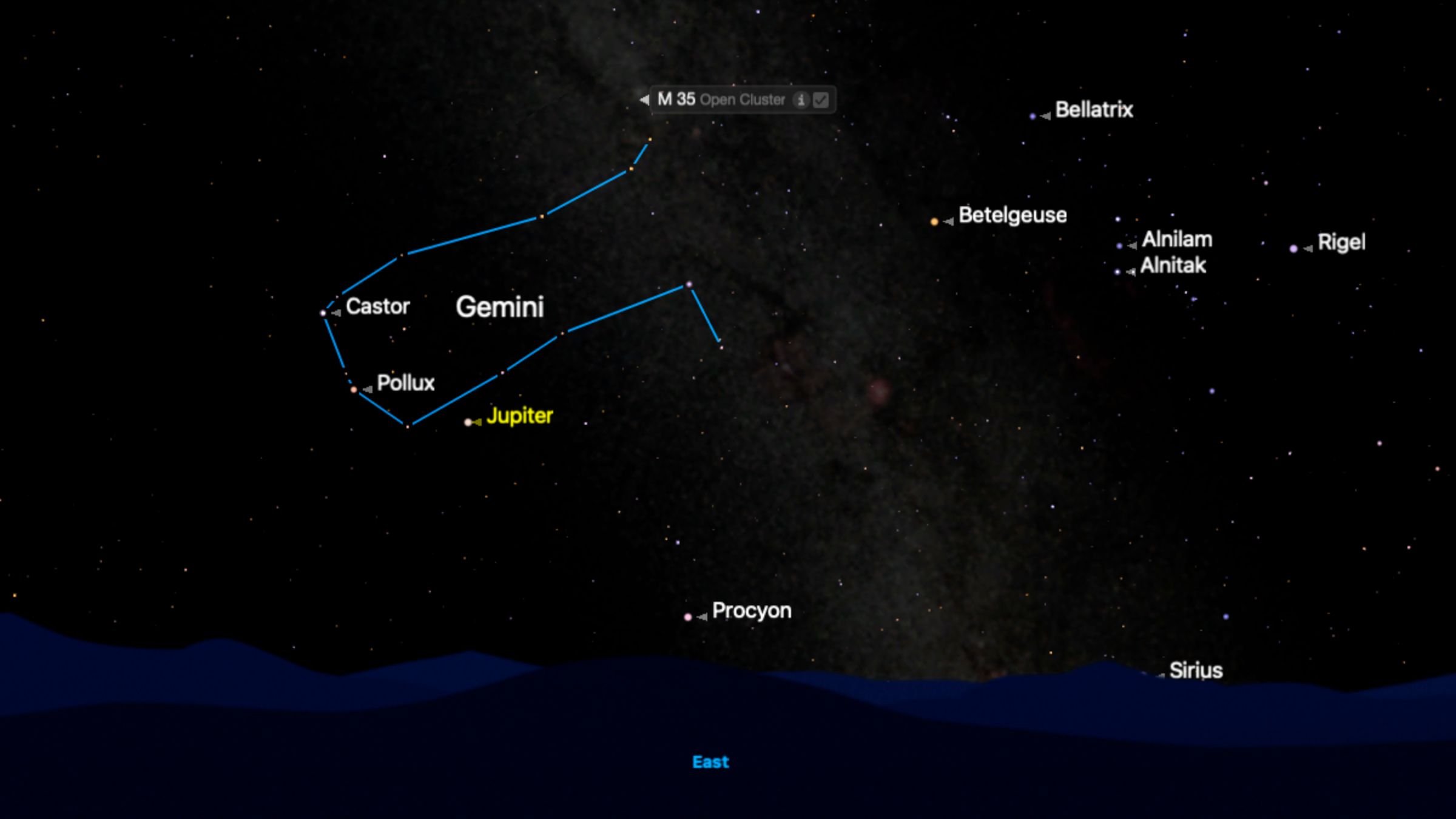
Hidden Target: M35 (Open Cluster)
Near the constellations Taurus and Orion, we find two bright stars, the twin heads Castor and Pollux, standing side by side. In December 2025 and January 2026, a very bright Jupiter will shine nearby, making it easier to spot. From them, fainter stars form a bar.
Spot M35 by pointing your binoculars or small telescope near the base of the northern twins, according to NASA. M35 is a young open cluster of gravitationally bound stars, also known as the Schubuckle Cluster.
Take a closer look

4. Coachman Auriga
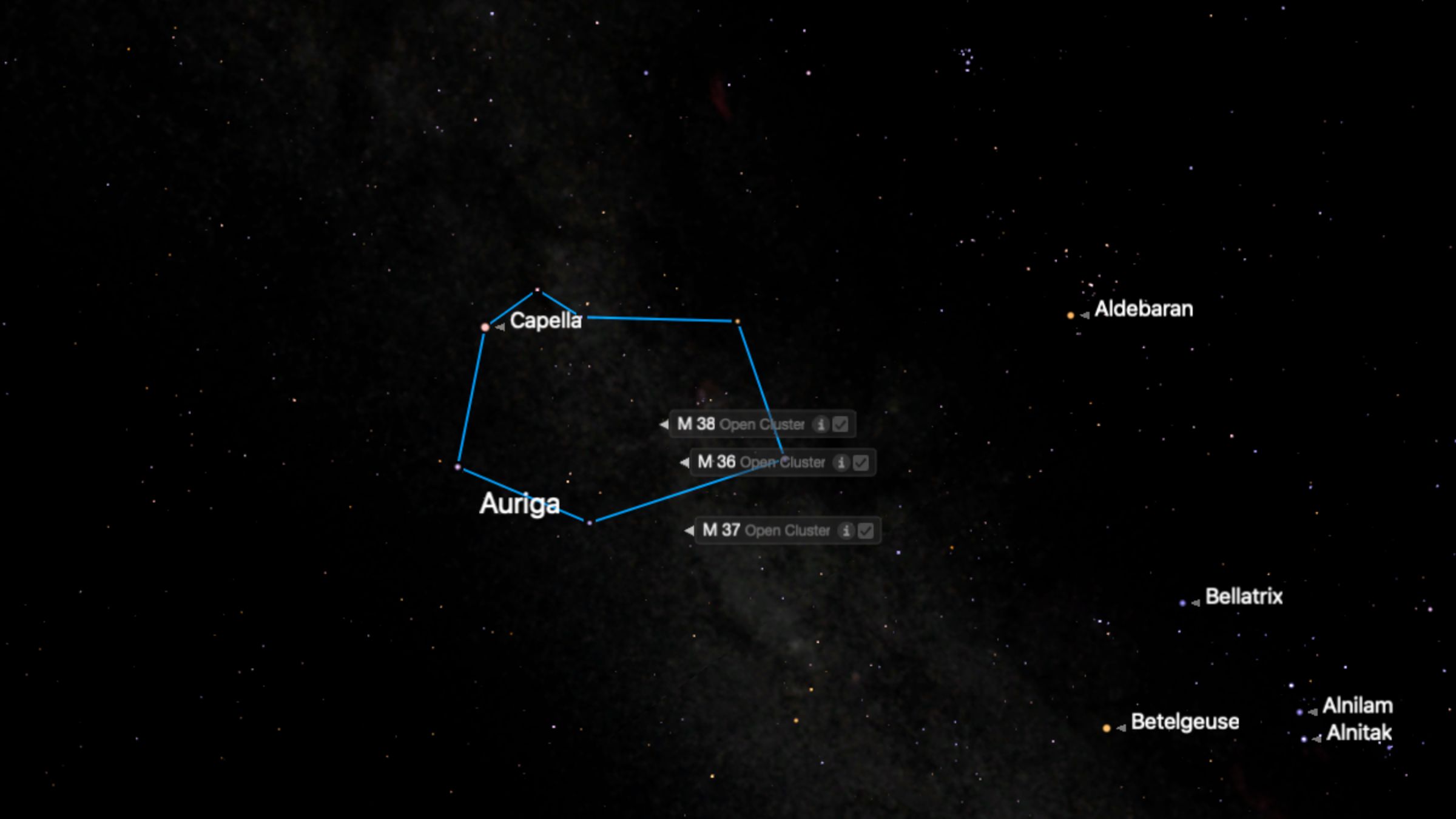
Hidden targets: M36, M37, M38 (open cluster)
High overhead from the northeast, Capella shines brightly like a lantern in the winter sky as soon as it gets dark. “Capricorn” is a star that marks one corner of the constellation Auriga. Auriga is a nearly pentagonal constellation whose constituent stars are easily visible from cities.
If you scan the area south of Capella with binoculars or a small telescope, you’ll likely encounter M36, M37, and M38. Three bright open star clusters transform a seemingly empty sky into something entirely different.
Take a closer look

5. Winter triangular asterism
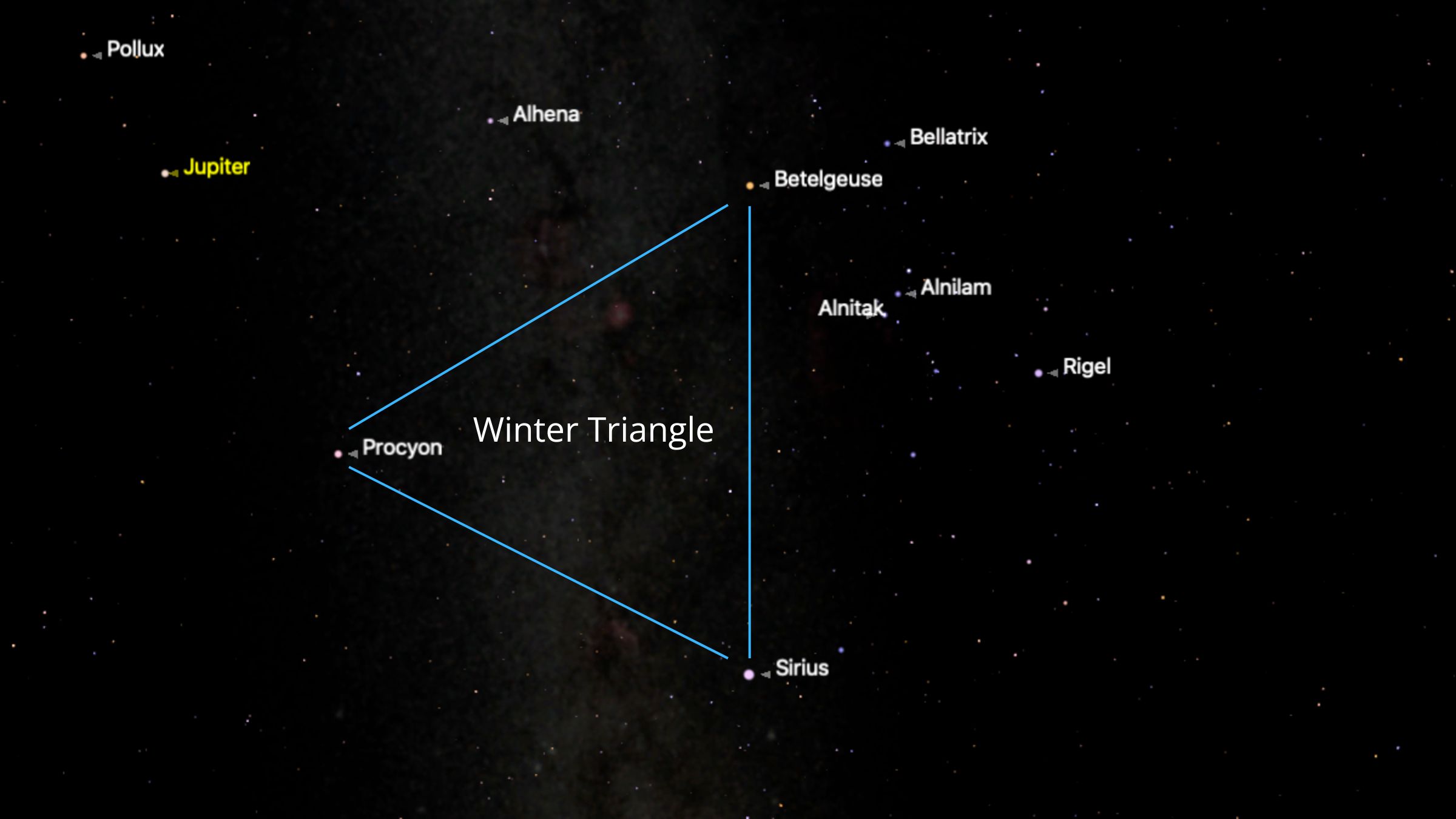
Hidden target: Sirius color
Constellations are a great way to study the night sky, but so are asterisms, which are easily recognizable star patterns. During the winter months, if you look to the southeast after dark, you’ll see three bright stars: the reddish Betelgeuse in the constellation Orion, Procyon in the constellation Canis Major, and the dazzlingly bright Sirius in the constellation Canis Major. Together they form the large winter triangle.
If you point your binoculars or small telescope at Sirius, you’ll notice that it flashes in rainbow colors. why? This star is so bright and so close, just 8.6 light-years away, that its intense starlight is twisted by turbulence in Earth’s atmosphere, bending the starlight and causing it to twinkle. Sirius is the ultimate example.
Take a closer look


6. Winter Hexagon
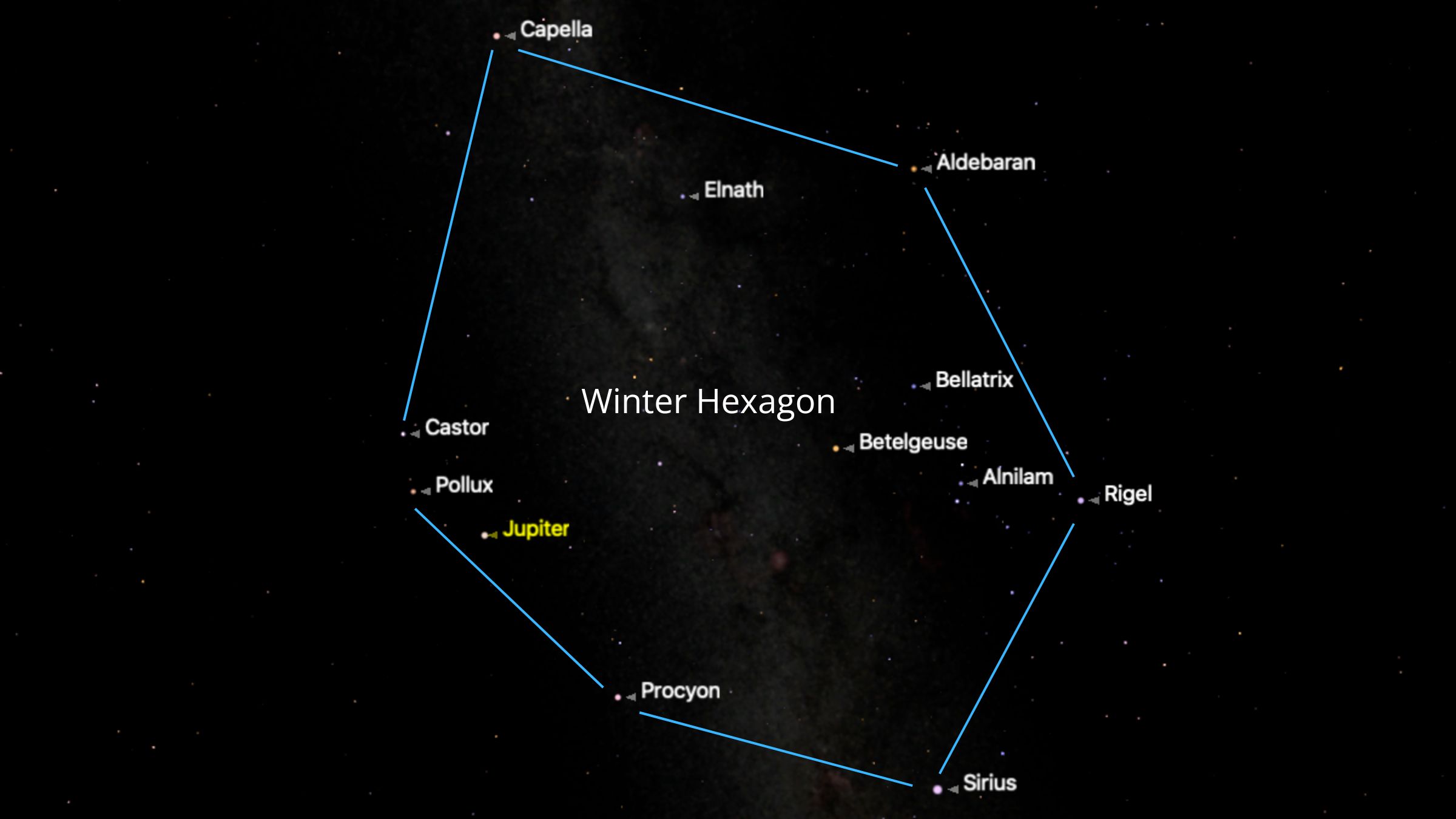
Hidden Target: Jupiter
Step back and join the dazzling stars of the southern sky, including Rigel in Orion, Aldebaran in Taurus, Capella in Auriga, Pollux in Gemini, Procyon in Canis Major, and Sirius in Canis Major. Together they form a giant winter hexagon (or winter circle). It takes some time to find it because of its vast shape, so take your time and star hop over and over again until you remember it. It will stay with you forever and make you look forward to winter.
As a bonus this winter, place your binoculars on bright Jupiter, which shines brightly near Pollux in the constellation Gemini, and see its four points of light: Ganymede, Europa, Callisto, and Io, its giant moons.
Take a closer look


7. Queen Cassiopeia
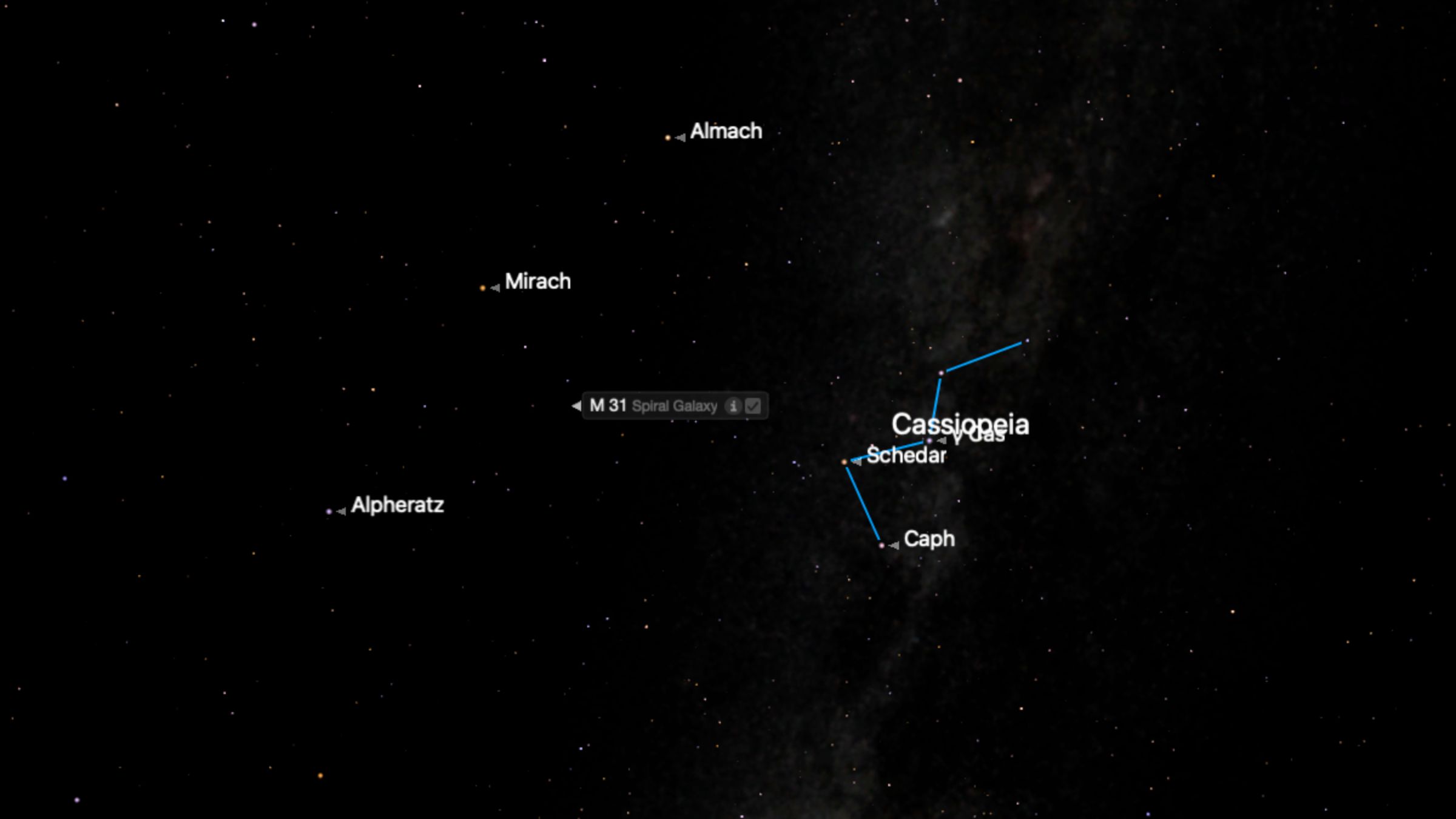
Hidden Target: M31 (Andromeda Galaxy)
High in the north, look for the five curved “W” or “M” stars, or Cassiopeia. It orbits Polaris all night long, more or less opposite the Big Dipper, and is visible throughout the winter, making it a useful beacon from any location.
From the central V of W, sweep outward to the south with binoculars or a small telescope to find Andromeda Galaxy M31. Located 2.5 million light-years away, this spiral galaxy appears as a soft, elongated glow, but the darker the starry sky, the brighter it appears.
Take a closer look
8. Ursa Major, Great Bear
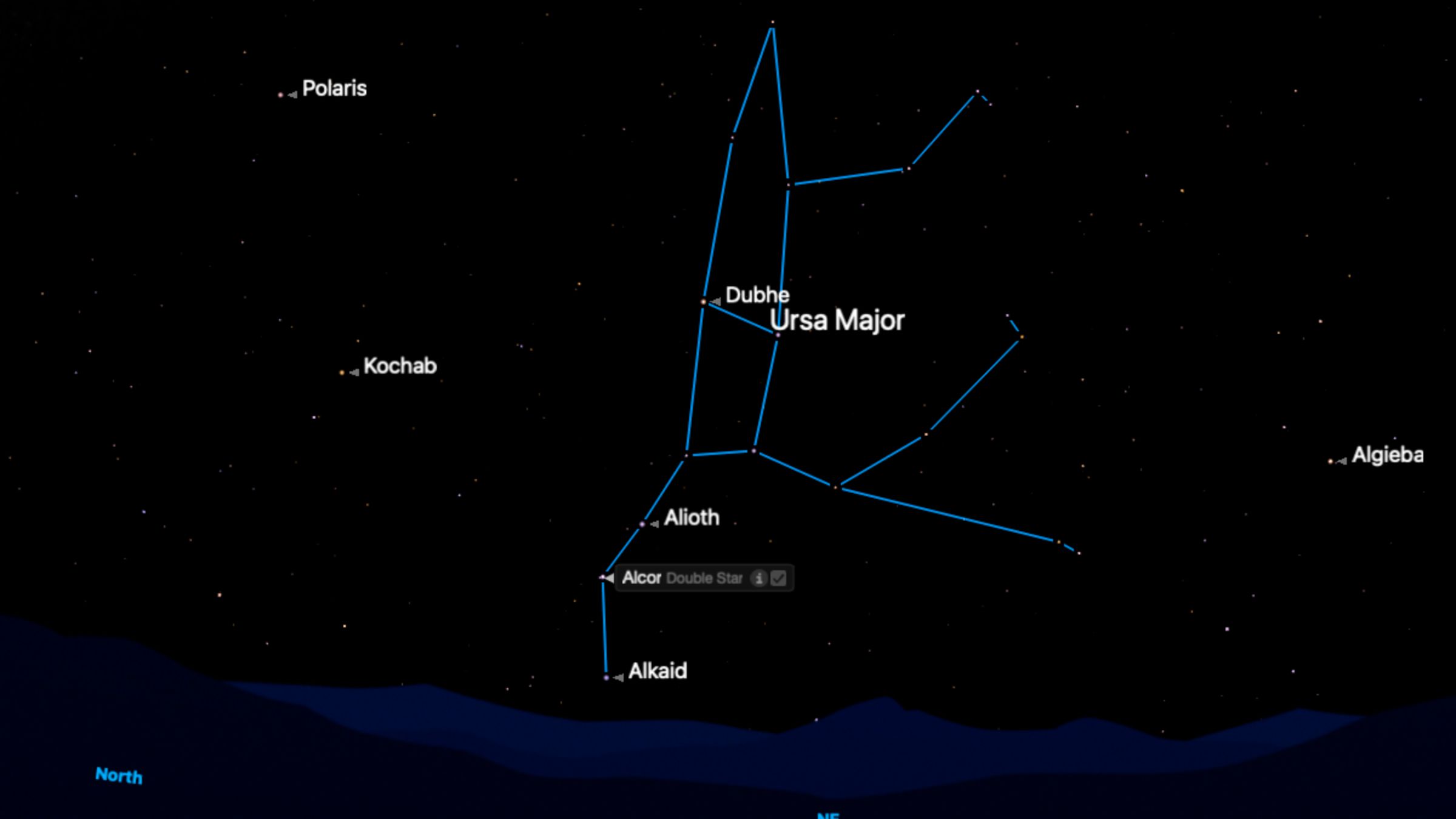
Hidden Target: Mizar and Alcor (Double Star)
On a late December evening, the Big Dipper part of Ursa Major lies low in the north-northeast and rises high after midnight. Look for bright pot shapes. It has 3 stars on the handle and 4 stars on the bowl. Mizar, the star in the middle of the handle, looks a little blurry to the naked eye.
If you have good eyesight, you may notice that there are actually two stars. To make sure your eyes aren’t fooling you, point your binoculars or small telescope and you’ll see Mizar and Alcor split neatly into two distinct spots of light. According to Space.com, the visual separation of Mizar and Alcor, known by stargazers as “horse and rider,” was a test of visual acuity used by ancient Arabs.
Take a closer look

9. Pegasus Grand Square
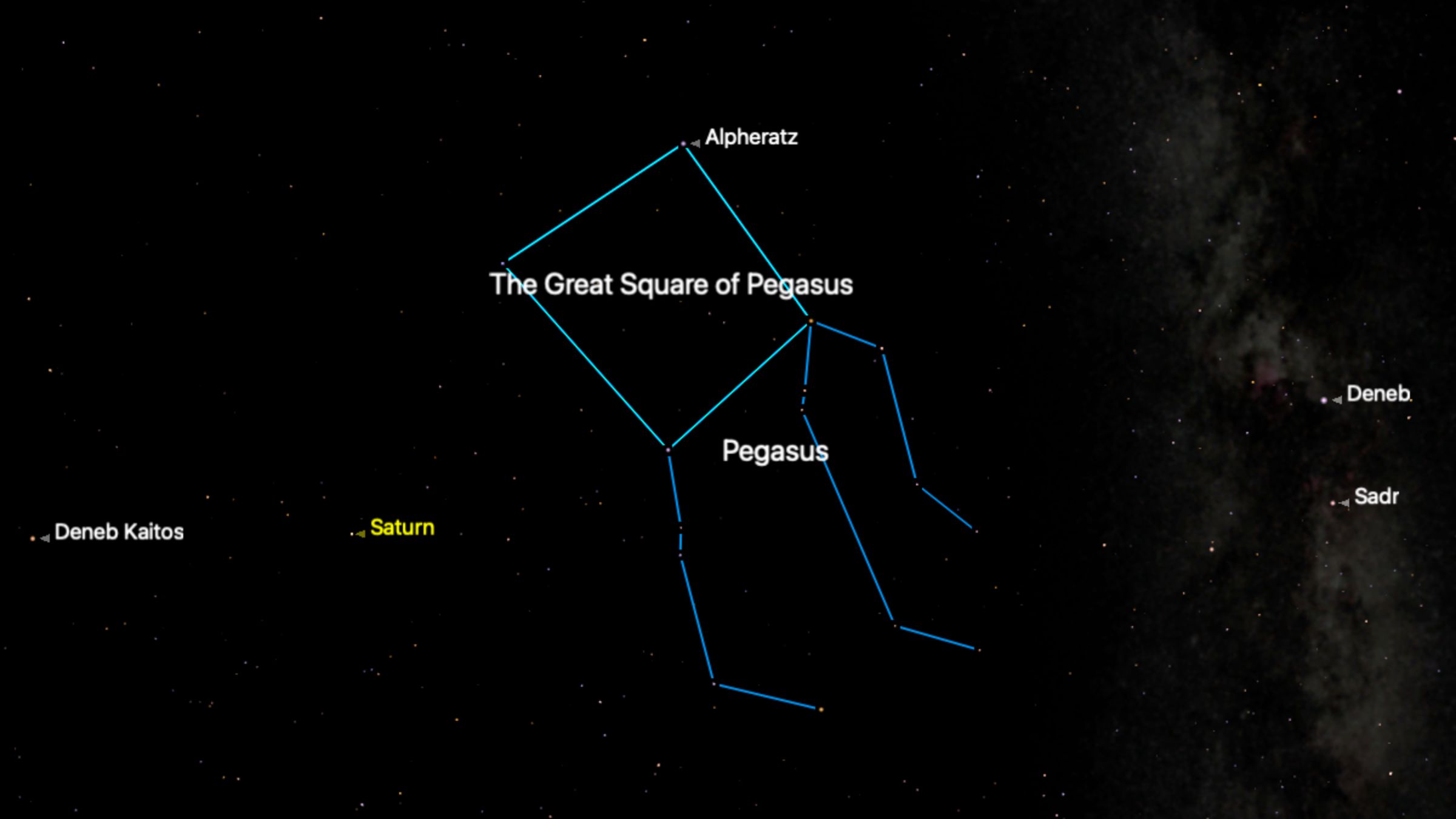
Hidden Target: Saturn
On early winter evenings, look to the west and look for a large, almost empty square made up of four moderately bright stars: Markab, Schete, Argenib, and Alferatz. These stars form the vast Grand Square of Pegasus. It sets by late December, but is still visible during the first half of the night.
In December 2025 and January 2026, there’s something else worth noting: over Saturn. Its pale golden light is not very visible to the naked eye, but its spectacular rings can be seen with a small 3-inch telescope at 50x magnification.
Take a closer look
10. Hero Perseus
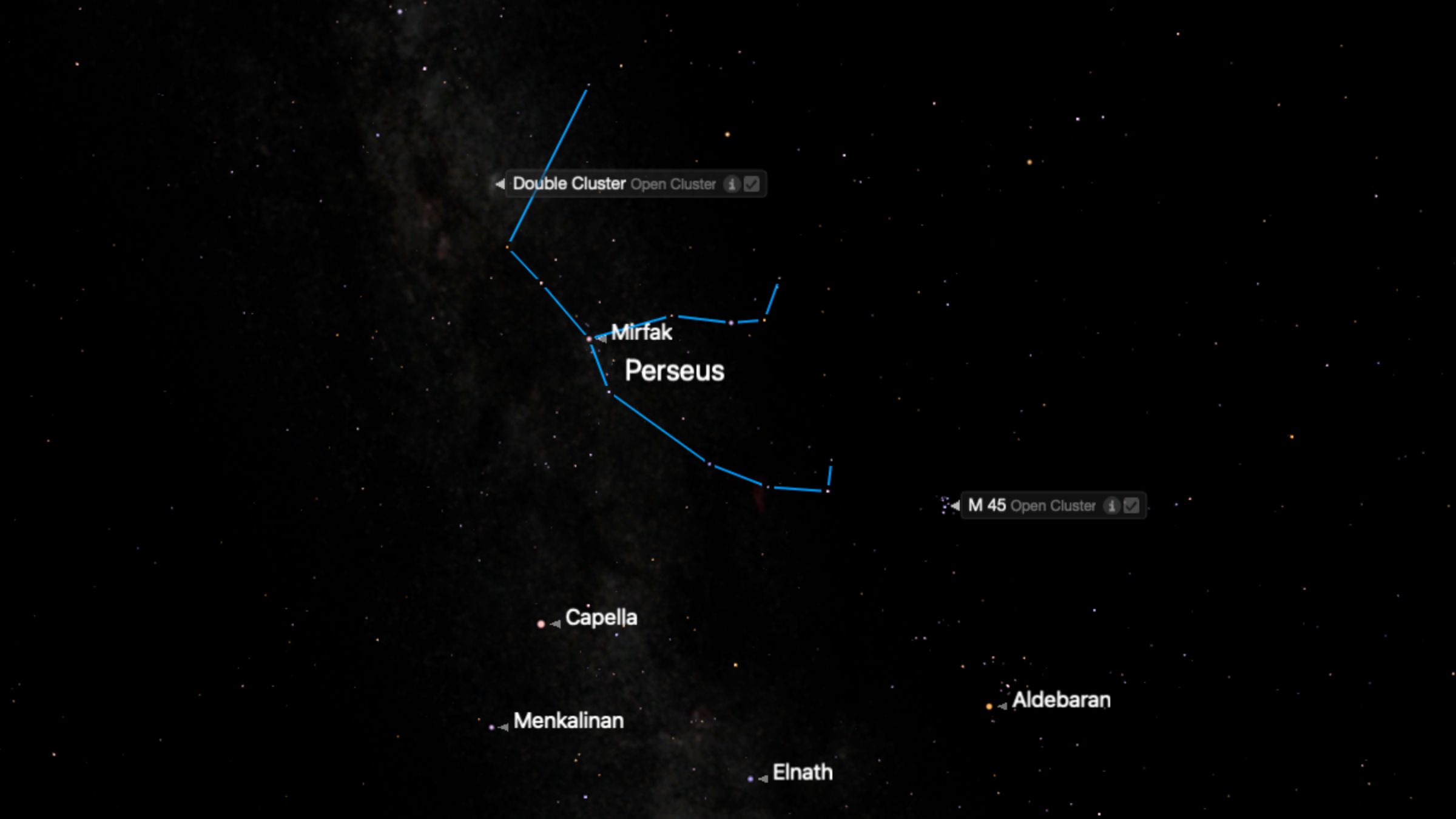
Hidden Target: Double Cluster (NGC 869 and NGC 884)
Look for the irregularly curved chain of stars, or Perseus, between Cassiopeia to the north and Capella to the northeast. At this time of year, it flows through the pale band of the winter Milky Way, which contains a lot of wealth.
One of these is a double star cluster, NGC 869 and NGC 884. It is a faint, fuzzy speck just visible to the naked eye in a very dark sky between the constellations of Perseus and Cassiopeia. These two overlapping clusters of stars look very beautiful when viewed through binoculars or a small telescope.
Take a closer look
Source link
