


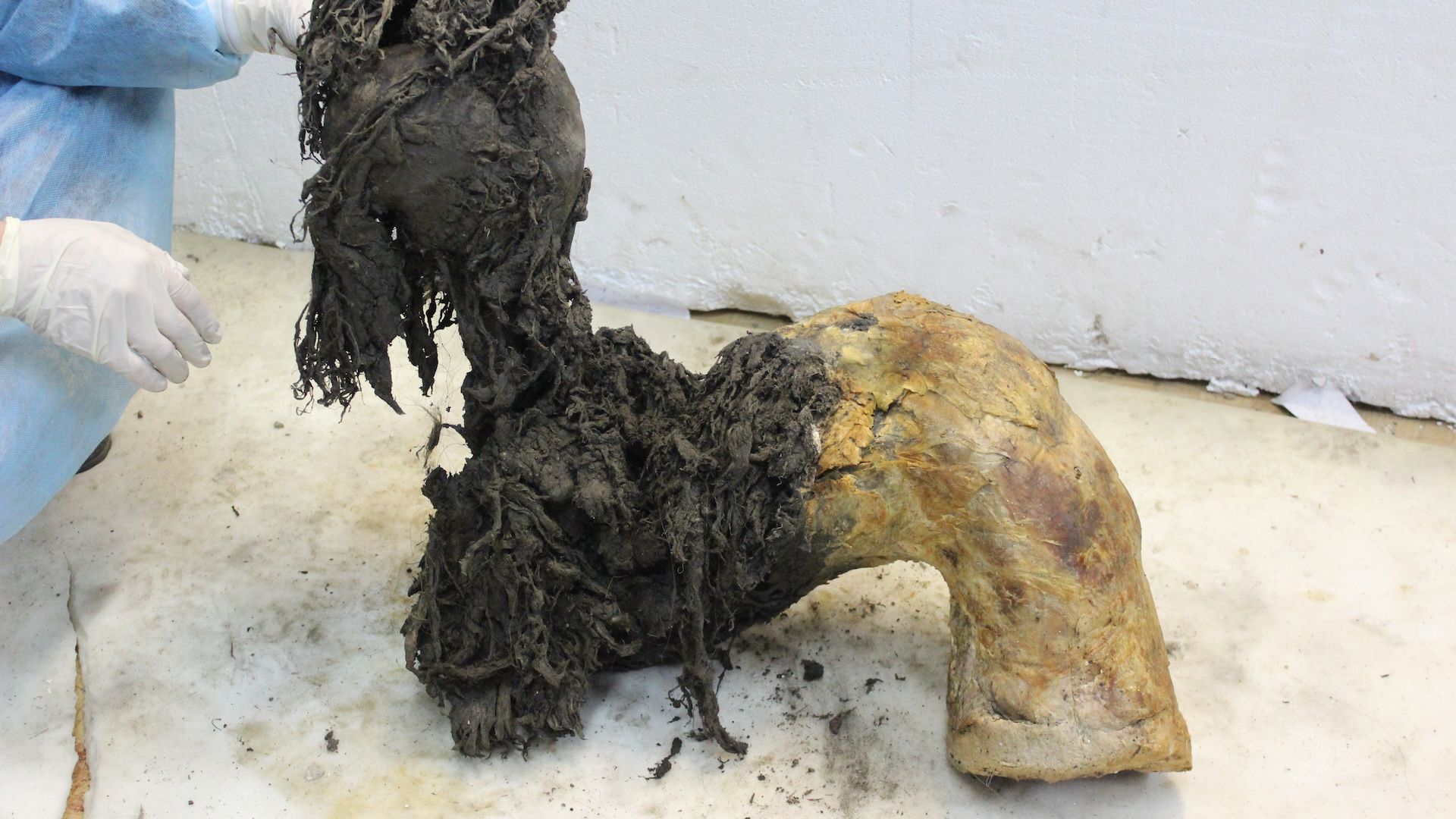
Scientists have successfully sequenced the RNA of a woolly mammoth for the first time, dispelling the assumption that this fragile genetic molecule cannot survive from time immemorial.
RNA, or ribonucleic acid, acts as a messenger that carries instructions between DNA and an organism’s protein-building machinery, converting genetic information into proteins. RNA can reveal which genes are active in a cell at a given moment and how patterns of gene activity within a cell change over time. Therefore, ancient RNA can tell scientists about the state of cells in extinct species.
you may like
Although DNA provides the blueprint for living things, there are limits to the information it can reveal. Study co-author Zoe Poshon, a PhD student at Stockholm University, said RNA “opens a window into how that blueprint is implemented” within each cell of an organism.
The aptly named messenger RNA (mRNA) “is the messenger of DNA,” she told Live Science via email. “In other words, it carries a working copy of the DNA instructions from the nucleus into the cell.” The rest of the cell then follows these instructions, she added.
In the new study, published Friday (November 14) in the journal Cell, researchers looked at 10 well-preserved woolly mammoth (Mammuthus primigenus) specimens from Siberia that are between 10,000 and 50,000 years old. The research team hoped that the freezing conditions would preserve more specimens and yield better results.
The results were particularly impressive with a specimen called Yuka, a young ginger-colored mammoth. Yuka is approximately 39,000 years old, making it the oldest piece of RNA ever sequenced. Previously, that distinction was held by tissue taken from canids dating back approximately 14,300 years.
Remarkably, scientists have discovered a clear genetic signal that Yuka, previously believed to be female based on her physical characteristics, is actually male.
Additionally, the RNA provided insight into the function of Yuka’s muscles, specifically that the RNA “generates proteins that make the muscles lengthen and contract,” said study lead author Emilio Marmol Sánchez, who was working at the University of Copenhagen’s Center for Evolutionary Hologenomics at the time of writing. The research team “also discovered a set of regulatory genes,” he told Live Science.
When a cell dies, the last function of RNA is left behind. “What we have here is, in a sense, a snapshot of the last moments of life inside these mammoth cells,” Marmol Sanchez said.
you may like
What the research team saw in Yuka’s muscle RNA reflects the underlying fear of her final moments. Professor Marmol Sánchez explained that they had discovered “molecular evidence of metabolic cellular stress in yuca muscle.” This is consistent with what another scientific team published in 2021. In the study, the researchers noted numerous claw marks that may have been made by cave lions (Panthera spelaea), as well as bite marks from smaller predators on the mammoth’s body and tail. However, it is unclear whether Yuka was hunted and killed by a large predator, or simply scavenged after death. The researchers are unsure of the cause of the cellular stress observed in RNA.
Federico Sánchez Quinto, a paleogenomist at the International Human Genome Research Institute at the National Autonomous University of Mexico (UNAM) who was not involved in the study, considers this a “landmark publication in the field of paleogenomics.” “RNA is very unstable even under favorable conditions, so this is interesting because it allows us to accomplish things that were previously unimaginable,” he said of the study. He added: “In this study, we obtained RNA from older samples. [than other recent RNA work]In larger quantities, more reliably,” he told Live Science via email.
The research team said their findings demonstrate that it is possible to extract RNA from very old specimens, opening up a new field of research for other researchers. Additionally, the team has included a roadmap to help others successfully obtain ancient RNA.
“Being able to recover RNA in addition to DNA from ancient samples opens a new window into the biology of extinct animals,” study co-author Rav Dalen, professor of evolutionary genetics at Stockholm University’s Center for Paleogenetics, told Live Science. “This is another powerful tool that allows us to see which genes are active in different cell types. Ultimately, it will help us better understand which genes make a mammoth a mammoth.”