


Close Menu
  • Home
  • Identity
  • Inventions
  • Future
  • Science
  • Startups
  • Spanish
What's Hot

From Svedka to Anthropic, brands are boldly leveraging AI in their Super Bowl ads

Prince Andrew’s advisor encouraged Jeffrey Epstein to invest in EV startups like Lucid Motors

AI agents could become lawyers after all

Facebook X (Twitter) Instagram
  • Home
  • About Us
  • Advertise with Us
  • Contact Us
  • DMCA
  • Privacy Policy
  • Terms & Conditions
  • User-Submitted Posts
Facebook X (Twitter) Instagram
Fyself News
  • Home
  • Identity
  • Inventions
  • Future
  • Science
  • Startups
  • Spanish
Fyself News
Home » Anacondas became gigantic 12 million years ago. It worked very well and the size has not changed since then.
Science

Anacondas became gigantic 12 million years ago. It worked very well and the size has not changed since then.

userBy userDecember 2, 2025No Comments3 Mins Read
Share Facebook Twitter Pinterest Telegram LinkedIn Tumblr Email Copy Link
Follow Us
Google News Flipboard
Share
Facebook Twitter LinkedIn Pinterest Email Copy Link

Anacondas have been huge for millions of years, a new study has found.

The average body size of giant snakes has remained constant since they first appeared in the fossil record some 12.4 million years ago during the Miocene (16 million to 11.6 million years ago), according to a new study published Monday in the journal Vertebrate Paleontology.

During the Miocene and Late Miocene (12.4 to 5.3 million years ago), warm temperatures, extensive wetlands, and abundant food allowed many animal species to grow much larger than their modern relatives. However, very few of these giant animals have survived to this day.

you may like

“Other species, such as giant crocodiles and giant turtles, have become extinct since the Miocene, probably due to lower global temperatures and habitat shrinkage,” study co-author Andres Alfonso Rojas, a vertebrate paleontologist at the University of Cambridge, said in a statement. “But the giant anacondas survived. They are very resilient.”

Anacondas make up a group of constricting snakes, which currently includes the heaviest snake species in the world. The average length of modern anacondas is 13 to 16 feet (4 to 5 meters), but the largest can reach 23 feet (7 meters). Scientists weren’t sure whether anacondas got even bigger during the Miocene, or whether they remained the same size and remained their gigantic size to this day.

To estimate how big ancient anacondas were, Alfonso Rojas and his colleagues measured 183 fossilized anaconda vertebrae from at least 32 snakes collected in Venezuela. They also used a technique called ancestral state reconstruction to predict the body length of ancient anacondas from the characteristics of closely related snakes.
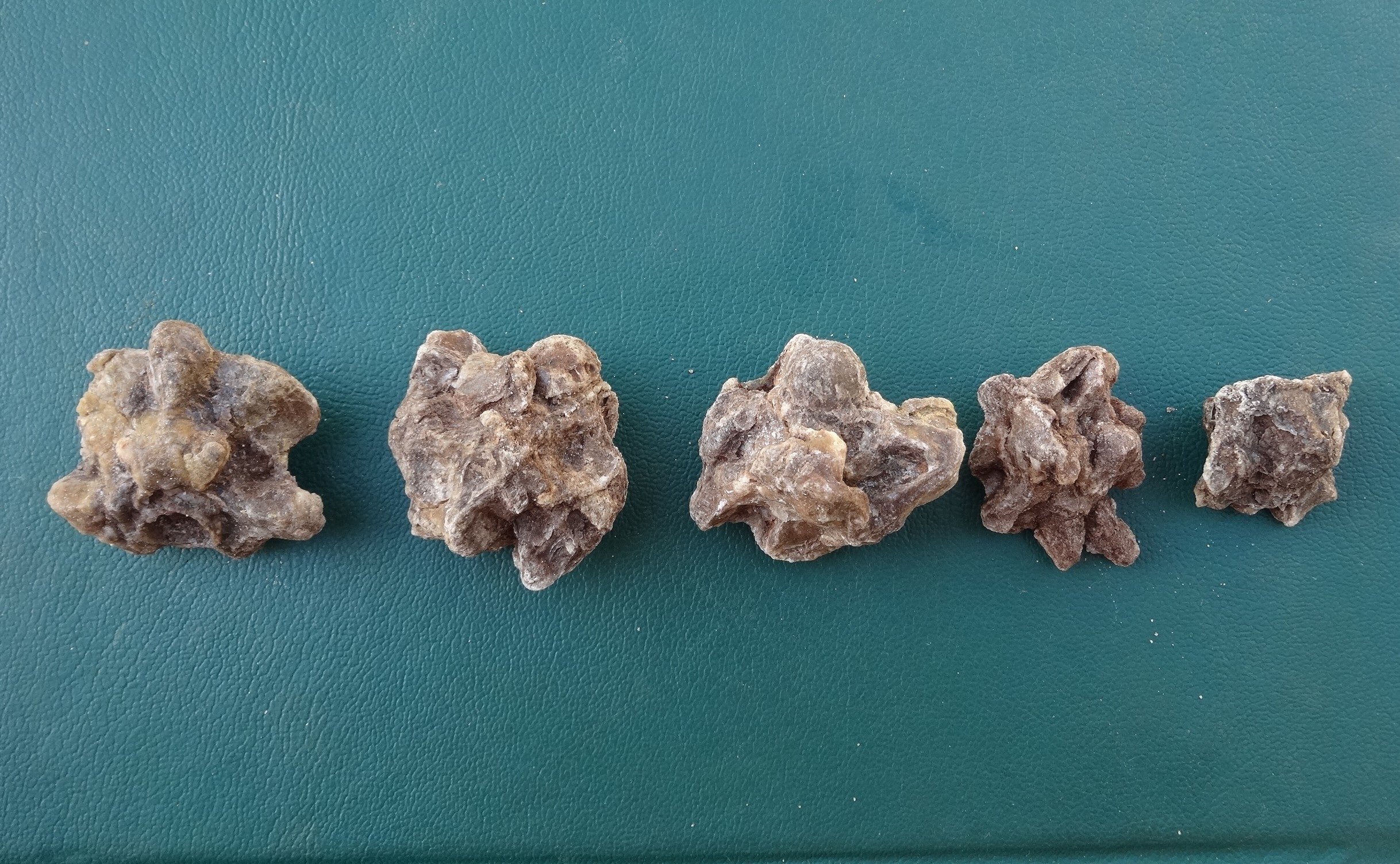
Five fossilized vertebrae of an ancient anaconda on a light blue background

Researchers measured fossilized anaconda vertebrae to determine the length of the ancient snake. (Image credit: Jorge Carrillo-Briceño)

Based on these calculations, the researchers found that when anacondas first appeared 12 million years ago, during the Miocene Epoch, their average body length was about 17 feet (5.2 meters). This is about the same length as a modern anaconda.

Get the world’s most fascinating discoveries delivered straight to your inbox.

“This is a surprising result, as ancient anacondas were expected to be between 7 and 8 meters long.” [23 to 26 feet] “However, there is no evidence that larger snakes existed during the Miocene, when global temperatures were warmer,” Alfonso Rojas said in a statement.

It’s still unclear why anacondas don’t get smaller over time.

While a warm climate and rich wetlands may have allowed anacondas to reach giant sizes early in their evolutionary history, lower temperatures and shrinking ranges haven’t forced snakes to become smaller to adapt. This may suggest that these were not the main factors that have kept snakes large over thousands of years, the researchers said in their study.

Predator-prey interactions also likely do not play a major role in maintaining snake body size, the researchers said. It is possible that the snakes grew larger because there was no competition for food in the first place. However, during the Pliocene (5.3 million to 2.6 million years ago) and Pleistocene (2.6 million to 11,700 years ago), other predators migrated into South America without causing them to become smaller. This suggests that food availability is not a major factor in anacondas’ giant size.

Snake Quiz: How much do you know about crawling reptiles?


Source link

#Biotechnology #ClimateScience #Health #Science #ScientificAdvances #ScientificResearch
Follow on Google News Follow on Flipboard
Share. Facebook Twitter Pinterest LinkedIn Tumblr Email Copy Link
Previous ArticleThe future of deep tech will be discussed at StrictlyVC Palo Alto on December 3rd
Next Article Google tests AI Overview and AI Mode integration
user
  • Website

Related Posts

All major galaxies except one are moving away from the Milky Way – and we finally know why

February 6, 2026

The spotted orchid fly has invaded the United States. They may have acquired evolutionary superpowers in Chinese cities.

February 5, 2026

Kanji the bonobo was able to pretend – a trait thought to be unique to humans.

February 5, 2026
Add A Comment
Leave A Reply Cancel Reply

Latest Posts

From Svedka to Anthropic, brands are boldly leveraging AI in their Super Bowl ads

Prince Andrew’s advisor encouraged Jeffrey Epstein to invest in EV startups like Lucid Motors

AI agents could become lawyers after all

The Legal Revolution is Digital: Meet TwinH, Your AI Partner in the Courtroom of the Future

Trending Posts

Subscribe to News

Subscribe to our newsletter and never miss our latest news

Please enable JavaScript in your browser to complete this form.
Loading

Welcome to Fyself News, your go-to platform for the latest in tech, startups, inventions, sustainability, and fintech! We are a passionate team of enthusiasts committed to bringing you timely, insightful, and accurate information on the most pressing developments across these industries. Whether you’re an entrepreneur, investor, or just someone curious about the future of technology and innovation, Fyself News has something for you.

Castilla-La Mancha Ignites Innovation: fiveclmsummit Redefines Tech Future

Local Power, Health Innovation: Alcolea de Calatrava Boosts FiveCLM PoC with Community Engagement

The Future of Digital Twins in Healthcare: From Virtual Replicas to Personalized Medical Models

Human Digital Twins: The Next Tech Frontier Set to Transform Healthcare and Beyond

Facebook X (Twitter) Instagram Pinterest YouTube
  • Home
  • About Us
  • Advertise with Us
  • Contact Us
  • DMCA
  • Privacy Policy
  • Terms & Conditions
  • User-Submitted Posts
© 2026 news.fyself. Designed by by fyself.

Type above and press Enter to search. Press Esc to cancel.