Close Menu
  • Home
  • Identity
  • Inventions
  • Future
  • Science
  • Startups
  • Spanish
What's Hot

Asian State Assistance Group TGR-STA-1030 breaches 70 governments and infrastructure-related organizations

How printed electronics from Tampere Uni is building a sustainable future

How Samsung Knox prevents network security breaches

Facebook X (Twitter) Instagram
  • Home
  • About Us
  • Advertise with Us
  • Contact Us
  • DMCA
  • Privacy Policy
  • Terms & Conditions
  • User-Submitted Posts
Facebook X (Twitter) Instagram
Fyself News
  • Home
  • Identity
  • Inventions
  • Future
  • Science
  • Startups
  • Spanish
Fyself News
Home » ‘They’ve never seen it before’: Romans made liquid plaster paste and smeared it on the dead before burial, leaving fingerprints, new study finds
Science

‘They’ve never seen it before’: Romans made liquid plaster paste and smeared it on the dead before burial, leaving fingerprints, new study finds

userBy userDecember 11, 2025No Comments3 Mins Read
Share Facebook Twitter Pinterest Telegram LinkedIn Tumblr Email Copy Link
Follow Us
Google News Flipboard
Share
Facebook Twitter LinkedIn Pinterest Email Copy Link

About 1,800 years ago, people preparing for burial in Roman England created a plaster-like paste and applied it to corpses, leaving fingerprints that are still visible today, researchers reported in a recent blog post.

These newly discovered prints reveal a pragmatic approach to funerary practices in the third and fourth centuries AD, the archaeologists said.

The team of researchers, part of York University’s ‘Seeing the Dead’ project, have been investigating the mysterious practice of using liquid plaster to fill stone and lead coffins among people living in Yorkshire during the Roman Empire.

you may like

Gypsum is a calcium-based mineral that was an important component of ancient plaster and cement. When heated and mixed with water, gypsum becomes a pourable liquid and is sometimes called plaster of Paris. This thick liquid, when poured over a corpse, hardens into plaster, leaving behind an integument or impression of the deceased, similar to the casting of Pompeii.

At least 70 liquid plaster burials have so far been discovered in the Yorkshire area. Examining one of these, a sarcophagus discovered in the 1870s that had not previously been properly studied, the team found surprising clues about how liquid plaster was applied. That means someone spread it by hand.

Maureen Carroll, a Roman archaeologist at the University of York and lead researcher on the Seeing the Dead project, told Live Science via email: “When we lifted the casing and started cleaning and 3D scanning, we were surprised to find a handprint with fingers attached.” “They had never been seen before, and no one had ever removed the casing from the sarcophagus.”

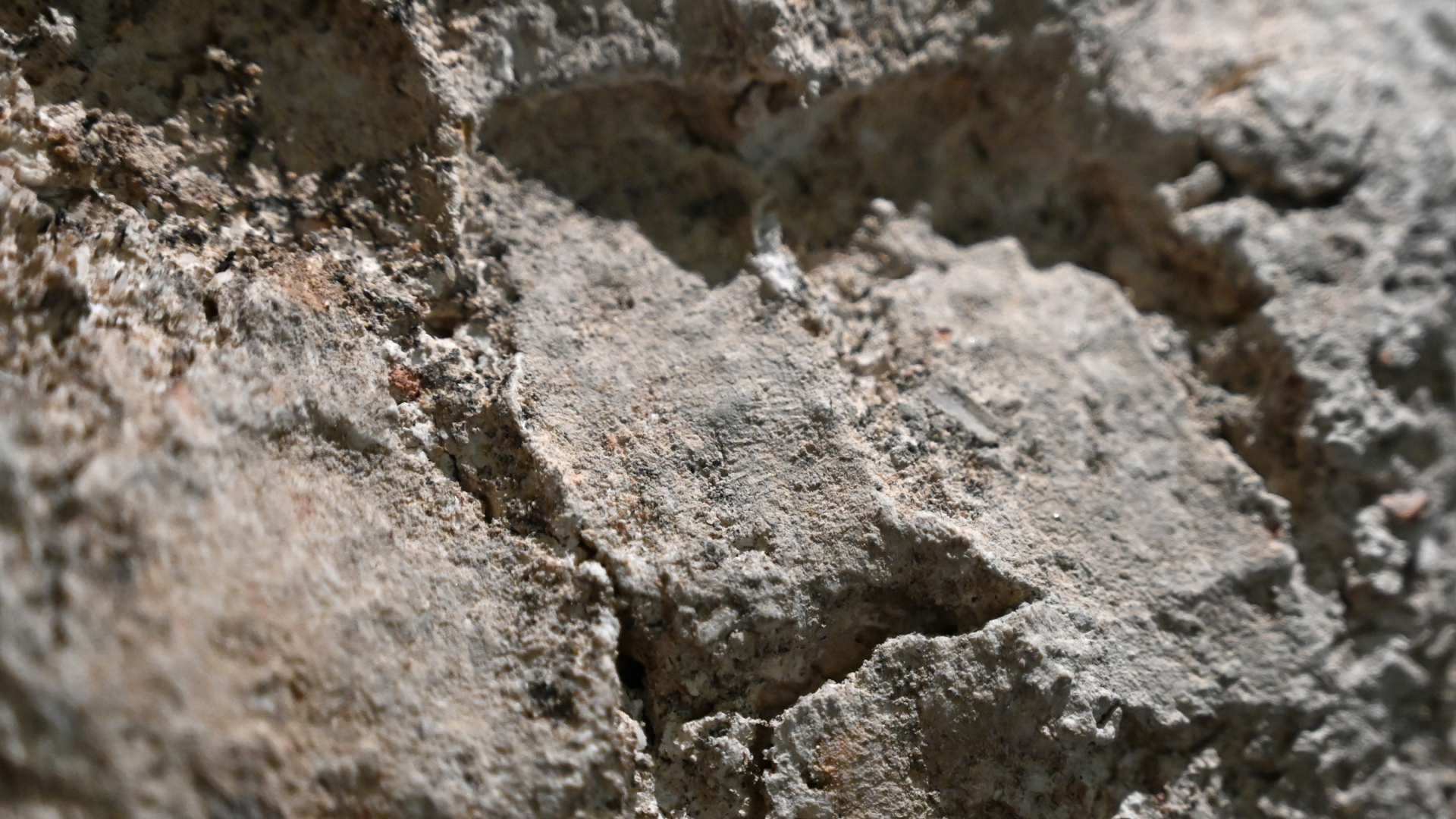
Image 1/4
A piece of plaster with a fingerprint on it
(Image credit: Seeing the Dead Project/University of York and York Museums Trust)

Researchers found handprints in the hardened plaster.

A piece of plaster with a fingerprint on it
(Image credit: Seeing the Dead Project/University of York and York Museums Trust)

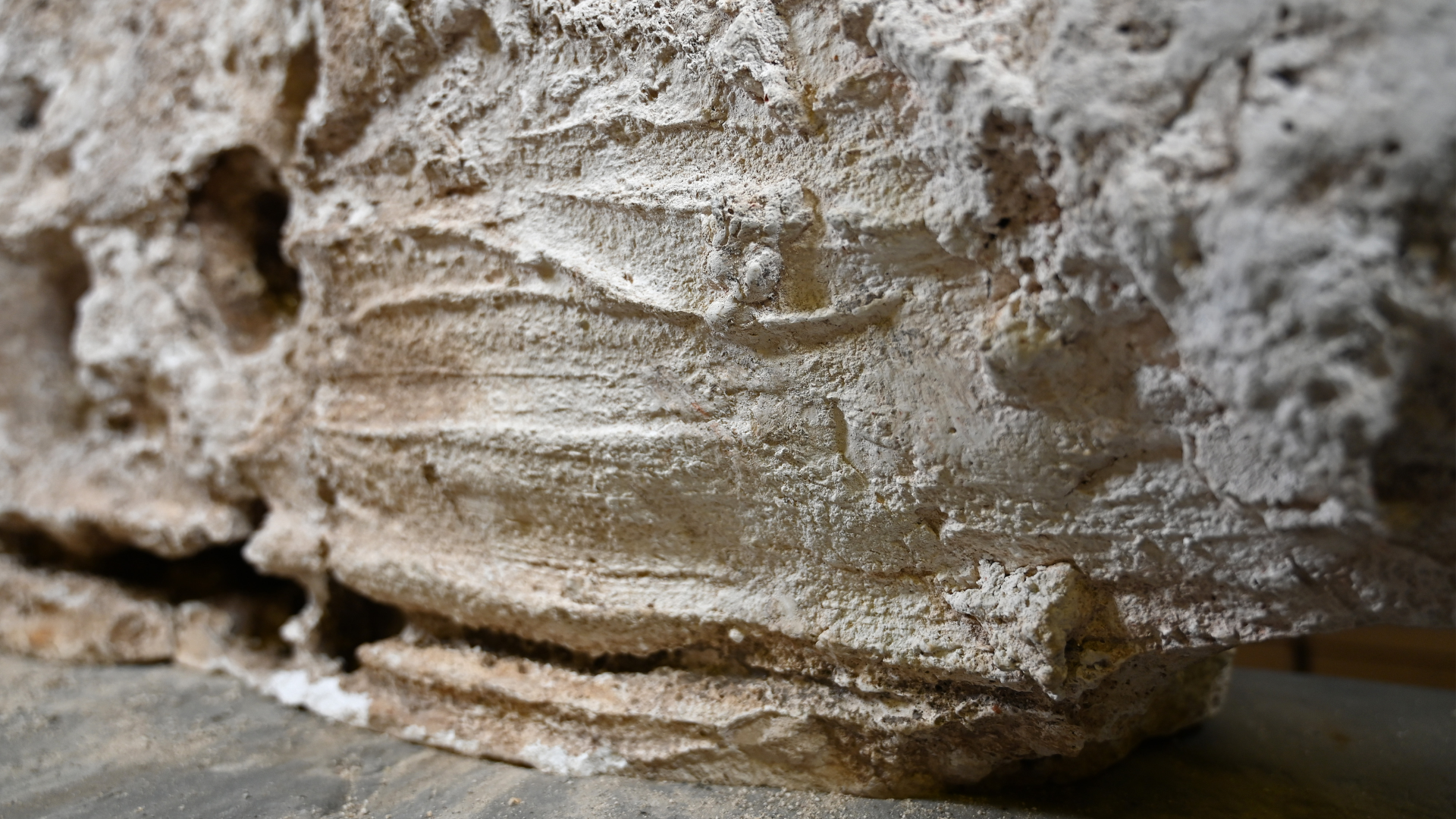
Close-up of the handprint showing the individual fingers.

A piece of plaster with a fingerprint on it
(Image credit: Seeing the Dead Project/University of York and York Museums Trust)

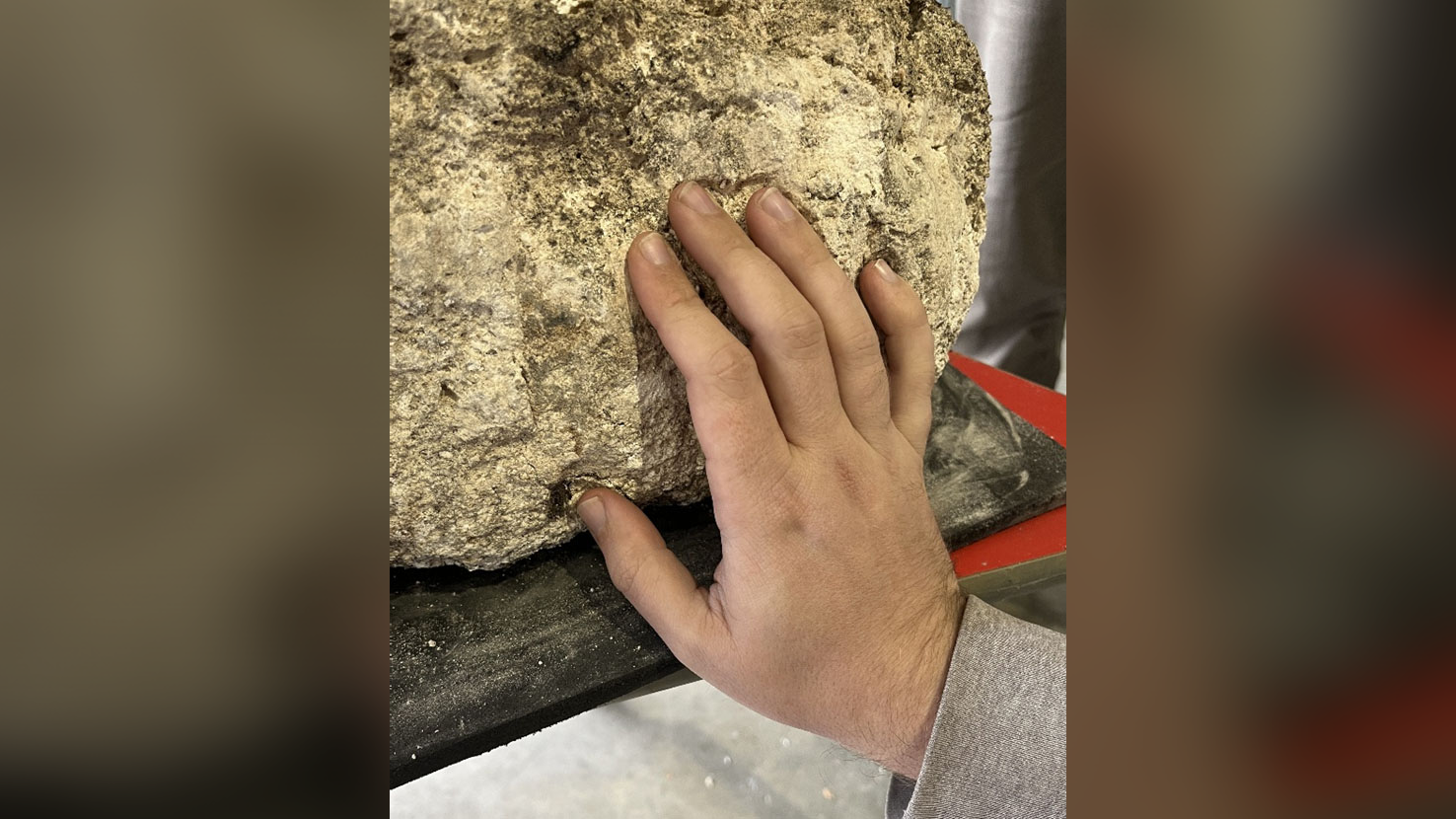
A person demonstrating how Romans touched plaster.

A piece of plaster with a fingerprint on it
(Image credit: Seeing the Dead Project/University of York and York Museums Trust)

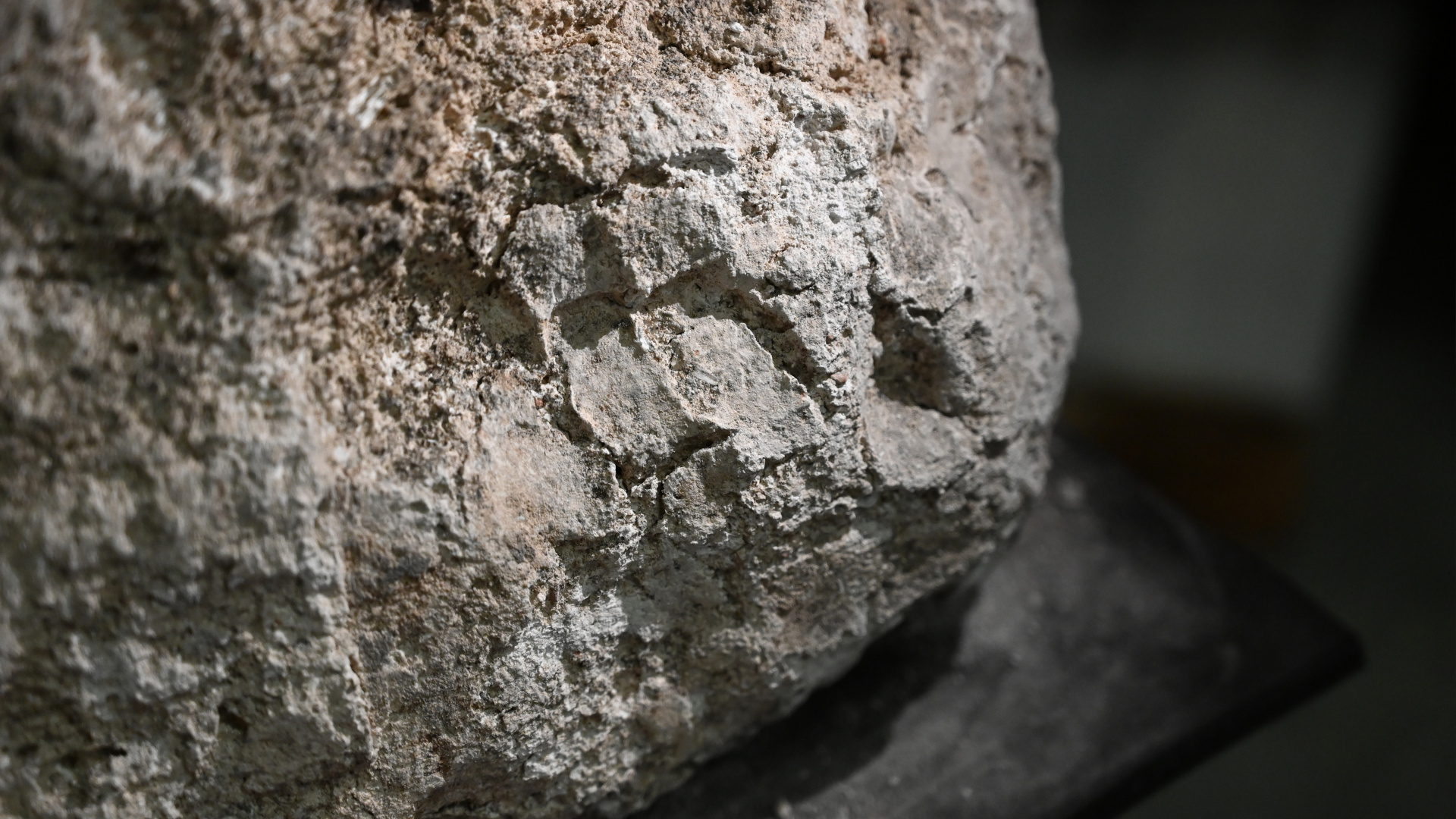
A 3D scan of the plaster reveals fingerprints (orange) and drag marks (yellow).

Carroll explained in a Dec. 10 blog post that the researchers had previously assumed that the liquid gypsum was heated to at least 300 degrees Fahrenheit (150 degrees Celsius) and poured onto the bodies. However, the presence of fingerprints means the plaster mixture was probably a soft paste that someone rubbed onto the body inside the coffin. The plaster extended so close to the coffin’s edges that no fingerprints were visible until the team removed the casing from the coffin.

Get the world’s most fascinating discoveries delivered straight to your inbox.

Fingerprints and handprints reveal that the Romans had close personal contact with the dead, Carroll said. “They are significant traces of human activity and are not otherwise known to persist on bodies in Roman funerary contexts,” she wrote in a blog post.

These traces may store additional clues about the person who buried the deceased, revealing, for example, whether a professional mortician or a family member was the last person to touch the deceased.

“We hope to extract any potential DNA remnants from the handprints for testing at the Francis Crick Institute in London,” Carroll said. Although it’s a long way off, “the best-case scenario is that we might be able to infer genetic sex, which would be a huge accomplishment!”

Editor’s note: This article was updated on Dec. 12 at 12:55 p.m. ET to correct the number of liquid plaster burials discovered to date to 70.

Roman Britain Quiz: What do you know about the Empire’s conquest of the British Isles?


Source link

#Biotechnology #ClimateScience #Health #Science #ScientificAdvances #ScientificResearch
Follow on Google News Follow on Flipboard
Share. Facebook Twitter Pinterest LinkedIn Tumblr Email Copy Link
Previous ArticleStudy finds killer whales work with dolphins to hunt salmon – but not everyone agrees
Next Article 1X has a contract to send humanoids from their “homeland” to factories and warehouses.
user
  • Website

Related Posts

7,500-year-old deer headdress discovered in Germany shows hunter-gatherers shared sacred objects and ideas with the region’s first farmers

February 5, 2026

How well can AI and humans work together? Scientists are looking to Dungeons & Dragons to find out.

February 5, 2026

Saltwater crocodiles crossed the Indian Ocean to the Seychelles before humans arrived and made them extinct.

February 5, 2026
Add A Comment
Leave A Reply Cancel Reply

Latest Posts

Asian State Assistance Group TGR-STA-1030 breaches 70 governments and infrastructure-related organizations

How printed electronics from Tampere Uni is building a sustainable future

How Samsung Knox prevents network security breaches

Puragen unveils PFAS treatment technology during UK ministerial visit

Trending Posts

Subscribe to News

Subscribe to our newsletter and never miss our latest news

Please enable JavaScript in your browser to complete this form.
Loading

Welcome to Fyself News, your go-to platform for the latest in tech, startups, inventions, sustainability, and fintech! We are a passionate team of enthusiasts committed to bringing you timely, insightful, and accurate information on the most pressing developments across these industries. Whether you’re an entrepreneur, investor, or just someone curious about the future of technology and innovation, Fyself News has something for you.

Castilla-La Mancha Ignites Innovation: fiveclmsummit Redefines Tech Future

Local Power, Health Innovation: Alcolea de Calatrava Boosts FiveCLM PoC with Community Engagement

The Future of Digital Twins in Healthcare: From Virtual Replicas to Personalized Medical Models

Human Digital Twins: The Next Tech Frontier Set to Transform Healthcare and Beyond

Facebook X (Twitter) Instagram Pinterest YouTube
  • Home
  • About Us
  • Advertise with Us
  • Contact Us
  • DMCA
  • Privacy Policy
  • Terms & Conditions
  • User-Submitted Posts
© 2026 news.fyself. Designed by by fyself.

Type above and press Enter to search. Press Esc to cancel.