
Retro, a photo sharing app for friends, lets you ‘time travel’ through your camera roll
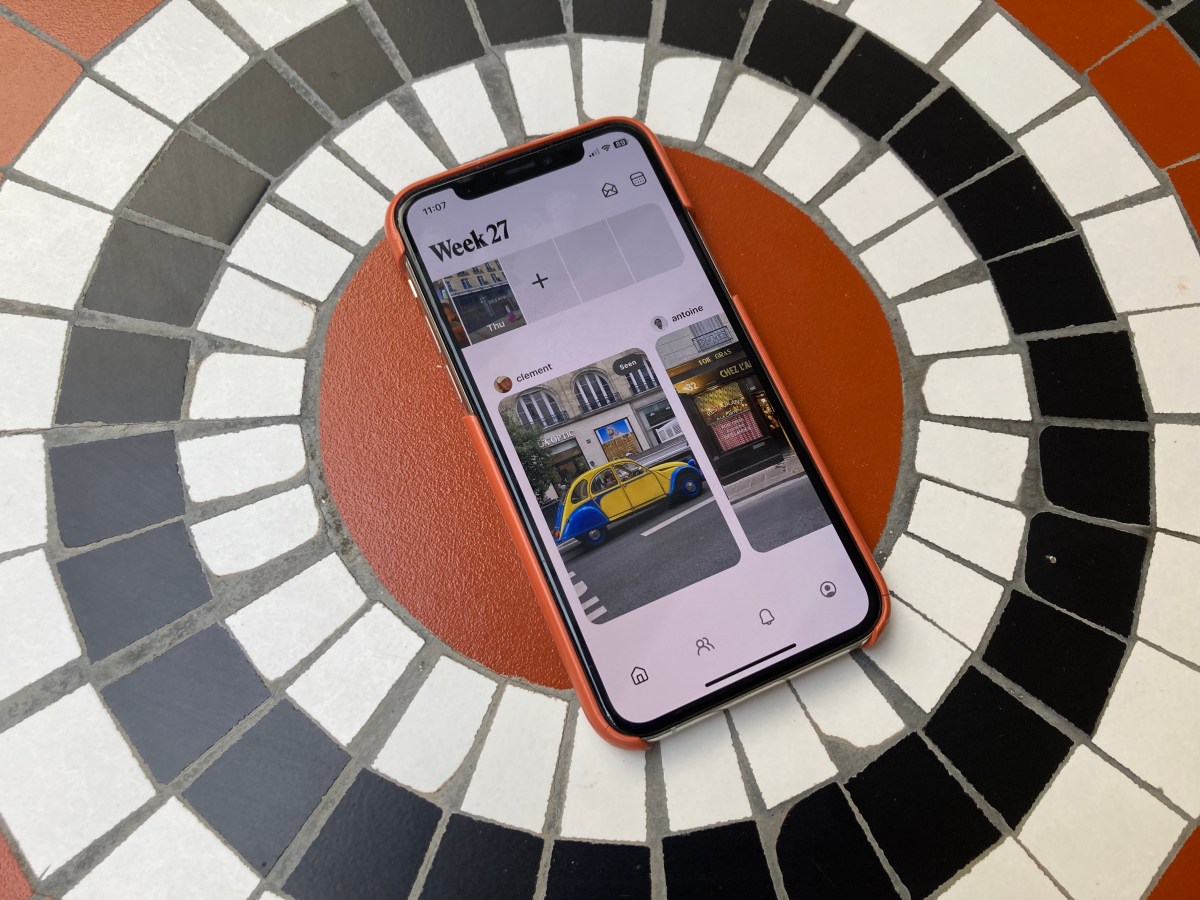
Retro, the friend-centric photo-sharing app with nearly 1 million users, is adding a new feature that lets you time-travel through old photo memories from your phone’s camera roll. The app currently offers a way to share photos of what happened during your week with a private group of friends and create shared albums, but this latest addition, dubbed “Rewind,” will keep your photos visible only to you unless you choose to share them with others.
Retro co-founder Nathan Sharp explains that the idea for Rewind was inspired by the popular features the app already offered.
Today, at the end of the column showcasing the photos your friends have shared that week, there’s a card you can tap to see a photo of yourself taken during the same week a year ago.
However, new Retro users did not have access to this option because they had not yet uploaded enough photos to the app to take advantage of the photo memory feature.

“As a new user, you don’t often have the opportunity to time-travel through your memories like this,” Sharp said. He spent more than six years at Meta, working on products like Instagram Stories and Facebook Dating, before leaving in 2022 to start his own photo-sharing startup with Retro CTO Ryan Olson.
“Another problem we’re seeing is that even though people are taking more photos than ever before, they’re actually taking fewer photos than they used to, so those photos just kind of disappear into thin air,” he added.
In addition to this, we are also seeing some backlash against the growing trend of AI-generated content and “for you” feed style algorithms.
“It has to be true, and it will be true, that as people participate more and more on these platforms, people will still want to see their friends more,” says Sharp. “The photos and videos you take need to find a place to reach their target audience.”

Almost half (45.7%) of Retro users engage with the app every day, and the rewind feature could further increase that engagement.
To try rewinding, you can launch it from the end of the row of shared photos, just beyond the “This Week” card, or from a prominent location like the tab in the center of the bottom navigation bar.
When you start it up, there’s a haptic response and old photos from your camera roll start cycling across the screen. These memories aren’t shared, but if you want to send them to a friend or post them, you can tap the share icon. You can also hide photos you don’t want to see (like photos of your ex) or save them to a random memory instead by tapping the “dice” icon.
The iPod-inspired dial clicks to recall your past, and you’ll feel a subtle vibration as each new memory is loaded. You can also turn the dial to move time forward or backward, and watch photos from past months or years flash by on the screen, pausing for photos you want to look at longer or share.

Press and hold the photo to see it uncropped. When you share a photo, a timestamp is added at the bottom so your friends know it’s not a new photo.
Screenshots will not be displayed in this photo archive, but other photos such as receipts and workplace whiteboards will be displayed as they can be interesting mementoes. (If you find a photo that you don’t want to save, delete it from the app and it will also be removed from your camera roll.)
Of course, the idea of reliving old photographic memories is not new.
In the past, a startup called Timehop popularized the idea of adding something more to your growing digital photo archive by allowing users to re-view old photos through their simple mobile app. Facebook then copied the idea of its “On This Day” feature, and photo hosting services like Google Photos and Apple Photos added their own Memories feature.
Still, Sharp doesn’t think these will be direct competitors to the Retro. For years, Facebook has been lowering the rankings of your friends’ content as your feed becomes filled with links, news, and ads. On the other hand, people tend to think of Apple and Google’s Photos apps as utilities for managing and storing photos, rather than as social apps like Retro.
Source link

