
EU signs groundbreaking agreement to tackle end-of-life vehicles
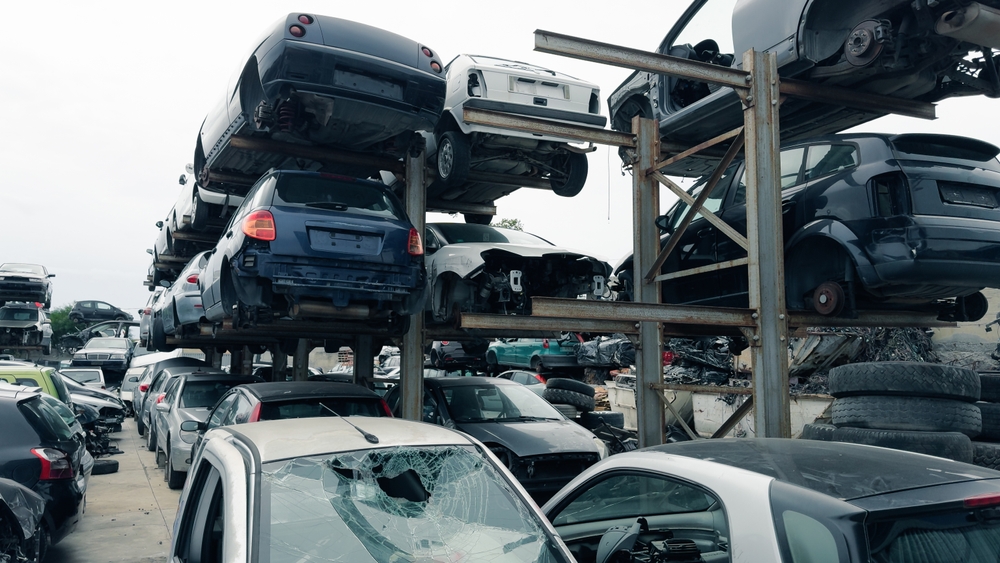
The European Union has taken a decisive step towards a more sustainable automotive sector, with the European Commission welcoming the interim agreement between the European Parliament and the Council on new regulations covering end-of-life vehicles.
The contract represents a major overhaul of how vehicles are designed, manufactured and treated at the end of their useful life, with far-reaching implications for resource efficiency, environmental protection and industrial resilience.
Stéphane Séjournet, Executive Vice President for Prosperity and Industrial Strategy, believes the new regulations will transform Europe’s automotive sector.
“The measures adopted today will help create a concrete business case for a Europe-wide recycling supply chain.
“We therefore welcome the swift completion of the co-determination process on end-of-life vehicle regulation. This is an important step towards strengthening Europe’s recycling industry.”
Serious problems for Europe’s auto sector
The automotive industry is one of Europe’s largest consumers of raw materials, relying heavily on steel, aluminium, copper and plastics. However, the EU continues to lose large amounts of these valuable resources every year.
An estimated 3 to 4 million vehicles each year effectively “disappear” after being deregistered, with authorities unable to track whether they were properly scrapped, exported, or illegally handled.
This lack of transparency has serious consequences. Poorly managed end-of-life vehicles result in pollution, loss of economic value, and missed opportunities to reuse critical materials.
A recent assessment of existing EU regulations concluded that the current framework is insufficient and that significant reforms are needed to support the transition to a circular economy in the automotive sector.
From proposal to political agreement
In response, the European Commission proposed new end-of-life vehicle regulations in July 2023. With the agreement reached, the proposal moves much closer to becoming law.
Once formally adopted, the regulation will replace outdated rules with a single harmonized framework that applies across the EU.
The new legislation is designed to work in parallel with key EU strategies such as the Critical Materials Act, the European Automotive Sector Industry Action Plan, the European Steel and Metals Action Plan and the RESourceEU initiative.
It also foresees future policies, such as upcoming circular economy legislation, ensuring long-term coherence in Europe’s sustainability agenda.
Clear rules on what counts as a used vehicle
A central feature of this regulation is that it introduces clear and proportionate criteria for determining when a vehicle is classified as a used vehicle.
In principle, cars that are completely beyond repair will be subject to the new rules, which will ensure that they are dismantled and disposed of in a licensed facility. However, vehicles of historical interest remain excluded and are not affected by the regulations.
This clarification is expected to increase enforcement, reduce illegal exports, and close loopholes that have allowed end-of-life vehicles to escape proper disposal.
Designing cars for recycling and reuse
This regulation focuses on vehicle design. Manufacturers are required to ensure that vehicles are easy to disassemble and components can be removed, replaced, and recycled efficiently.
Detailed instructions for repair and end-of-life treatment should be provided to support both professional recyclers and the repair market.
For the first time in Europe, mandatory targets for recycled plastic content will be introduced. From 2036 onwards, at least 25% of the plastic used in cars must come from recycled sources, with 20% of that proportion specifically coming from end-of-life vehicles.
These requirements apply equally to cars produced within the EU and cars imported from abroad and help create a level playing field.
Environmental benefits and supply chain resilience
There are significant environmental and economic benefits.
The European Commission estimates that the new measures will enable the recycling and reuse of hundreds of tonnes of rare earth materials, as well as 5-6 million tonnes of steel, 1-2 million tonnes of aluminum and up to 300,000 tonnes of copper per year. At least 30% of the plastic recovered from end-of-life vehicles must be recycled.
By keeping these materials within Europe, this regulation will reduce dependence on imports and strengthen resilience to disruptions in global supply chains, while supporting a competitive and sustainable automotive industry.
what happens next
The agreement will now proceed to formal adoption by the European Parliament and the European Council. The regulation will come into force 20 days after it is published in the EU’s Official Journal, ushering in a new era in end-of-life vehicle management across Europe.
Source link

