

Close Menu
  • Home
  • Identity
  • Inventions
  • Future
  • Science
  • Startups
  • Spanish
What's Hot

Waymo temporarily suspends service in San Francisco as robotaxis stall due to power outage

Iran’s Infy APT resurfaces with new malware activity after years of silence

Google and Apple reportedly warned employees with visas to avoid traveling abroad

Facebook X (Twitter) Instagram
  • Home
  • About Us
  • Advertise with Us
  • Contact Us
  • DMCA
  • Privacy Policy
  • Terms & Conditions
  • User-Submitted Posts
Facebook X (Twitter) Instagram
Fyself News
  • Home
  • Identity
  • Inventions
  • Future
  • Science
  • Startups
  • Spanish
Fyself News
Home » Deep snow turns Yellowstone Lake into a vast white void — Earth seen from space
Science

Deep snow turns Yellowstone Lake into a vast white void — Earth seen from space

userBy userDecember 16, 2025No Comments3 Mins Read
Share Facebook Twitter Pinterest Telegram LinkedIn Tumblr Email Copy Link
Follow Us
Google News Flipboard
Share
Facebook Twitter LinkedIn Pinterest Email Copy Link

simple facts

Where is it? Yellowstone National Park, Wyoming [44.46284445, -110.3628428]

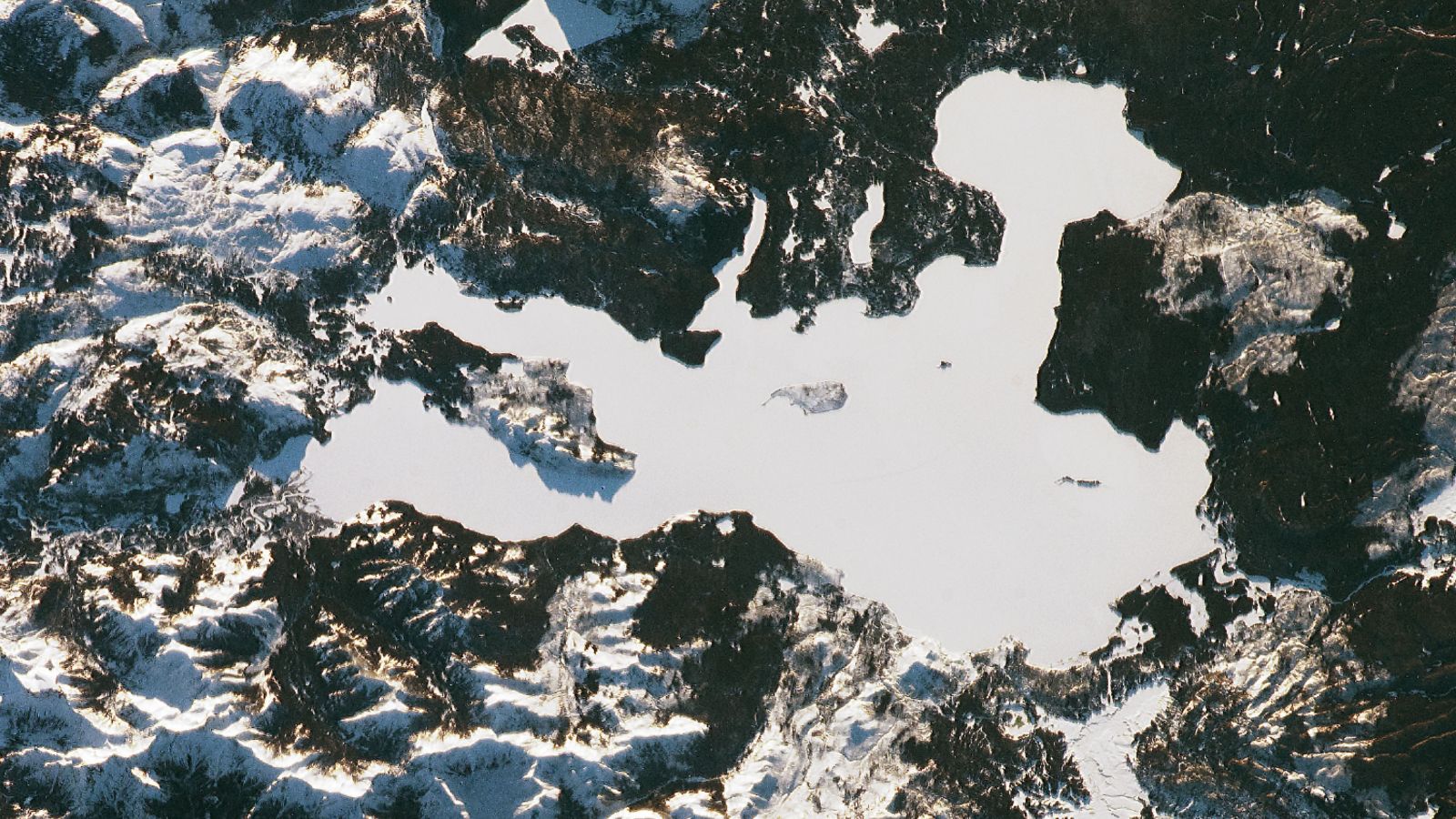
What is in the photo? A blanket of white snow covers Yellowstone Lake

Who took the photo? An unknown astronaut aboard the International Space Station (ISS)

When was it taken? January 26, 2022

This eye-catching astronaut photo shows Yellowstone’s eponymous lake covered in thick snow, making it look like a colorless, featureless void in the surrounding landscape. But beneath this subzero empty space are some of the most active and hottest hydrothermal vents anywhere on Earth.

According to the National Park Service (NPS), Yellowstone Lake is the largest body of water within Yellowstone National Park and the largest high-altitude lake in North America, located 7,733 feet (2,357 meters) above sea level. It is approximately 20 miles (32 km) wide at its widest point and up to 410 feet (125 m) deep.

The lake freezes each winter around late December to early January, with an ice sheet ranging from a few inches to about 2 feet (0.6 m) thick. But the snow on top of this ice could reach a depth of 1.1 meters by March, according to NASA’s Earth Observatory. The lake is typically free of snow and ice by late May to early June.

you may like

The thick snowpack means Yellowstone Lake is remarkably resilient to human-induced climate change, maintaining surface ice thickness despite rising atmospheric temperatures. This makes this lake a major outlier among highland lakes around the world.

The astronaut’s photo shows one deep snowdrift, largely undisturbed except for a few islands, the largest of which is Stevenson Island.
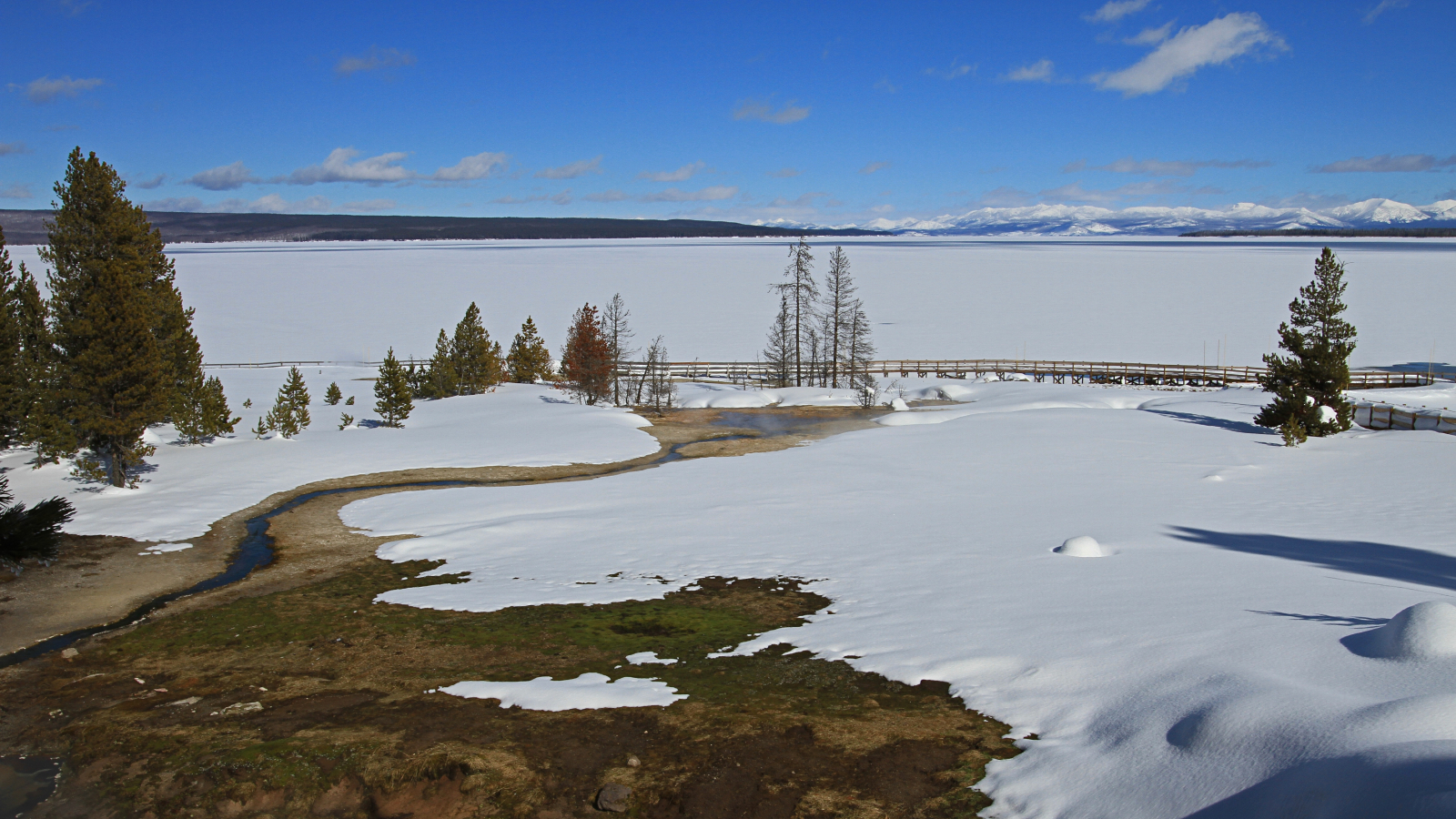
Photo taken from the shore of Yellowstone Lake showing snow-covered bodies of water

The snow that covers Yellowstone Lake can reach up to 3.5 feet (1.1 m) deep. This photo of the lake was taken in February 2014. (Image credit: Smith Collection/Gado/Getty Images)

During the winter, Yellowstone Lake’s surface may seem cold and lifeless, but the water below remains surprisingly calm thanks to a series of hydrothermal vents spread across the lake bed. This allows aquatic animals, including the cutthroat trout (Oncorhynchus clarkei) population in the largest lake of its kind in North America, to survive for months under the ice, according to the NPS.

One of the spouts, located right next to Stevenson Island, releases water at an astonishing 345 degrees Fahrenheit (174 degrees Celsius), hotter than Old Faithful and all other geysers and hot springs in Yellowstone National Park.

Get the world’s most fascinating discoveries delivered straight to your inbox.

“These hot springs are much hotter than any surface hot springs in Yellowstone, because the weight of the overlying lake water acts like a pressure cooker lid, allowing them to reach temperatures above boiling,” U.S. Geological Survey representatives wrote in an article about the lake’s vents. “These are the hottest hydrothermal vents measured in lakes around the world.”

The vent is powered by a huge mass of magma that lies about 2.6 miles (3.8 km) underground in Yellowstone National Park and contains an astonishing amount of lava. This mass of magma acts like a giant volcanic bottle cap that will one day explode, causing a “supervolcanic” eruption that can be felt across the continent.

Yellowstone Lake was formed shortly after a similar eruption 640,000 years ago, which carved out the 1,500 square miles (3,900 square kilometers) of caldera on which the lake now stands. About 130,000 years ago, a small eruption then chipped away at a doorknob-shaped handle in a lake called West Thumb (visible near the top of the astronaut photo).

For more amazing satellite photos and astronaut images, check out Earth from the Space Archives.


Source link

#Biotechnology #ClimateScience #Health #Science #ScientificAdvances #ScientificResearch
Follow on Google News Follow on Flipboard
Share. Facebook Twitter Pinterest LinkedIn Tumblr Email Copy Link
Previous ArticlePFAS zero fire extinguishing technology
Next Article React2Shell vulnerability is actively exploited to deploy Linux backdoors
user
  • Website

Related Posts

This week’s science news: Japan’s laser weapons test bids farewell to Comet 3I/ATLAS, AI solves ‘impossible’ math problem

December 20, 2025

Interstellar comet 3I/ATLAS is rapidly moving away from us. Can we ‘intercept’ it before it leaves us forever?

December 19, 2025

AI is solving ‘impossible’ math problems. Can it best the world’s top mathematicians?

December 19, 2025
Add A Comment
Leave A Reply Cancel Reply

Latest Posts

Waymo temporarily suspends service in San Francisco as robotaxis stall due to power outage

Iran’s Infy APT resurfaces with new malware activity after years of silence

Google and Apple reportedly warned employees with visas to avoid traveling abroad

‘It felt so wrong’: Colin Angle on iRobot, the FTC, and the Amazon deal that never was

Trending Posts

Subscribe to News

Subscribe to our newsletter and never miss our latest news

Please enable JavaScript in your browser to complete this form.
Loading

Welcome to Fyself News, your go-to platform for the latest in tech, startups, inventions, sustainability, and fintech! We are a passionate team of enthusiasts committed to bringing you timely, insightful, and accurate information on the most pressing developments across these industries. Whether you’re an entrepreneur, investor, or just someone curious about the future of technology and innovation, Fyself News has something for you.

Castilla-La Mancha Ignites Innovation: fiveclmsummit Redefines Tech Future

Local Power, Health Innovation: Alcolea de Calatrava Boosts FiveCLM PoC with Community Engagement

The Future of Digital Twins in Healthcare: From Virtual Replicas to Personalized Medical Models

Human Digital Twins: The Next Tech Frontier Set to Transform Healthcare and Beyond

Facebook X (Twitter) Instagram Pinterest YouTube
  • Home
  • About Us
  • Advertise with Us
  • Contact Us
  • DMCA
  • Privacy Policy
  • Terms & Conditions
  • User-Submitted Posts
© 2025 news.fyself. Designed by by fyself.

Type above and press Enter to search. Press Esc to cancel.