

Close Menu
  • Home
  • Identity
  • Inventions
  • Future
  • Science
  • Startups
  • Spanish
What's Hot

Elon Musk is serious about orbiting data centers

NASA astronauts can now bring cell phones on missions to the moon

OpenAI launches a way for enterprises to build and manage AI agents

Facebook X (Twitter) Instagram
  • Home
  • About Us
  • Advertise with Us
  • Contact Us
  • DMCA
  • Privacy Policy
  • Terms & Conditions
  • User-Submitted Posts
Facebook X (Twitter) Instagram
Fyself News
  • Home
  • Identity
  • Inventions
  • Future
  • Science
  • Startups
  • Spanish
Fyself News
Home » 1,400 years ago, Nubians tattooed their young children. Archaeologists are trying to figure out why.
Science

1,400 years ago, Nubians tattooed their young children. Archaeologists are trying to figure out why.

userBy userDecember 19, 2025No Comments4 Mins Read
Share Facebook Twitter Pinterest Telegram LinkedIn Tumblr Email Copy Link
Follow Us
Google News Flipboard
Share
Facebook Twitter LinkedIn Pinterest Email Copy Link

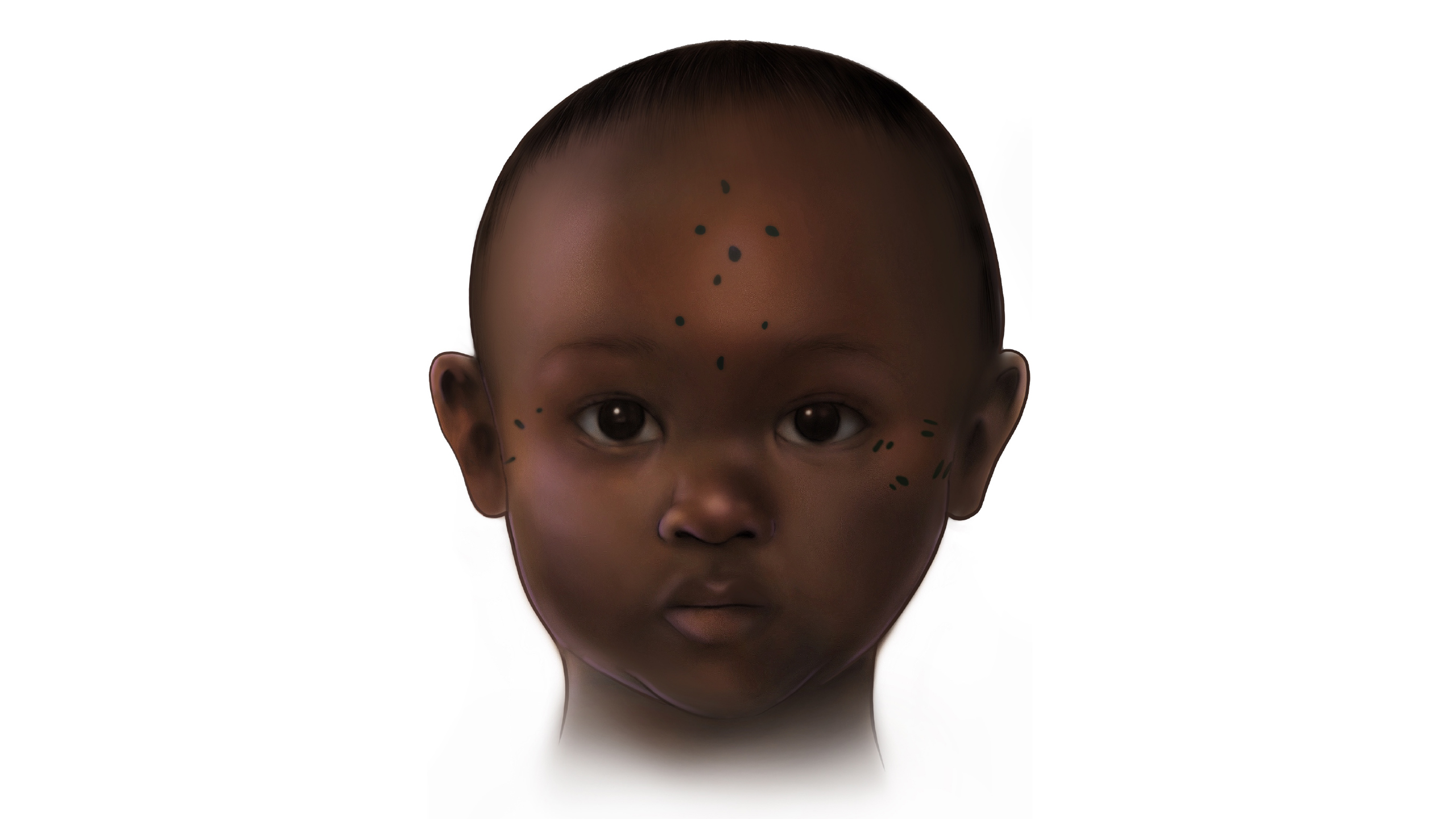
Archaeologists discovered mummified bodies in Sudan and discovered that children as young as 18 months old had their faces tattooed 1,400 years ago in the Nile Valley region. Furthermore, this practice coincided with the introduction of Christianity to the area known as Nubia.

“If the tattoo was a symbol of the person’s Christian beliefs, it may have been important for parents to create a permanent way to mark their children as Christian,” says study lead author Anne Austin, an archaeologist at the University of Missouri in St. Louis. Lewis told LiveScience.

Austin and colleagues examined 1,048 mummified human remains excavated from three sites in modern-day Sudan and documented evidence of tattoos on 27 people of all ages and genders. They published their results in the academic journal PNAS on December 15th.

you may like

Tattoos are a long-standing custom of mankind. Some of the earliest archaeological evidence of tattoos is found in Ötzi the Iceman, whose well-preserved 5,300-year-old remains found in the Alps had 61 tattoos. Other early tattoos have been discovered on a 5,000-year-old Egyptian mummy, a 2,300-year-old Siberian mummy, and a 1,200-year-old Peruvian mummy. However, all of these examples were adult tattoos. It is much rarer for children to be discovered with tattoos.

In a new study, researchers have identified widespread examples of tattooing at the Christian-era site of Kulbnarti in northern Sudan. The two cemeteries at this site were in use from 650 to 1000 AD. Using a microscope equipped with infrared illumination that can penetrate the skin to reveal tattoos that are nearly invisible to the naked eye, researchers identified 17 people with clear tattoos and six with possible faded tattoos.

While studying exactly where on the bodies the people buried at Kulbunarti had their tattoos, researchers noticed an unusual pattern. Two had tattoos on their backs, and the rest had patterns on their foreheads, temples, cheeks, and eyebrows. Facial tattoos are already relatively rare in the archaeological record, but researchers have discovered an even rarer practice: tattooing on children.

Most of the tattooed Kulbunarti people were children under the age of 11, and the youngest person with a clear tattoo was 18 months old, the researchers wrote in their study. The three-year-old girl was also found to have one tattoo directly on top of another, suggesting that young children were being repeatedly tattooed.
Get the world’s most fascinating discoveries delivered straight to your inbox.

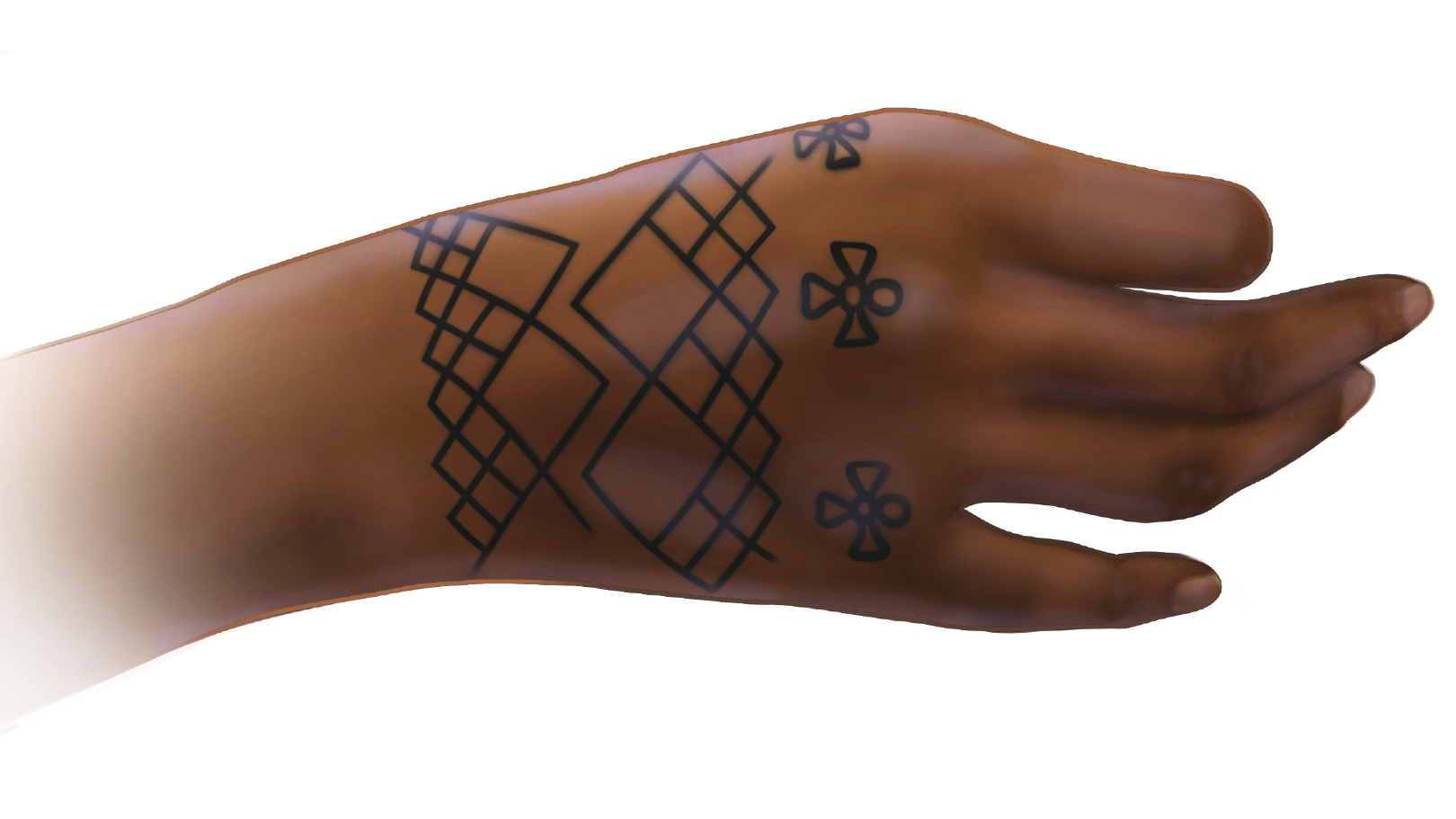
Artist's reconstruction of a dark-skinned right hand with geometric tattoos

An artist’s reconstruction of a geometric tattoo on the right hand of a woman buried at the Semna South site. (Image credit: Mary Nguyen/UMSL)

The tattoo consisted of a collection of dots and dashed lines. Austin said the most common design was a four-dot tattoo on the forehead in a diamond-shaped pattern, which may represent a Christian cross. “If tattoos were used as a sign of Christianity in Krubunarti, it is entirely plausible that they were part of a form of baptism,” she says.

But researchers are also investigating other theories about the extensive tattooing of children found in cemeteries.

“If parents tattooed their children for protection or medical reasons, perhaps the high rates of tattooing among young children may indicate that the Kurbunarti population faces a disproportionate number of health problems,” Austin said.

you may like

Forehead tattoos may represent an attempt by parents to protect their children from the headaches and high fevers commonly experienced during malaria outbreaks, which have a long history in the Nile Valley, the study said.

The researchers also found that the shape of the tattoo marks suggests that Nubians likely used knives rather than needles to get their tattoos.

Austin says people shouldn’t be too quick to judge people’s tattoos in the past, even if they were merely decorative.

“The form of tattooing in Kulbunarti may have been done quite early, but it doesn’t seem to be any more extreme than piercing the ears of infants or circumcising newborns,” she says.

Mummy Quiz: Can you solve the mysteries of ancient Egypt?


Source link

#Biotechnology #ClimateScience #Health #Science #ScientificAdvances #ScientificResearch
Follow on Google News Follow on Flipboard
Share. Facebook Twitter Pinterest LinkedIn Tumblr Email Copy Link
Previous ArticleStargazing during the Christmas holidays: 10 sights you’ll want to look up to
Next Article OpenAI reportedly looking to raise $100 billion at $830 billion valuation
user
  • Website

Related Posts

How well can AI and humans work together? Scientists are looking to Dungeons & Dragons to find out.

February 5, 2026

Saltwater crocodiles crossed the Indian Ocean to the Seychelles before humans arrived and made them extinct.

February 5, 2026

Total lunar eclipse on March 3rd: When and where can you see the “blood moon” from the United States?

February 5, 2026
Add A Comment
Leave A Reply Cancel Reply

Latest Posts

Elon Musk is serious about orbiting data centers

NASA astronauts can now bring cell phones on missions to the moon

OpenAI launches a way for enterprises to build and manage AI agents

Anthropic releases Opus 4.6 with new “Agent Teams”

Trending Posts

Subscribe to News

Subscribe to our newsletter and never miss our latest news

Please enable JavaScript in your browser to complete this form.
Loading

Welcome to Fyself News, your go-to platform for the latest in tech, startups, inventions, sustainability, and fintech! We are a passionate team of enthusiasts committed to bringing you timely, insightful, and accurate information on the most pressing developments across these industries. Whether you’re an entrepreneur, investor, or just someone curious about the future of technology and innovation, Fyself News has something for you.

Castilla-La Mancha Ignites Innovation: fiveclmsummit Redefines Tech Future

Local Power, Health Innovation: Alcolea de Calatrava Boosts FiveCLM PoC with Community Engagement

The Future of Digital Twins in Healthcare: From Virtual Replicas to Personalized Medical Models

Human Digital Twins: The Next Tech Frontier Set to Transform Healthcare and Beyond

Facebook X (Twitter) Instagram Pinterest YouTube
  • Home
  • About Us
  • Advertise with Us
  • Contact Us
  • DMCA
  • Privacy Policy
  • Terms & Conditions
  • User-Submitted Posts
© 2026 news.fyself. Designed by by fyself.

Type above and press Enter to search. Press Esc to cancel.