


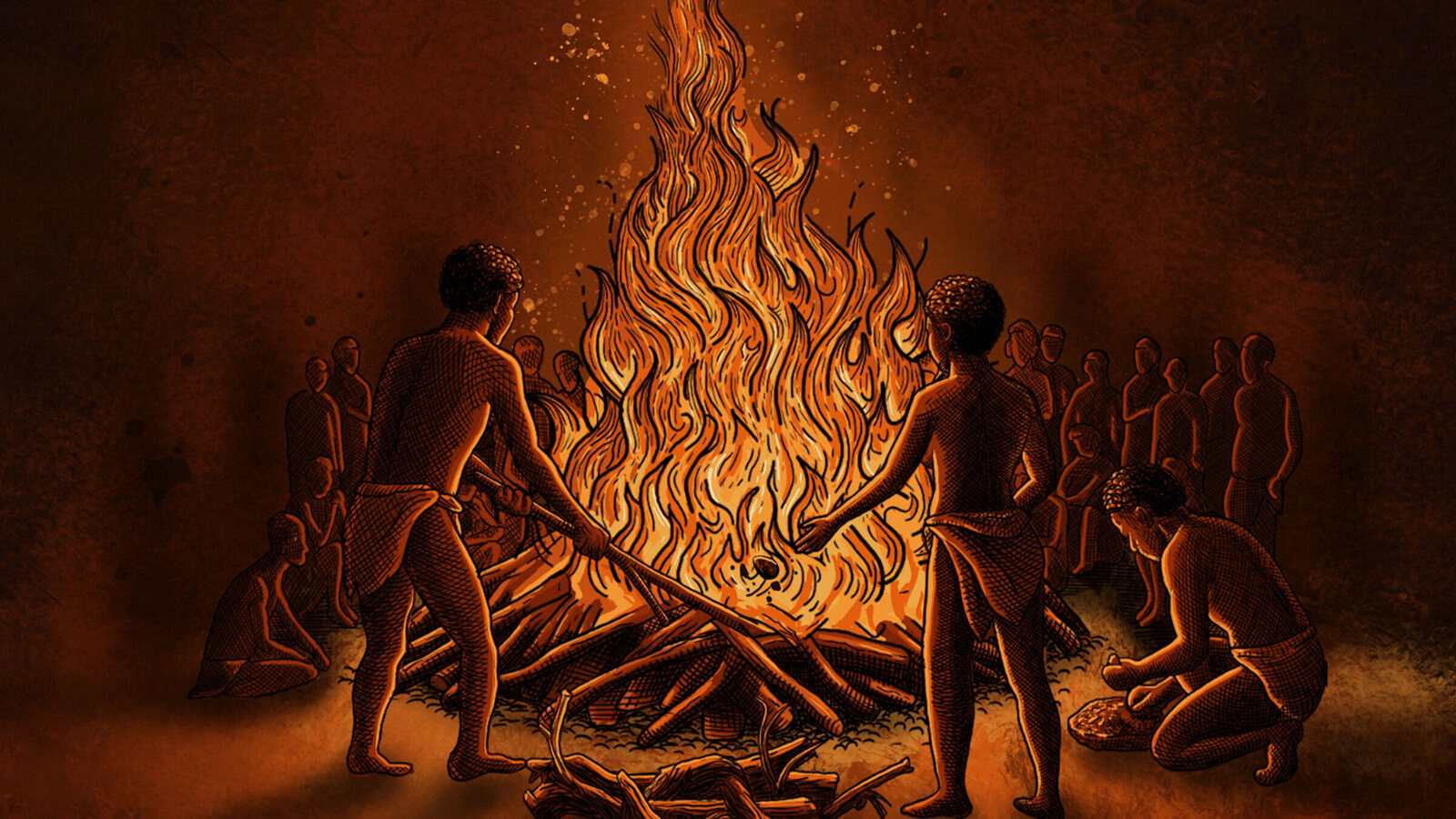
The 9,500-year-old remains of a woman in Malawi set a new record and is Africa’s oldest evidence of intentional cremation, as well as the oldest known cremation of an adult still ‘in situ’, or in its original location, a new study finds.
The crematorium is located in a hunter-gatherer cemetery at the foot of Mount Hora in Malawi, and the burials are thought to date from 8,000 to 16,000 years ago. This crematorium is the only crematorium known at this location. Analysis of 170 bone fragments from the cremated person revealed that she was less than 5 feet (150 centimeters) tall and died between the ages of 18 and 60. The team also found stone tools that may have been grave goods among the cremation remains.
you may like
The findings, published January 1 in the journal Science Advances, said some of the bones had cuts, indicating that parts of the deceased’s body had been ripped off or separated. Study lead author Jessica Cerezo-Roman, an anthropologist at the University of Oklahoma, said in a statement that these cuts and skull removals may have been associated with ancestral mourning, social memory and respect.
The researchers also concluded that the woman was likely cremated just a few days after her death, before her body began to decompose.
The oldest evidence of in-situ cremation found at an archaeological site in Alaska is that of a 3-year-old child who was cremated about 11,500 years ago. Before the latest discovery, Africa’s oldest definitive cremation was dated to about 3,500 years ago in Kenya and was associated with Neolithic nomads. The earliest evidence of regular cremation is much older, dating back to around 40,000 years ago at Lake Mungo in Australia, but the bodies were not completely cremated.
“Cremation is extremely rare among ancient and modern hunter-gatherers, at least in part because it requires a large amount of labor, time, and fuel to fragment the remains and turn them into calcined bones and ashes,” Cerezo Roman explained.
Cremation in Malawi is thought to have required at least 30 kilograms of wood and grass, suggesting a collective effort. The study also found that people were constantly adding fuel to the firewood to maintain high temperatures, which could have exceeded 930 degrees Celsius (500 degrees Celsius).
“This was an event so spectacular that we need to rethink how we view collective labor and ritual in ancient hunter-gatherer societies,” study co-author Jessica Thompson, assistant professor of anthropology at Yale University, said in a statement.
Researchers identified evidence of a large fire at the site 700 years before and 500 years after the cremation. This evidence suggests that the crematorium’s location persisted as an important site, even though no one else was cremated there, the researchers said.
The question that remains is why only women were cremated on site. “There must have been something about her that deserved special treatment,” Thompson said.