

Close Menu
  • Home
  • Identity
  • Inventions
  • Future
  • Science
  • Startups
  • Spanish
What's Hot

Consumer watchdog warns about Google’s AI agent shopping protocols — Google says she’s wrong

Ring founder details camera company’s ‘intelligent assistant’ era

Doctors think AI can play a role in medicine, but maybe not as chatbots

Facebook X (Twitter) Instagram
  • Home
  • About Us
  • Advertise with Us
  • Contact Us
  • DMCA
  • Privacy Policy
  • Terms & Conditions
  • User-Submitted Posts
Facebook X (Twitter) Instagram
Fyself News
  • Home
  • Identity
  • Inventions
  • Future
  • Science
  • Startups
  • Spanish
Fyself News
Home » Greenland’s giant ice dome disappeared 7,000 years ago – and is melting at today’s temperatures
Science

Greenland’s giant ice dome disappeared 7,000 years ago – and is melting at today’s temperatures

userBy userJanuary 7, 2026No Comments4 Mins Read
Share Facebook Twitter Pinterest Telegram LinkedIn Tumblr Email Copy Link
Follow Us
Google News Flipboard
Share
Facebook Twitter LinkedIn Pinterest Email Copy Link

Parts of Greenland’s ice sheet completely melted about 7,000 years ago at temperatures close to those expected by the end of this century, a new study shows.

Prudhoe Dome, a 1,640-foot-thick (500-meter) ice cap that currently covers 965 square miles (2,500 square kilometers) of northwestern Greenland, melted during warm temperatures during the early Holocene, exposing the sediments beneath.

With similar temperatures predicted by the end of this century, significant ice loss is likely over time. Currently, the Greenland ice sheet is the largest contributor to sea level rise, and if all the ice melted, global average sea levels would rise by 24 feet (7.3 meters).

you may like

“It’s truly humbling to see nothing but ice on all sides, and to think that that ice will disappear again in the recent geological past and future,” lead author Caleb Wolcott George, a geologist at the University of Kentucky, said in a statement.

After the last ice age ended about 11,700 years ago, temperatures in Greenland rose above current averages and widespread ice melted. However, much of the evidence for Holocene ice extent, or lack thereof, is buried beneath today’s existing ice, making it difficult to determine the impact of climate change on ice sheet extent.
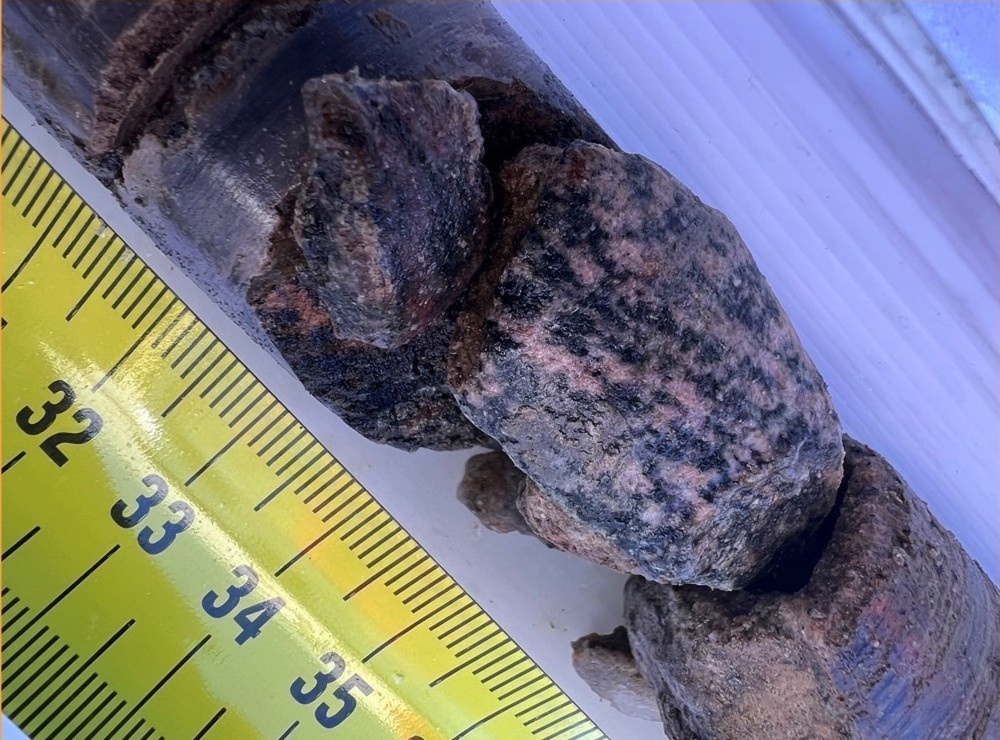
A core of rock and sediment was pulled from 300 feet beneath the Greenland Ice Sheet near the edge of Prudhoe Dome.

Bedrock cores reveal that Prudhoe Dome completely melted about 7,000 years ago. (Image credit: Jason Briner/University at Buffalo)

In a new study published Monday (January 5) in the journal Nature, scientists excavated Prudhoe Dome to collect sediment from beneath the ice sheet. They then used infrared light to measure how far the sediment was buried beneath the dome without exposure to sunlight.

The researchers found that this deposit last saw the sun about 7,100 years ago. This means that the ice must have completely melted at that point for the dust and rocks underneath to be exposed. Chemical signatures on the icicles suggest that no ice remained from the last Ice Age, and that the dome completely melted and reformed in the years that followed.

Get the world’s most fascinating discoveries delivered straight to your inbox.

Summer temperatures during the early and mid-Holocene were 5.4 to 10.8 degrees Fahrenheit (3 to 6 degrees Celsius) warmer than today. Major climate models, such as CMIP6, predict that summer temperatures could rise to similar values ​​by 2100. That warming could have a major impact on Greenland’s ice sheet, the researchers said in the study.

However, it is not yet clear how long such high temperatures had to be maintained before the ice on Prudhoe Dome completely melted. Limiting the amount of future warming could help limit ice sheet melting, the researchers wrote.
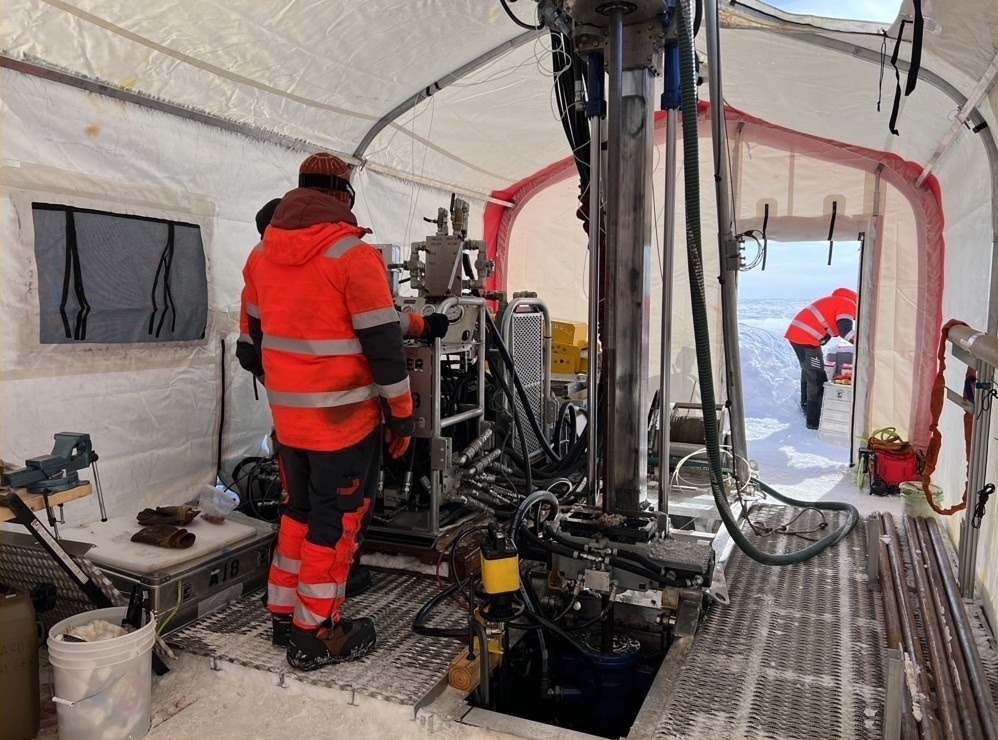
A photo of a drill used to extract rock cores from underground.

The drill extended more than 1,600 feet into the ice to reach the bedrock below. (Image credit: Jason Briner/University at Buffalo)

The early Holocene was “an era known for its climate stability, when humans first developed agricultural practices and began the march toward civilization. So if natural, mild climate changes during this period continued to melt the Prudhoe Dome and potentially cause it to recede for thousands of years, it may only be a matter of time before it begins to peel away again from today’s anthropogenic climate changes,” said study co-author Jason Breiner, a geologist and paleoclimatologist at the University at Buffalo. That statement.

Additional ice cores taken from other parts of Greenland will help map how much the ice sheet retreated during the Holocene warming period, potentially providing better insight into how it will respond in the future and how sea levels may rise as a result. “We have very reliable numerical models that can predict melt rates, but we also need actual observational data points that can tell us without a doubt that X amount of warming in the past has led to X amount of ice loss,” Briner said.

Study co-author Jorg Schäfer, a research professor at Columbia University’s Lamont-Doherty Earth Observatory, added that the findings could help show which parts of the Greenland ice sheet are most vulnerable. This is extremely important in predicting local sea level rise. “This new field of science is a game changer in providing this information through direct observation and predicting ice melt,” he said in a statement.


Source link

#Biotechnology #ClimateScience #Health #Science #ScientificAdvances #ScientificResearch
Follow on Google News Follow on Flipboard
Share. Facebook Twitter Pinterest LinkedIn Tumblr Email Copy Link
Previous ArticleOne of Siberia’s last shamans was an 18th-century woman whose parents were related, a DNA study reveals
Next Article The 9,500-year-old crematorium of a hunter-gatherer woman is the oldest of its kind in the world
user
  • Website

Related Posts

Ethereal ice structures swirl next to Chicago during extreme cold waves accelerated by the polar vortex — Earth seen from space

January 13, 2026

DNA from ancient viral infections aids embryo development, mouse study finds

January 12, 2026

Metal compound identified as potential new antibiotic thanks to robot performing ‘click chemistry’

January 12, 2026
Add A Comment
Leave A Reply Cancel Reply

Latest Posts

Consumer watchdog warns about Google’s AI agent shopping protocols — Google says she’s wrong

Ring founder details camera company’s ‘intelligent assistant’ era

Doctors think AI can play a role in medicine, but maybe not as chatbots

Long-running web skimming campaign steals credit cards from online checkout pages

Trending Posts

Subscribe to News

Subscribe to our newsletter and never miss our latest news

Please enable JavaScript in your browser to complete this form.
Loading

Welcome to Fyself News, your go-to platform for the latest in tech, startups, inventions, sustainability, and fintech! We are a passionate team of enthusiasts committed to bringing you timely, insightful, and accurate information on the most pressing developments across these industries. Whether you’re an entrepreneur, investor, or just someone curious about the future of technology and innovation, Fyself News has something for you.

Castilla-La Mancha Ignites Innovation: fiveclmsummit Redefines Tech Future

Local Power, Health Innovation: Alcolea de Calatrava Boosts FiveCLM PoC with Community Engagement

The Future of Digital Twins in Healthcare: From Virtual Replicas to Personalized Medical Models

Human Digital Twins: The Next Tech Frontier Set to Transform Healthcare and Beyond

Facebook X (Twitter) Instagram Pinterest YouTube
  • Home
  • About Us
  • Advertise with Us
  • Contact Us
  • DMCA
  • Privacy Policy
  • Terms & Conditions
  • User-Submitted Posts
© 2026 news.fyself. Designed by by fyself.

Type above and press Enter to search. Press Esc to cancel.