
simple facts
What it is: IRAS 23077+6707, the largest planet-forming disk ever observed
Location: Cepheus constellation, 978 light years away
Share date: December 23, 2026
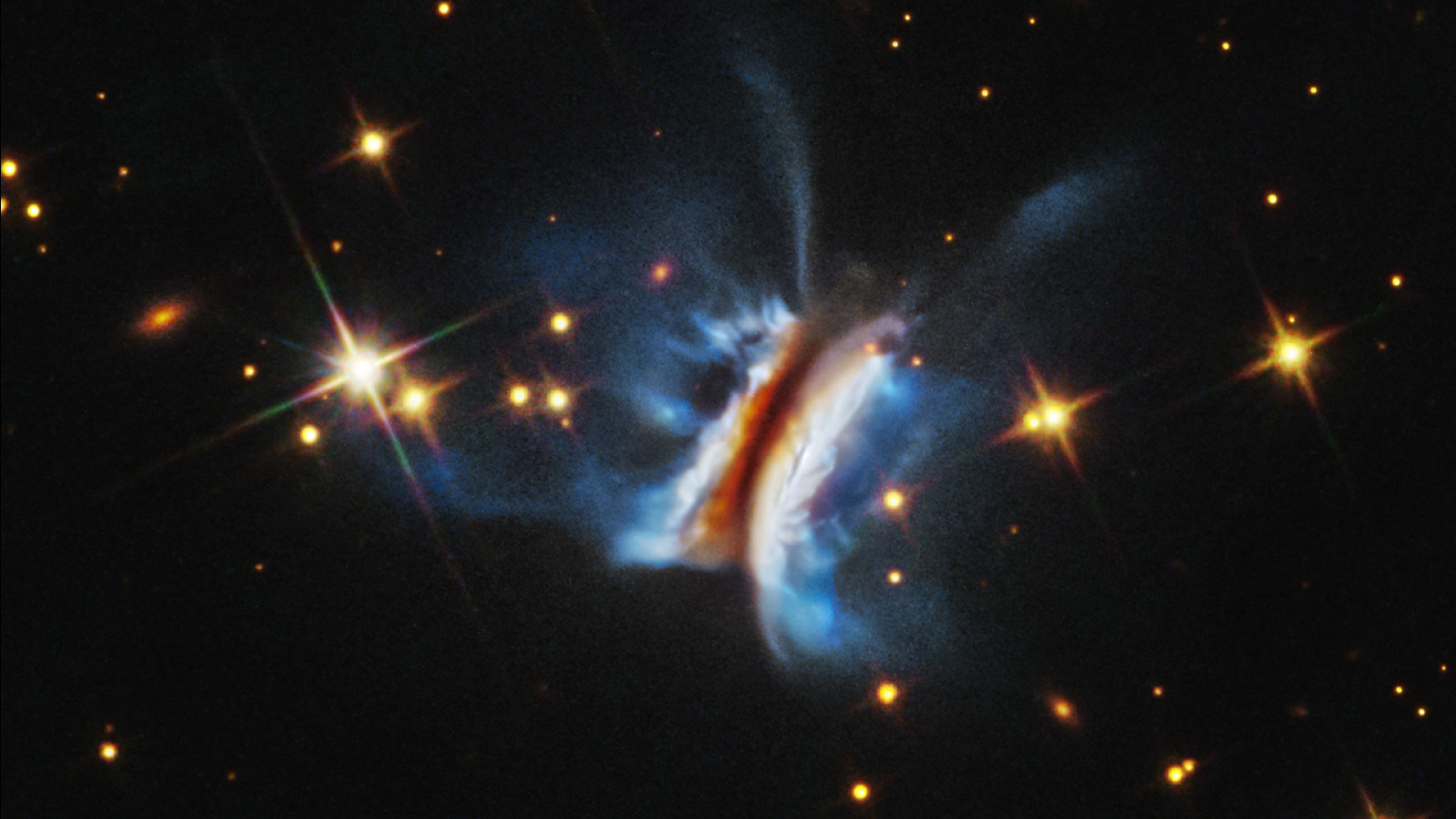
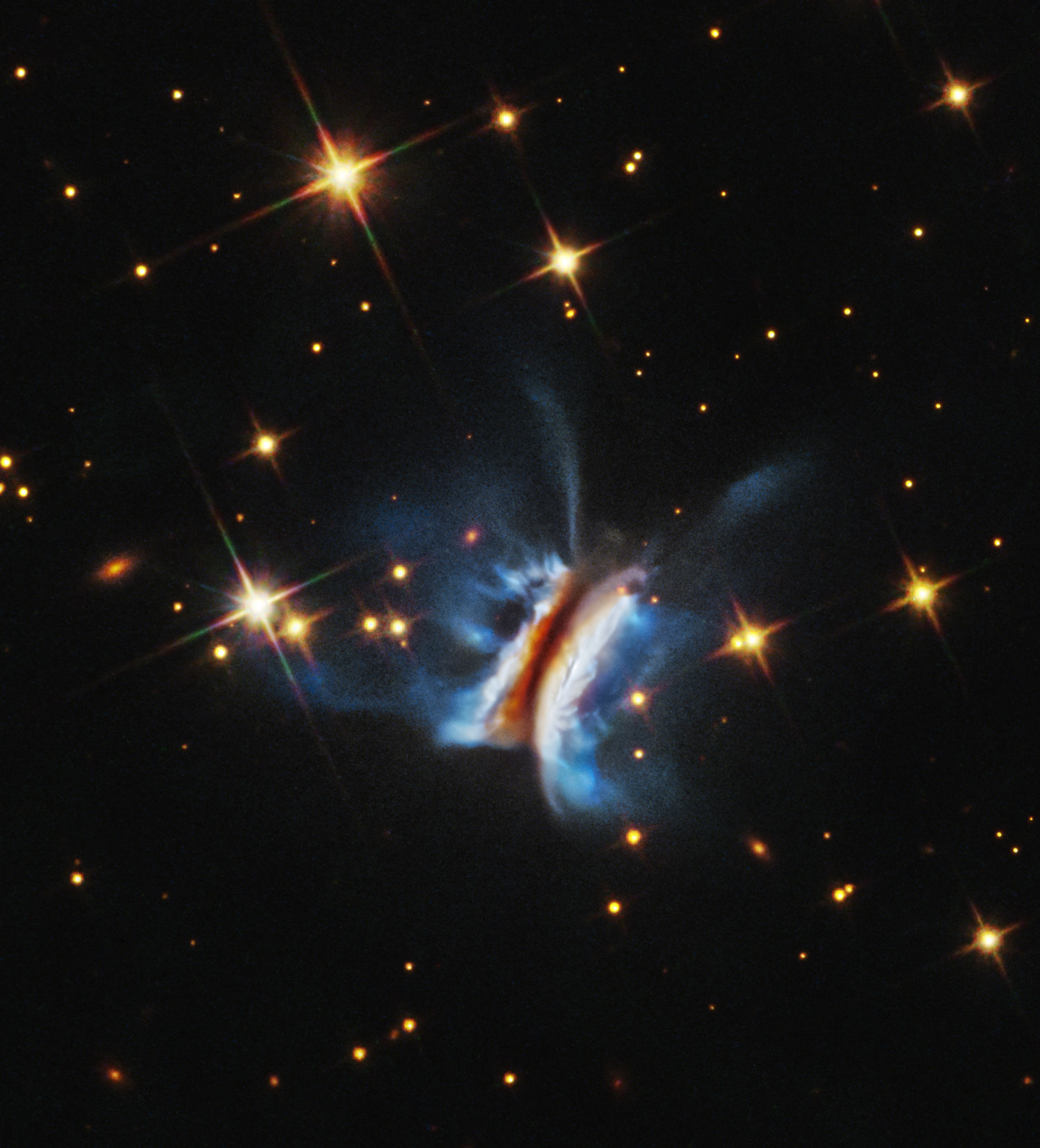
Gas- and dust-rich protoplanetary disks are where planets (rocky worlds like Earth and gas giants like Jupiter) form around young stars. Theoretically, there could be a vast planetary system in Dracula’s Chibito. Its name refers both to its appearance and to its discoverer, who is from Transylvania, Romania (home of the fictional Dracula), and Uruguay. Uruguay’s national dish is chivito, a sandwich of sliced beef, ham, mozzarella, tomatoes and olives that resembles the layers of gas and dust in a protoplanetary disk.
In a paper published in the Astrophysical Journal, astronomers estimate that the cosmic sandwich spans about 400 billion miles (640 billion kilometers). This is more than 100 times the diameter of the inner solar system, which all known planets orbit. The object, tilted almost directly in front of Earth, was first seen in 2016 and is now confirmed to be a giant planet-forming disk.
you may like
Although it is thought to contain a hot, massive star, or a pair of stars, at its center, this giant disk is surprisingly chaotic, with bright bits of material visible far above and below it.
“Imaging protoplanetary disks rarely yields this level of detail,” Christina Monsch, an astronomer at the Harvard-Smithsonian Center for Astrophysics (CfA) and lead author of the paper, said in a statement. “These new Hubble images show that the planet’s nursery may be much more active and chaotic than we expected.”
This system contains bright, vertical filaments of gas on one side only, with sharp edges on the other side.
“We were surprised to see how asymmetric this disk is,” co-investigator Joshua Bennett Lovell, also an astronomer at CfA, said in a statement. “Hubble has given us a front row seat to the chaotic process of forming disks as they build new planets. This process is still not fully understood, but now we can study it in entirely new ways.”
For more sublime space images, check out this week’s space photo archive.
