


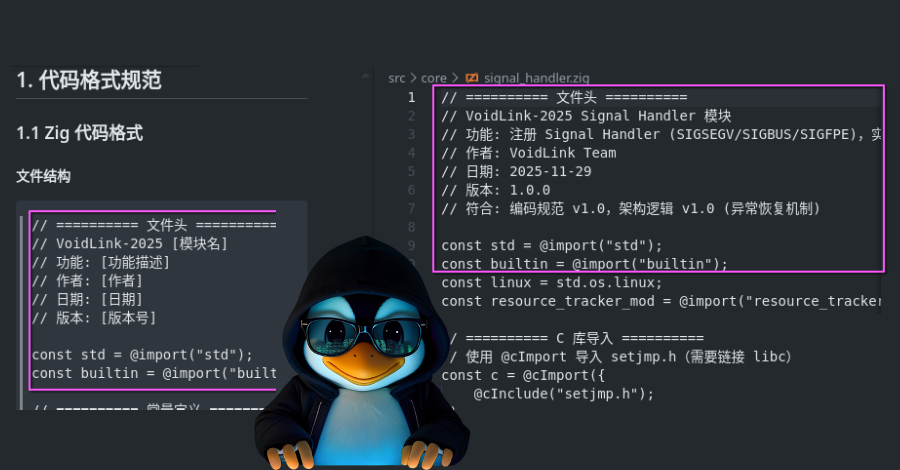

A recently discovered sophisticated Linux malware framework known as VoidLink is believed to have been developed by a single person with the assistance of artificial intelligence (AI) models.
This is due to new findings from Check Point Research, which identify operational security mistakes by the malware’s creators and shed light on the origin of the malware’s development. The latest insights make VoidLink one of the first instances of advanced malware generated primarily using AI.
“These materials provide clear evidence that the malware was primarily generated through AI-driven development and reached its first functional implant within a week,” the cybersecurity firm said, adding that it had reached over 88,000 lines of code by early December 2025.
VoidLink, first made public last week, is a feature-rich malware framework written in Zig and specifically designed for long-term, stealthy access to Linux-based cloud environments. This malware is said to have come from a China-related development environment. At the time of writing, the exact purpose of the malware remains unknown. No real-world infections have been observed to date.

A follow-up analysis by Sysdig highlighted for the first time the fact that the toolkit may have been developed with the help of large-scale language models (LLMs) under the direction of a person with extensive knowledge of kernel development and red teaming experience, citing four different lines of evidence.
Overly systematic debug output with completely consistent format across all modules Placeholder data (‘John Doe’) is typical of LLM training examples embedded in decoy response templates Unified API versioning where everything is _v3 (e.g. BeaconAPI_v3, docker_escape_v3, timestomp_v3) Template-like JSON responses covering all possible fields
“The most likely scenario was that skilled Chinese-speaking developers would use AI to accelerate development (boilerplate, debug logging, JSON template generation) while providing security expertise and architecture themselves,” the cloud security vendor said late last week.
Check Point’s report on Tuesday confirms this hypothesis, saying it identified artifacts that suggest the development itself was designed using AI models to build, run, and test the framework, effectively turning what was a concept into a working tool in an accelerated timeline.
 VoidLink project overview
“The general approach to developing VoidLink can be described as specification-driven development (SDD),” the magazine said. “In this workflow, developers start by specifying what they want to build, then create a plan, break that plan into tasks, and only then authorize agents to implement that plan.”
Threat actors are believed to have begun work on VoidLink in late November 2025, utilizing a coding agent known as TRAE SOLO to perform their tasks. This assessment is based on the presence of helper files generated by TRAE that were copied along with the source code to the threat actor’s servers and then leaked to publicly available open directories.
Additionally, Check Point said it discovered internal planning materials written in Chinese related to sprint schedules, feature breakdowns, and coding guidelines. These materials exhibit all the characteristics of LLM-generated content: well-structured, consistently formatted, and meticulously written. One of the documents detailing the development plan was created on November 27, 2025.
This document was allegedly repurposed as an execution blueprint for LLM to track, build, and test malware. Check Point, which recreated the implementation workflow using the developer’s TRAE IDE, found that the model produced code similar to VoidLink’s source code.
 Translated development plans for three teams: core, arsenal, and backend.
“A review of the code standardization instructions against the recovered VoidLink source code showed a surprising level of consistency,” the report said. “The conventions, structure, and implementation patterns are so well matched that there is little doubt that the codebase was written following those exact instructions.”
This development is another sign that while AI and LLM may not equip malicious attackers with novel capabilities, they can further lower the barrier to entry for malicious actors, allowing even a single individual to quickly conceive, create, and iterate on complex systems and execute sophisticated attacks. It streamlines a process that was once labor-intensive, resource-intensive, and only available to adversaries attacking a nation.

“VoidLink represents a real change in the way advanced malware is written. What stood out was not just the sophistication of the framework, but the speed with which it was built,” Eli Smadja, group manager at Check Point Research, said in a statement shared with The Hacker News.
“AI now allows what appears to be a single attacker to plan, develop, and iterate complex malware platforms in days, something that previously required coordinated teams and significant resources. This is a clear sign that AI is changing the economics and scale of cyber threats.”

In a white paper published this week, Group-IB explained that AI will accelerate the “fifth wave” in the evolution of cybercrime, providing ready-made tools to enable sophisticated attacks. “Adversaries are industrializing AI, turning once-specialized skills like persuasion, impersonation, and malware development into on-demand services available to anyone with a credit card,” the report said.
The Singapore-based cybersecurity firm noted that posts on dark web forums featuring AI keywords have increased by 371% since 2019, with threat actors promoting dark LLMs like Nytheon AI with no ethical restrictions, jailbreak frameworks, and synthetic ID kits that offer AI video actors, cloned voices, and even biometric datasets for as little as $5.
“AI has industrialized cybercrime. What once required skilled operators and time can now be purchased, automated and scaled globally,” said Craig Jones, former Interpol director of cybercrime and independent strategic advisor.
“Although AI has not created new incentives for cybercriminals, money, leverage, and access still drive the ecosystem. AI has dramatically increased the speed, scale, and sophistication with which those incentives are pursued.”