
£36m DAWN supercomputer upgrade to power UK AI
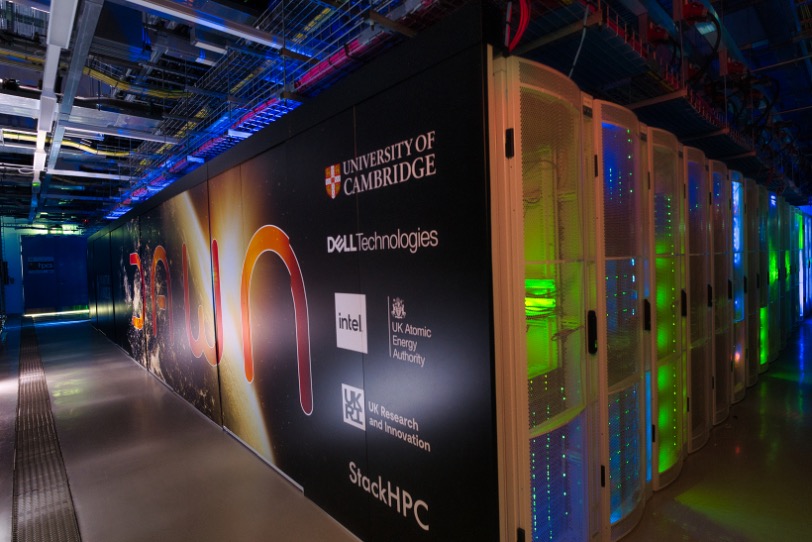
Science in the UK is gearing up for a major leap forward after the Government confirmed a £36m investment to dramatically expand the power of one of the country’s most important computing hubs.
The funding will increase the capacity of the University of Cambridge’s AI facility sixfold, strengthening the UK’s ability to develop the next generation of artificial intelligence and data-driven technologies.
At the heart of this expansion is the DAWN supercomputer, a system that is already the cornerstone of national AI research. The upgrade is expected to be operational as early as spring 2026, opening up new possibilities for researchers, start-ups and public sector innovators alike.
Professor Sir John Aston, Vice-Chancellor for Research at the University of Cambridge, explained: “This investment is a significant milestone for the UK’s AI research resources, expanding the capacity of Cambridge’s DAWN supercomputer and strengthening the national computing ecosystem.
“This gives researchers, clinicians, and innovators the tools they need to drive breakthrough advances that improve public services.
“The University of Cambridge is proud to be working with industry leaders like Dell to ensure world-class computing is available to those tackling society’s most complex challenges and to help the UK shape the next generation of AI for the public good.”
Cambridge’s growing role in UK innovation
The investment builds on Cambridge’s position as a key engine of innovation in the Oxford-Cambridge Corridor, one of Europe’s most influential science and technology clusters.
Home to a dense network of world-class universities, research institutes, and rapidly expanding technology companies, the region is a natural home for advanced computing infrastructure.
As part of this drive, the government is also supporting a new National Computing Resources supercomputer in Cambridge, further expanding the computing power available to UK scientists and strengthening the city’s role at the heart of the national research strategy.
DAWN supercomputers are already making an impact
The DAWN supercomputer hosted by the University of Cambridge is a core component of the AI Research Resource (AIRR). The national program will give UK researchers and small businesses free access to computing capabilities normally reserved for the world’s biggest technology companies.
The impact is already visible. More than 350 projects have used DAWN to date, including research into AI systems designed to accelerate personalized cancer vaccines by identifying which tumor characteristics the immune system should target.
Other teams are applying the platform to environmental research, using AI to better understand and predict climate and ecosystem change.
Next generation chips and bigger ambitions
Researchers using AIRR will have first access to AMD’s latest MI355X AI processor, one of the most advanced chips available today.
The new hardware, integrated by Dell Technologies, which provides the underlying infrastructure, will enable scientists to work with much larger datasets and pursue more ambitious and computationally intensive ideas than ever before.
Tariq Hussain, Head of UK Public Sector at Dell Technologies, added: “Dell Technologies is working with the UK Government and the University of Cambridge to make world-class AI computing freely available to UK researchers and innovators. This will enable their bold ideas to have real-world impact in areas such as early disease detection, climate resilience and improving public services.”
“By integrating Dell PowerEdge servers and AMD’s latest MI355X accelerators into the DAWN supercomputer as part of the AI Research Resource, we will help UK startups and scientists run larger models on larger datasets, accelerating breakthroughs that benefit people and communities across the country.”
Benefits of national AI investment
The expanded DAWN supercomputer is expected to deliver practical benefits beyond the lab, from earlier and more accurate disease detection to smarter digital public services and improved climate modeling to help communities prepare for extreme weather events.
The funding is part of the government’s wider AI Opportunities Action Plan, which will pump more than £2 billion into public computing infrastructure. Plans include expanding AIRR 20 times by 2030 and building a new national supercomputer in Edinburgh.
Alongside DAWN in Cambridge, AIRR already includes Isambard-AI in Bristol, demonstrating a national approach to AI-powered innovation.
Source link

