
STELLAR-AI project accelerates fusion energy research with AI
A new U.S.-led computing initiative aims to eliminate one of the biggest obstacles to progress in fusion energy research: the enormous amount of time and computational power required to model, design, and optimize fusion systems.
By tightly integrating artificial intelligence with high-performance computing and live experimental data, this project promises to dramatically accelerate the pace of discovery across the fusion field.
The platform, called STELLAR-AI, is being developed under the leadership of the Department of Energy’s Princeton Plasma Physics Laboratory (PPPL).
Rather than function as a standalone facility, STELLAR-AI is designed as a shared computational backbone for the broader fusion community, connecting national laboratories, universities, technology companies, and private fusion companies.
Eliminate simulation bottlenecks
Modern fusion energy research relies heavily on advanced computer simulations to predict plasma behavior, test reactor designs, and refine operating conditions.
These simulations are extremely complex and can take weeks or even months to complete on traditional computing infrastructure. Training AI systems that can assist with fusion design can similarly take time.
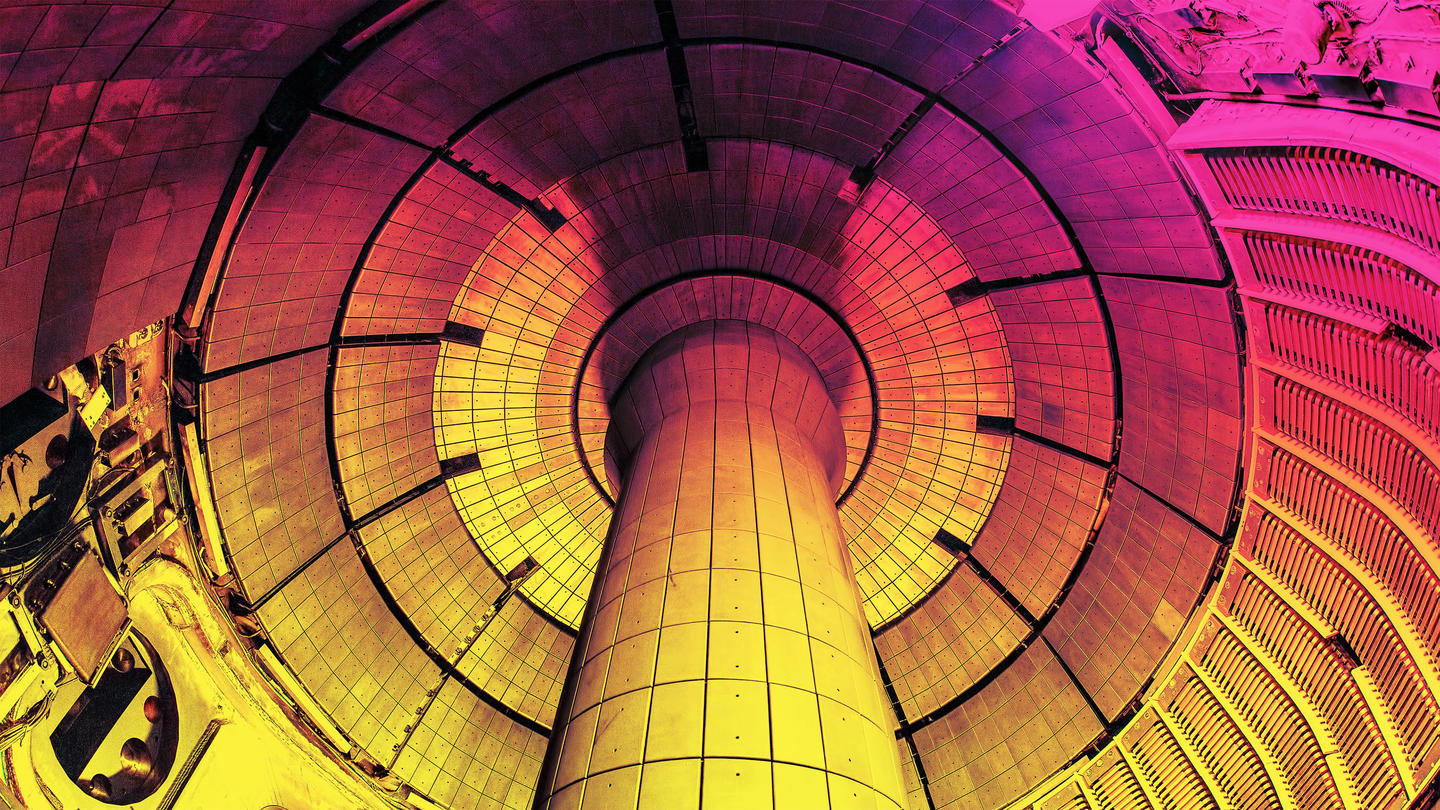
STELLAR-AI aims to compress these timelines by orders of magnitude. The platform directly links powerful computing resources to fusion experimental equipment, such as PPPL’s National Spherical Torus Experiment-Upgrade (NSTX-U), which is scheduled to resume operations this year.
This connection allows researchers to analyze experimental data in near real-time without having to wait until the experiment is finished.
STELLAR-AI transforms fusion research from a stop-start process to a continuous, adaptable workflow by closing the loop between simulation, AI analysis, and live experimentation.
Digital platform dedicated to fusion
The core of STELLAR-AI is designed specifically for the unique challenges of fusion energy research.
Fusion systems involve tightly coupled physical processes, engineering constraints, and economic considerations. Optimizing them requires both speed and accuracy.
To meet this need, the platform integrates multiple types of computing hardware. Traditional central processing units handle common workloads, graphics processing units accelerate AI training and inference, and new quantum processing units are incorporated to explore problems that could benefit from quantum algorithms.
This hybrid approach creates a flexible computing environment that can tackle everything from plasma turbulence modeling to nuclear reactor design optimization.
The ultimate goal is to shorten the path from scientific insight to commercially viable fusion power by enabling faster and smarter design decisions.
Digital twin and fast reactor design
Researchers plan to deploy STELLAR-AI across multiple high-impact projects. One of the key efforts is the creation of a detailed digital twin of NSTX-U.
This virtual replica allows scientists to test control strategies and experiment with designs in software before applying them to physical machines, reducing risk and increasing efficiency.
Another major effort, known as StellFoundry, focuses on stellarators, fusion devices with complex and twisted magnetic geometries.
Traditionally, stellarator design requires scanning a vast parameter space, a process that can take years. By applying AI-driven optimization to STELLAR-AI, researchers hope to identify promising designs more quickly.
Part of national AI science push
STELLAR-AI operates within the broader Genesis mission, a Department of Energy national initiative launched to accelerate scientific discovery across federal laboratories through the use of artificial intelligence.
Genesis provides shared access to laboratory facilities, leader-class supercomputers, data repositories, and advanced AI models.
Within this ecosystem, STELLAR-AI will contribute fusion-specific simulation codes, selected datasets, and scientific models to strengthen the national infrastructure for fusion energy research.
The project also supports federal goals outlined in the Fusion Science and Technology Roadmap, which calls for an AI-driven digital platform to accelerate the commercialization of fusion and strengthen U.S. energy leadership.
strong public-private partnership
STELLAR-AI is characterized by its extensive partnership network. The project brings together the expertise of national laboratories, leading universities, and global technology companies, as well as direct collaboration with the private fusion industry.
Academic partners contribute cutting-edge research and training, and technology companies provide advanced hardware, cloud infrastructure, and performance optimization.
Fusion companies will have access to validated AI models and simulation tools that can directly support reactor development and commercial schedules.
This collaborative structure will allow STELLAR-AI advances to flow quickly from the lab to industry, strengthening the entire convergence ecosystem.
Accelerating the future of convergence
STELLAR-AI is a major step forward for fusion energy research by integrating AI, high-performance computing, and live experimentation into a single purpose-built platform.
If successful, it could significantly shorten development cycles, reduce costs and bring practical fusion power closer to reality, helping to open the door to a new era of clean and abundant energy.
Source link

