


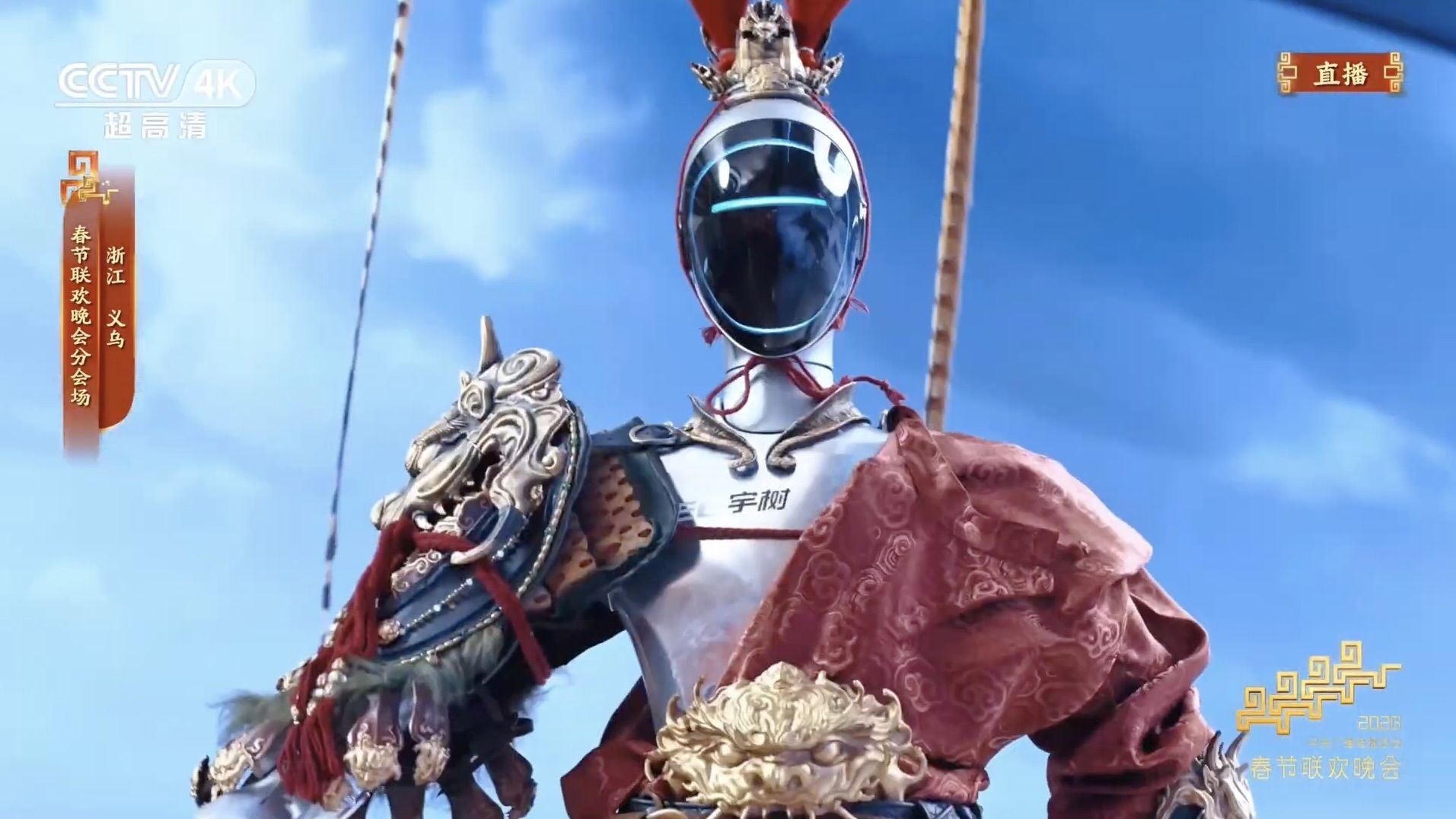
A humanoid robot took part in the world’s first fully autonomous martial arts performance to celebrate the Lunar New Year. New footage from the 2026 Chinese New Year celebrations in Beijing shows Unitree Robotics’ G1 and H2 machines performing intricate acrobatics and brandishing weapons.
you may like
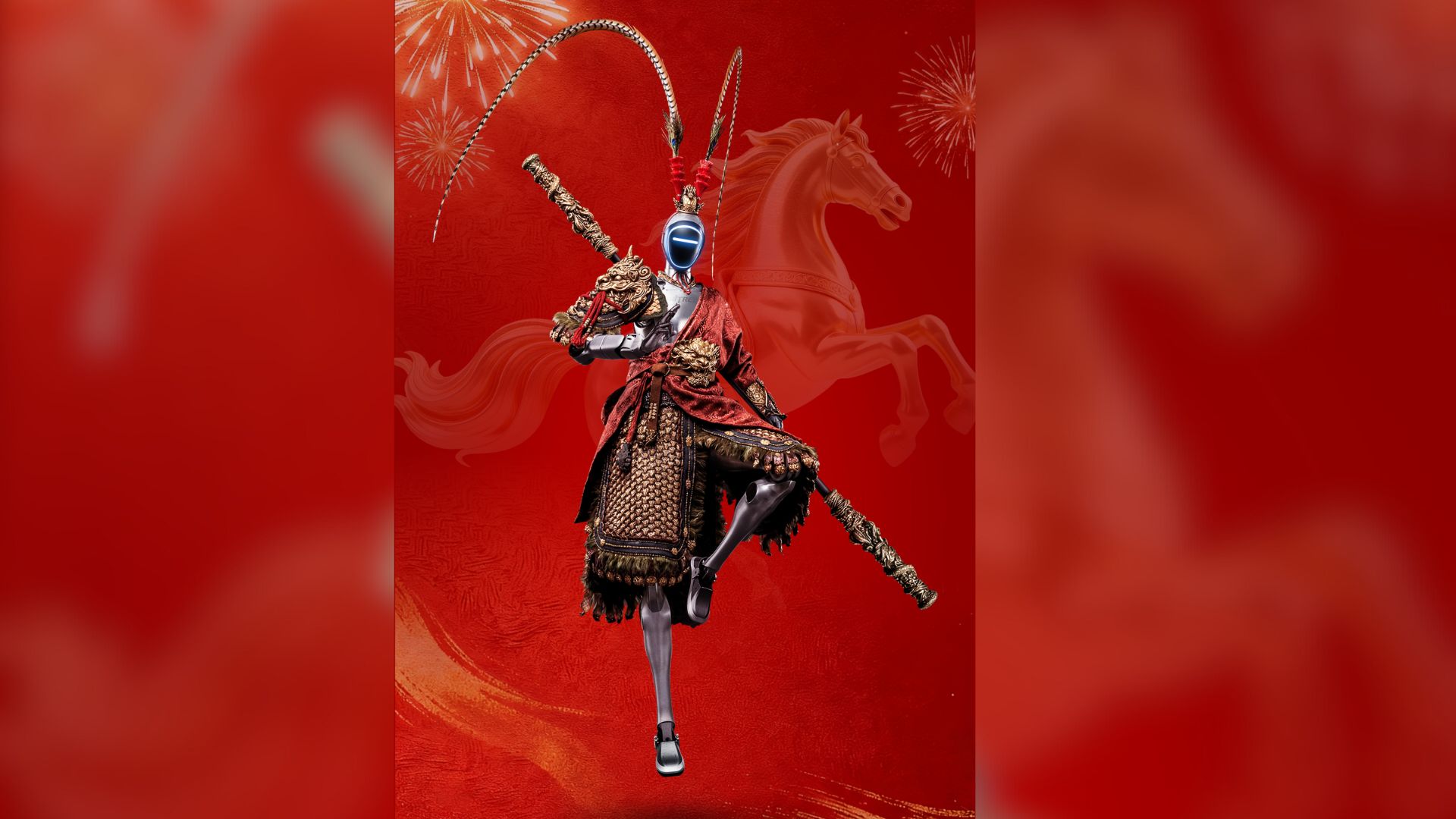
The robot’s performance was noticeably improved compared to a demonstration at the same festival in 2025, where the machine looked stiff and clumsy, and the transitions between different routines seemed awkward.
Company representatives said the improvements are the result of new lidar (light detection and ranging) processing and mechanical upgrades to the robot itself, as well as improvements in artificial intelligence (AI). These represent advances in the field of embodied AI, where scientists seek to give robots tools to better understand and navigate the physical world.
year of the fire horse
“This performance draws inspiration from homage to traditional Chinese martial arts,” Unitree representatives said in a technical blog post. “The concept focuses on fusing the spirit of martial arts with modern technology and using robotic performance to express the power and beauty of martial arts. [the Chinese term for martial arts] While conveying the message of cultural inheritance and innovation. The aim is to introduce Chinese kung fu culture to the world as technology advances. ”
The company’s engineers had been preparing for the performance since November 2025. Scientists pre-trained the stunt behavior model using extensive training data from a series of stunts. This subsequently improved the standard for fine-tuning the robot to speed.
We also upgraded the cluster control platform. It is a system for coordinating dozens of robots at once, including network communications, various operating systems, embedded devices, and software engineering elements. This enables end-to-end automation, from AI choreography planning to real-time multi-robot coordination, with millisecond-level synchronization.
Regarding the robot’s movement, engineers ensured that the robot can navigate the environment. This included a LIDAR-based localization algorithm that could improve the accuracy of the robot’s own location. Then, another pre-trained fast motion model ensured that it could stably and quickly track the target location and complete the desired motion with a human-like gait.
Machine design also contributed to improvements. Engineers have upgraded the motor for maximum performance and configured it to adapt to new movements. Examples of specific improvements include increasing the power density of core joint motors, optimizing limb robustness, and improving manual dexterity.
Although the martial arts exhibit is designed primarily for entertainment purposes, company representatives said the movements and actions demonstrate real-world practicality. For example, cluster control platforms could be an important step toward allowing multiple robots to coordinate within different environments without human intervention.