

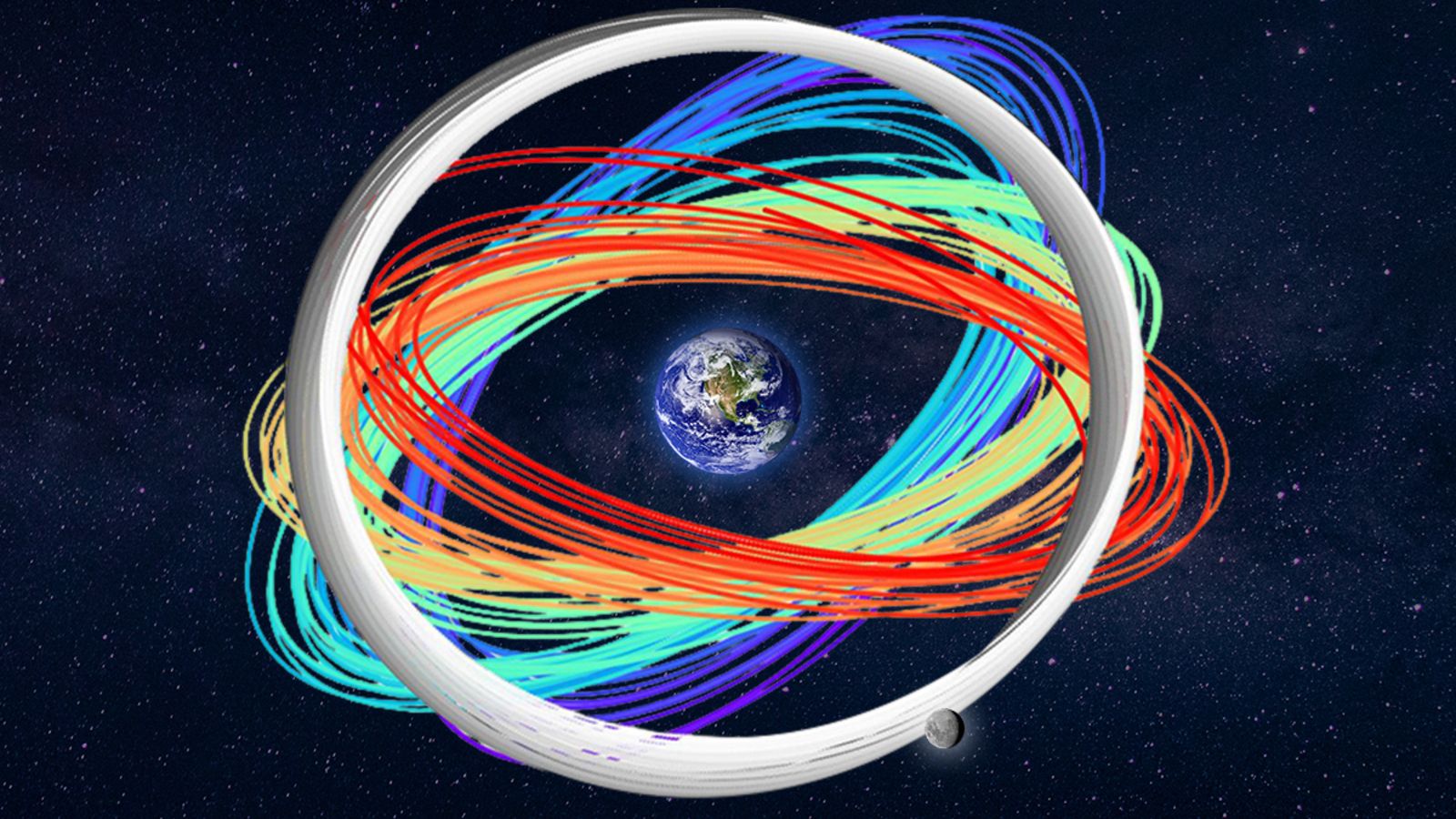
Close Menu
  • Home
  • Identity
  • Inventions
  • Future
  • Science
  • Startups
  • Spanish
What's Hot

After selling its shoe business, Allbirds shifts focus to AI

Actively exploited nginx-ui flaw (CVE-2026-33032) allows complete takeover of Nginx servers

How electric vehicles will change emergency response

Facebook X (Twitter) Instagram
  • Home
  • About Us
  • Advertise with Us
  • Contact Us
  • DMCA
  • Privacy Policy
  • Terms & Conditions
  • User-Submitted Posts
Facebook X (Twitter) Instagram
Fyself News
  • Home
  • Identity
  • Inventions
  • Future
  • Science
  • Startups
  • Spanish
Fyself News
Home » A supercomputer simulated the orbits of a million satellites between the Earth and the moon, but fewer than 10% survived.
Science

A supercomputer simulated the orbits of a million satellites between the Earth and the moon, but fewer than 10% survived.

By February 18, 2026No Comments4 Mins Read
Share Facebook Twitter Pinterest Telegram LinkedIn Tumblr Email Copy Link
Follow Us
Google News Flipboard
Share
Facebook Twitter LinkedIn Pinterest Email Copy Link

New supercomputer simulations show that if a million satellites were placed at different points between the Earth and the moon, fewer than 10% would survive long enough to make it worth the effort to send them out in the first place. While this is not as dire as it initially seemed, research shows that it does highlight the complex challenges of expanding humanity’s orbital capabilities.

The number of active spacecraft orbiting Earth has skyrocketed in recent years, thanks in large part to the emergence of private satellite “megaconstellations” such as SpaceX’s infamous Starlink network and China’s growing Thousand Sails project, a trend that is only just beginning.

Some experts predict that low Earth orbit (LEO) can safely support up to 100,000 satellites before spacecraft begin to crash out of control, potentially leading to a worst-case domino effect scenario known as the “Kessler syndrome.” In such a scenario, it would be impossible to launch anything else into space.

you may like

According to Live Science’s sister site Space.com, once LEO is fully saturated with spacecraft, the next logical step would be to start placing satellites in lunar space, the region between Earth and the moon. Doing so would not only benefit Earth’s infrastructure, but also provide internet and other services to future human colonies on the moon.

However, it is much more difficult to predict the trajectory of a spacecraft in cis-lunar space, as it is caught in a gravitational tug of war between the Earth, Moon, and Sun (which has major implications for celestial bodies far from Earth). Without Earth’s protective magnetic shield, radiation streaming from our home star could also destabilize the orbital trajectory of this region of space.
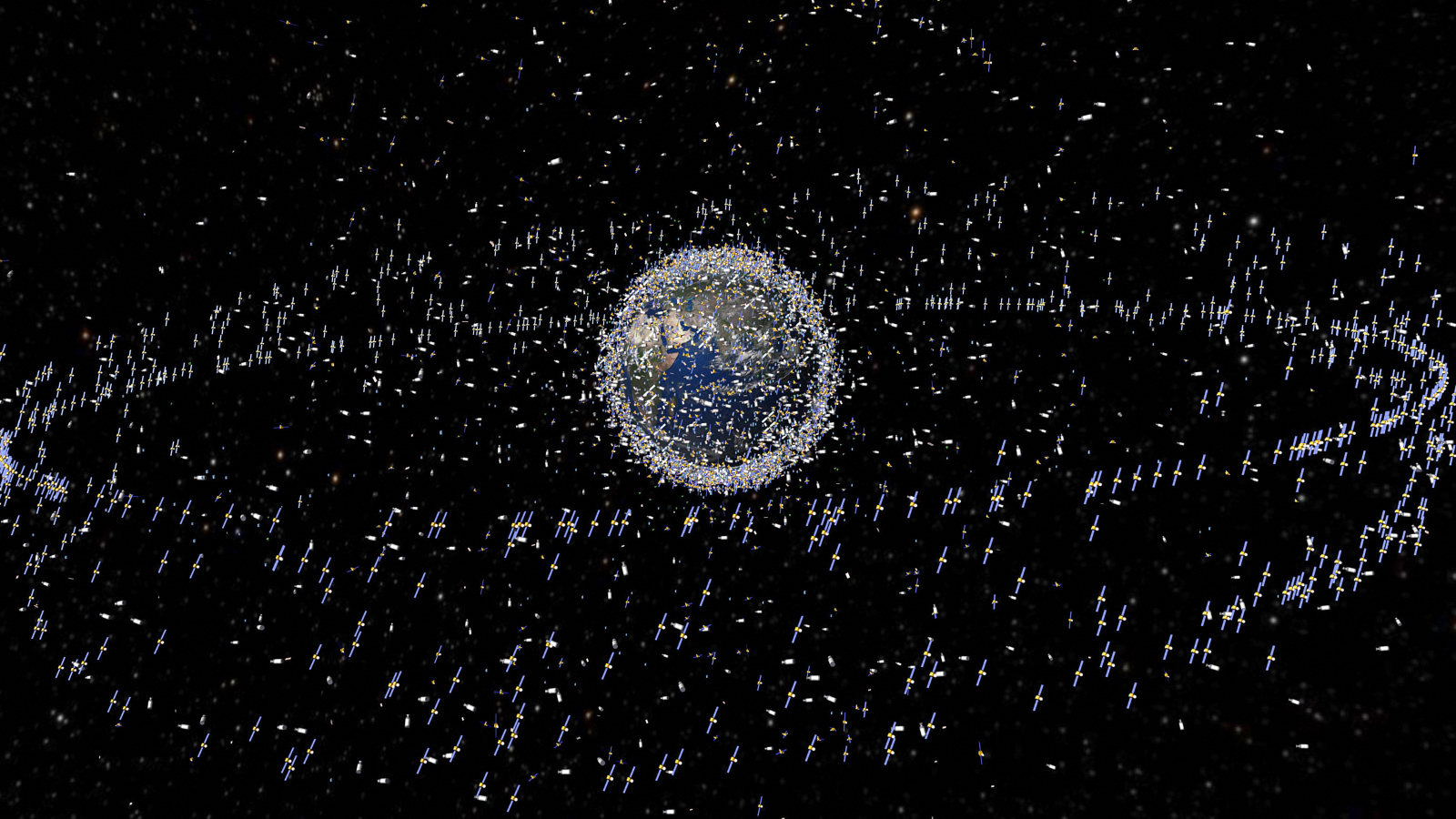
Illustration of thousands of satellites clustered around the Earth

As the number of satellites orbiting Earth is rapidly increasing, researchers are exploring the possibility of placing spacecraft farther from Earth. (Image credit: ESA/AFP, Getty Images)

To solve this problem, researchers at Lawrence Livermore National Laboratory (LLNL) in California used two supercomputers (Quartz and Ruby) to simulate the orbits of about one million lunar objects. The simulation requires about 1.6 million CPU hours and takes about 182 years to complete on a single computer, according to a statement from LLNL. The supercomputer completed this task in just three days.

Approximately 54% of these simulated trajectories were stable for at least 1 year, but only 9.7% were stable throughout the 6 years of simulation. The orbital data was published in the AAS journal Research Notes in August 2025, and the team’s analysis was uploaded to the preprint server arXiv in December. (The second paper has not yet been peer-reviewed.)

Get the world’s most fascinating discoveries delivered straight to your inbox.

The team designed the simulated trajectory to be as broad as possible, taking into account a variety of potential problems, including some that the team could not have foreseen.

“The point of this study was to make no assumptions about the type of trajectory we wanted,” study lead author Travis Yeager, a researcher at LLNL, said in a statement. “We tried to pretend we didn’t know anything about this space and went into it.”

uncertain trajectory

Unlike simulations of LEO orbits, which are more stable and repetitive, uncertainties are much higher in cis-lunar orbits. This means the team’s calculations have to “step forward in time in discrete chunks,” which is much more computationally intensive, the researchers wrote.

you may like

“If you want to know where it is, [cislunar] “The satellite will arrive within a week, but there’s no equation that actually tells us where it’s going to go. We have to move forward a little bit at a time,” Yeager said.
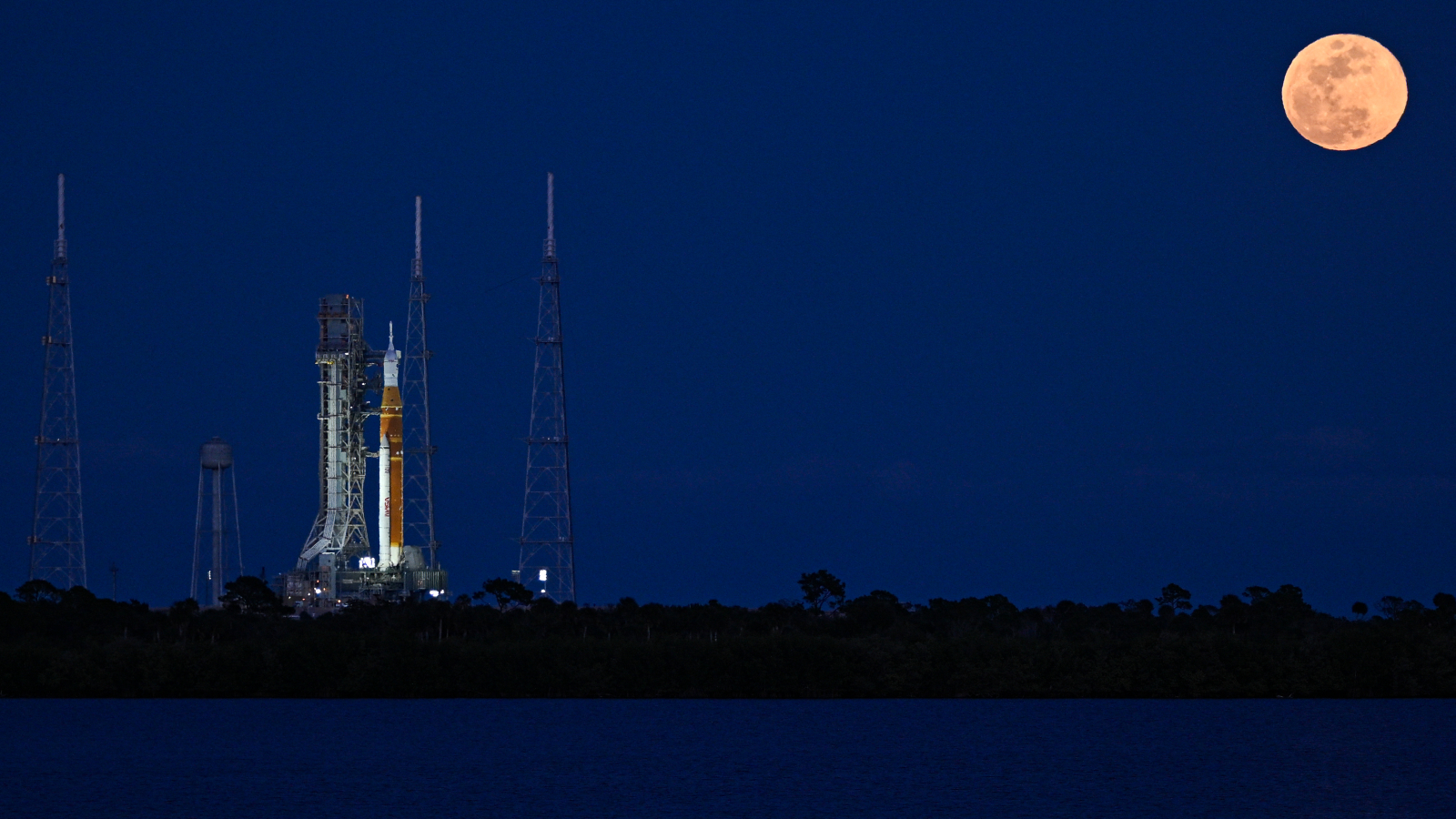
Rocket on the launch pad at night with a full moon in the background

Putting more spacecraft into lunar star orbit will help provide critical services to future humans living on the moon. (Image credit: Miguel J. Rodriguez Carrillo / AFP via Getty Images)

One of the most surprising factors influencing these orbits is the effect of Earth’s gravity, which changes subtly as the Earth rotates, the researchers noted. “Earth is not a point source of light,” Yeager said. “It’s actually floppy,” he added, because gravity is lower over Canada than over the Atlantic Ocean, for example.

Although the proportion of simulated satellites that survived is low, the results still represent approximately 97,000 stable orbits in lunar space and offer many possibilities for future exploration of this region. The researchers noted that knowing which trajectories didn’t work is just as valuable as knowing which trajectories did.

“From a data science perspective, this is an interesting dataset,” Jaeger said. “When you have a million orbits, you get a very rich analysis.”

The researchers shared the orbital trajectory on an open source platform, making the data freely accessible to anyone for future research on the Moon-Star satellites.


Source link

#Biotechnology #ClimateScience #Health #Science #ScientificAdvances #ScientificResearch
Follow on Google News Follow on Flipboard
Share. Facebook Twitter Pinterest LinkedIn Tumblr Email Copy Link
Previous ArticleResearch group claims pre-eclampsia doomed Neanderthals, but experts say this is just a ‘thought experiment’
Next Article The largest trees in the Peruvian Amazon store the most carbon and also face the biggest threats from humans

Related Posts

Preservative-resistant bacteria spread through hospital air, early research suggests

April 13, 2026

Homo erectus’ tools contained impressive geodes and fossils, perhaps as a way to connect with the universe, study finds

April 13, 2026

Physicists entangle two moving helium atoms for the first time to test ‘spooky’ quantum theory

April 13, 2026
Add A Comment
Leave A Reply Cancel Reply

Latest Posts

After selling its shoe business, Allbirds shifts focus to AI

Actively exploited nginx-ui flaw (CVE-2026-33032) allows complete takeover of Nginx servers

How electric vehicles will change emergency response

HBO Max comes to India with exclusive deal from JioHotstar

Trending Posts

Subscribe to News

Subscribe to our newsletter and never miss our latest news

Please enable JavaScript in your browser to complete this form.
Loading

Welcome to Fyself News, your go-to platform for the latest in tech, startups, inventions, sustainability, and fintech! We are a passionate team of enthusiasts committed to bringing you timely, insightful, and accurate information on the most pressing developments across these industries. Whether you’re an entrepreneur, investor, or just someone curious about the future of technology and innovation, Fyself News has something for you.

Castilla-La Mancha Ignites Innovation: fiveclmsummit Redefines Tech Future

Local Power, Health Innovation: Alcolea de Calatrava Boosts FiveCLM PoC with Community Engagement

The Future of Digital Twins in Healthcare: From Virtual Replicas to Personalized Medical Models

Human Digital Twins: The Next Tech Frontier Set to Transform Healthcare and Beyond

Facebook X (Twitter) Instagram Pinterest YouTube
  • Home
  • About Us
  • Advertise with Us
  • Contact Us
  • DMCA
  • Privacy Policy
  • Terms & Conditions
  • User-Submitted Posts
© 2026 news.fyself. Designed by by fyself.

Type above and press Enter to search. Press Esc to cancel.