


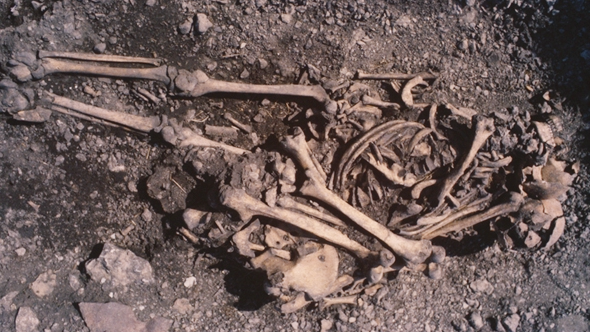
A rare Stone Age cemetery on a Swedish island shows that some of Europe’s last hunter-gatherers were buried with people who were more distantly related than extremely closely related, new DNA analysis reveals.
But some burials included close biological family members, including, in the case of a teenage girl, whose father’s untidy bones were placed above and next to her, the researchers found.
you may like
Ibide has been occupied for at least four centuries, and archaeologists have discovered large quantities of pottery and animal bones in addition to a cemetery. Excavation of the cemetery revealed that multiple people were buried in eight graves. Researchers initially thought the people inside the tomb were closely related. However, advances in ancient DNA analysis have increased the possibility of fully investigating the family relationships at Ajibide Cemetery.
“Archaeological studies of kinship in hunter-gatherer cultures are rare and usually limited in scale, as this kind of hunter-gatherer graves are rarely preserved,” Tina Mattila, a population geneticist at Uppsala University, said in a statement. Mattila led the genetic analysis of four of the burials, and the findings were published in the journal Proceedings of the Royal Society B on Wednesday (February 18).
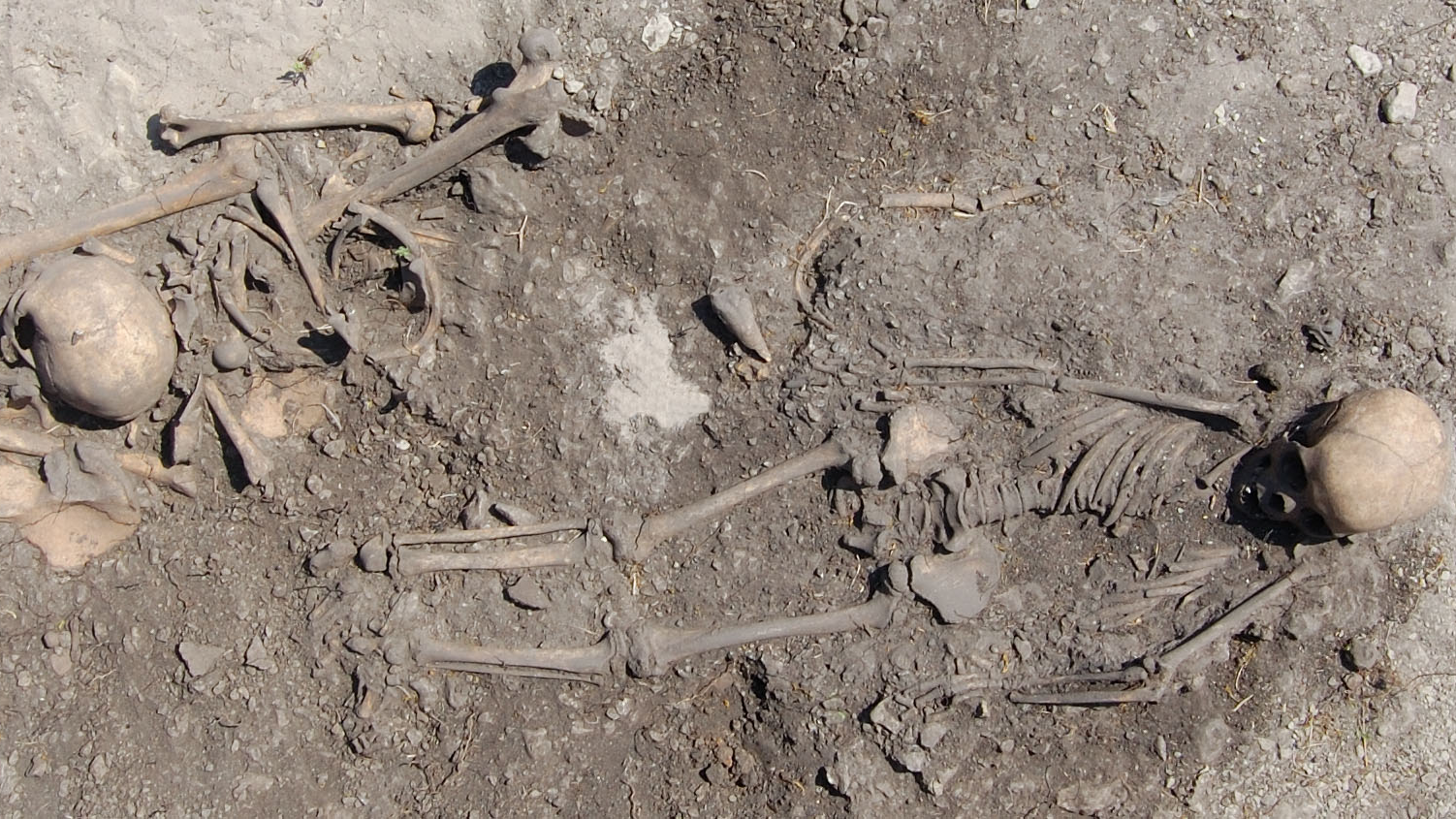
In one grave, excavators found the skeleton of an adult woman along with the skeletons of two young children. Researchers’ DNA analysis revealed that the children are a boy and a girl and are full siblings. However, the woman may not have been his mother, but his father’s sister or half-sister.
In the second grave, the skeletons of a boy and a girl were buried together. DNA analysis revealed they were third-degree relatives, likely cousins, sharing one-eighth of their DNA. In the third grave, DNA analysis of the skeletons of a girl and a young woman revealed that they were third-degree relatives, possibly cousins or great-aunts and great-nieces.
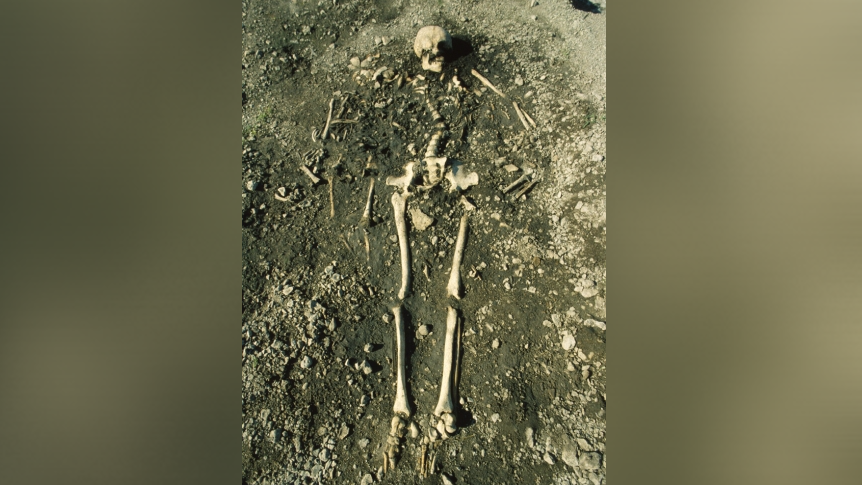
And in the fourth grave, a teenage girl was buried face up, with a pile of bones above and next to her. After conducting DNA analysis, researchers discovered that the bones belonged to the girl’s father. His death probably preceded hers, and his bones were likely exhumed from elsewhere and moved to his daughter’s grave, the researchers said.
“Surprisingly, our analysis shows that many of the people buried together were second- or third-degree relatives, rather than first-degree relatives, that is, parents and children or siblings, as is often thought,” study co-author Helena Malmström, an archaeogeneticist at Uppsala University, said in a statement. “This suggests that these people had good knowledge of their ancestry and that relationships beyond the immediate family played an important role.”
The Azivide burial study is the first to examine family relationships among Scandinavian Neolithic hunter-gatherers, the statement said. However, further studies are planned, with researchers now planning to analyze all human remains recovered from the cemetery to learn more about the social structure, life history, and burial rituals of the ancient hunter-gatherers.