


simple facts
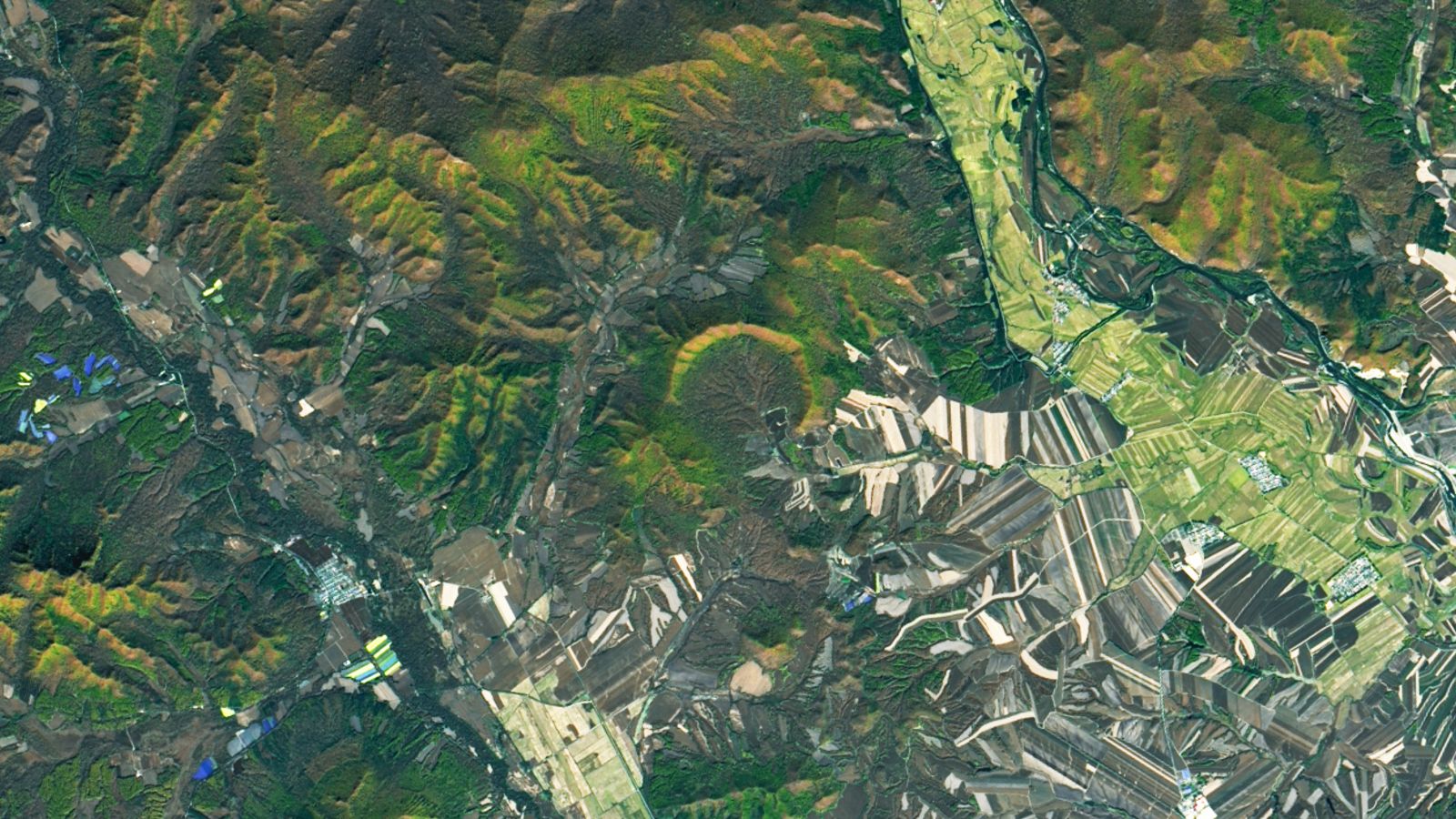
Where is it? Yilan Crater, Heilongjiang Province, China [46.38232967, 129.31209278]
What is in the photo? Unfinished ruins of the world’s youngest impact structure
Which satellite took the photo?Landsat 8
When was the photo taken? October 8, 2021
This impressive satellite photo shows a recently discovered meteor crater in China. It is probably the youngest and largest impact structure on Earth in a wide range of ages. This horseshoe-shaped depression is only the second impact crater discovered in the country.
Chinese researchers discovered that the incomplete ring was an impact crater in mid-2021, about three months before this photo was taken. Until then, it had received little attention because it was surrounded by deep forest. Locals knew about the structure, but called it Izumiyama, which means “circular mountain ridge.” This suggests that we knew nothing about its extraterrestrial origins.
you may like
But when the team dug 1,440 feet (440 meters) below the crater floor, they found “shocked quartz, molten granite, glass containing holes formed by gas bubbles, and teardrop-shaped glass shards,” according to NASA’s Earth Observatory. All of these are clear signs that a giant space rock hit there.
Carbon dating revealed that the crater was formed between 46,000 and 53,000 years ago. This means it may be the youngest of the approximately 200 major impact craters on Earth.
Until this discovery, the most widely accepted “youngest major crater” on Earth was Barringer Crater (also known as Meteor Crater) in Arizona, which dates back 50,000 years, according to the Lunar and Planetary Institute. Uncertainty about Yilan Crater’s age means researchers cannot be certain that it is younger than Ballinger Crater, but it is considered likely.
Yilan Crater is also the largest impact crater less than 100,000 years old, breaking another record previously held by Ballinger Crater, which is about 0.75 miles (1.2 km) in diameter.
As you can see in the satellite image, the southern third of the crater’s rim is missing. Researchers don’t know exactly when or how this part of the crater’s rim disappeared. However, the Earth Observatory says that sediments found at the crater floor suggest that there was once a lake within the crater, strongly suggesting that the structure was once completely intact.
crater in china
Yilan Crater is the first impact crater discovered in China since 2009, when the 1.1-mile-wide (1.8-kilometer) Xiuyan crater in Liaoning province was identified, dating from 330,000 to 1.1 million years ago.
It has long been a mystery why more impact craters have not been discovered in China, given how large it is (almost the same size in land area as the United States). However, after the discovery of Yilan Crater, others were also discovered.
In September 2023, scientists discovered a third crater in China that is roughly the same size as Yilan Crater. This crater carved into the top of a mountain near the North Korean border dates back at least 150 million years.
And in October 2025, scientists identified a fourth impact structure called Jinlin Crater in a mountain near Zhaoqing city in China’s Guangdong province. The crater, which is only about 3,000 feet (900 meters) wide, is unconfirmed in age, but may date back to the current era known as the Holocene, which began 11,700 years ago, Sci News said.
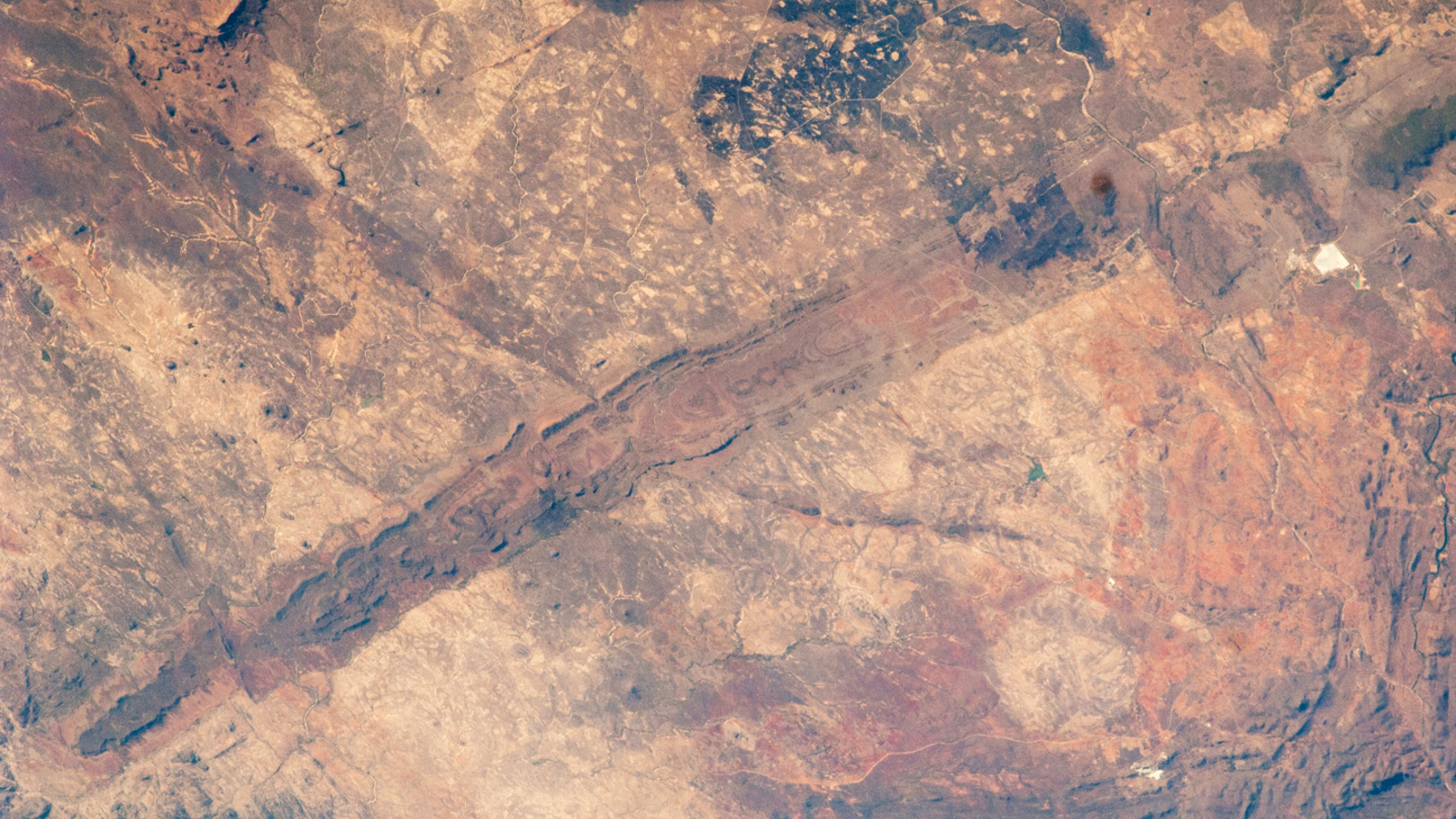
Zimbabwe’s “geological wonders”
A 2010 astronaut photo shows the incredible scale of Zimbabwe’s Great Embankment, which is more than 340 miles long. The long structure is rich in highly valuable minerals that power a large-scale mining industry.
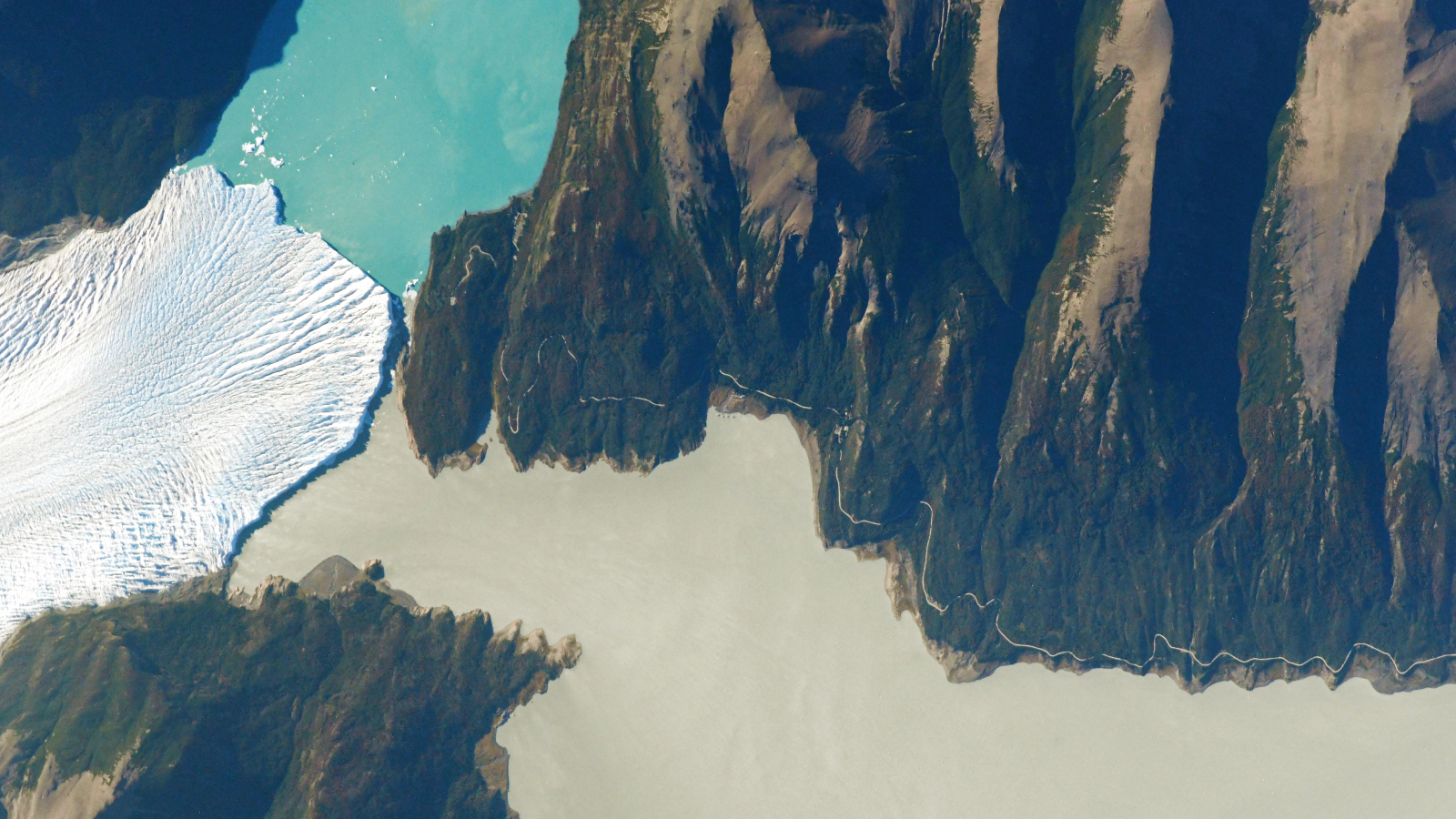
Glaciers, lakes and rivers “contact”
A 2021 astronaut photo shows a triple valley system in Argentina’s Los Glaciares National Park, home to giant climate-resilient glaciers, pristine turquoise lakes, and murky green “rivers.”
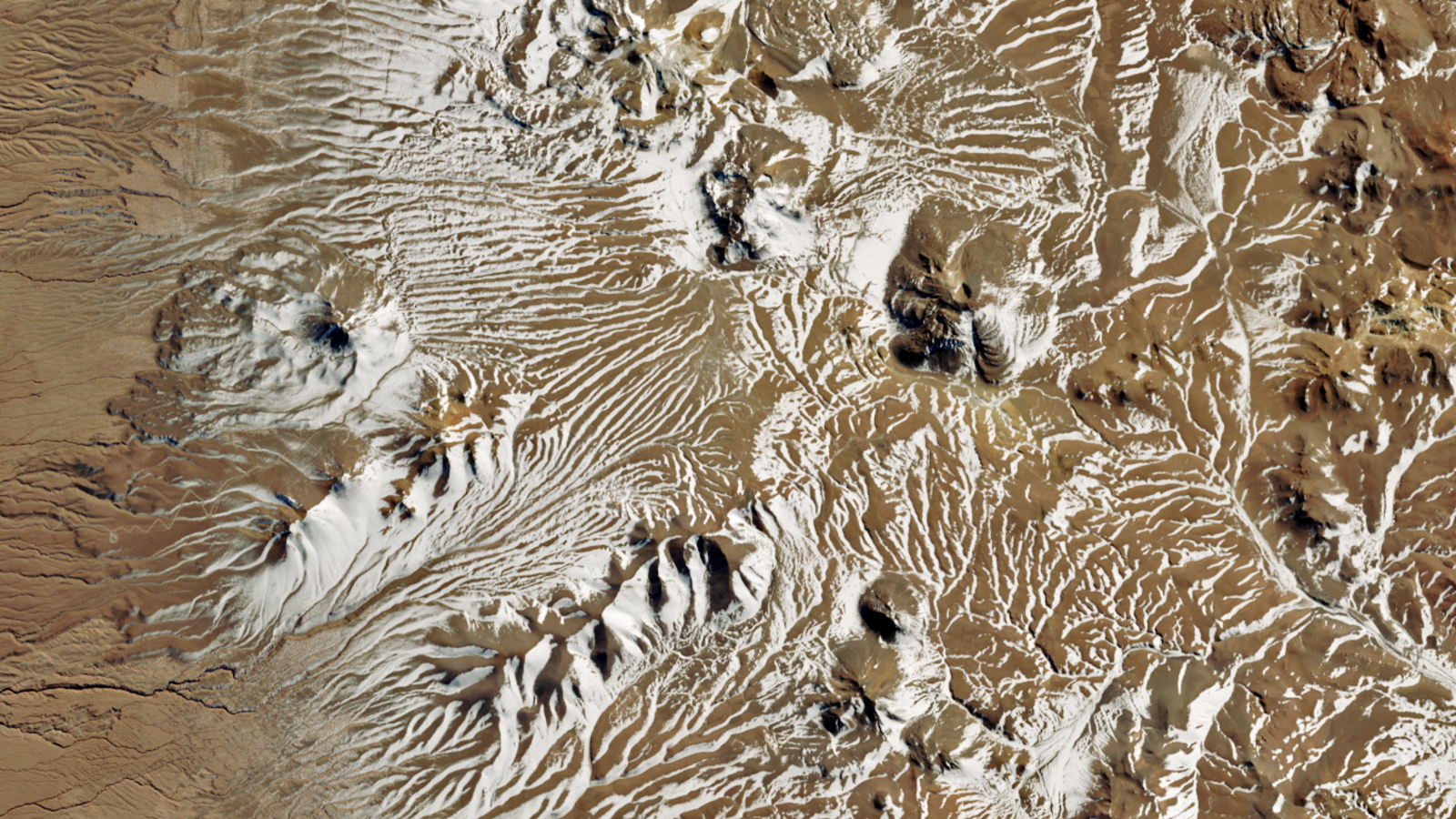
Rare snow falls in the Atacama Desert
Satellite images from 2025 show intricate snow stripes across Chile’s Atacama Desert. Frigid weather has temporarily put one of the world’s most powerful telescopes into “survival mode.”