

Close Menu
  • Home
  • Identity
  • Inventions
  • Future
  • Science
  • Startups
  • Spanish
What's Hot

Google settles with Epic Games, lowers Play Store fees to 20%

149 hacktivist DDoS attacks hit 110 organizations in 16 countries after Middle East conflict

X taps William Shatner to distribute an invitation to his payment service X Money

Facebook X (Twitter) Instagram
  • Home
  • About Us
  • Advertise with Us
  • Contact Us
  • DMCA
  • Privacy Policy
  • Terms & Conditions
  • User-Submitted Posts
Facebook X (Twitter) Instagram
Fyself News
  • Home
  • Identity
  • Inventions
  • Future
  • Science
  • Startups
  • Spanish
Fyself News
Home » Stone Age women were buried like men in Hungary 7,000 years ago, revealing flexible gender roles
Science

Stone Age women were buried like men in Hungary 7,000 years ago, revealing flexible gender roles

userBy userMarch 3, 2026No Comments3 Mins Read
Share Facebook Twitter Pinterest Telegram LinkedIn Tumblr Email Copy Link
Follow Us
Google News Flipboard
Share
Facebook Twitter LinkedIn Pinterest Email Copy Link

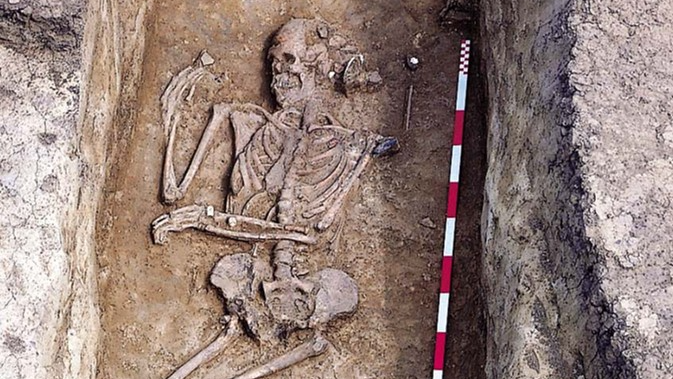
A skeleton lying partially on its right side in an excavated tomb. Archaeological markers and meter sticks are visible

A typical male burial in the Stone Age cemetery of Chashalom, Hungary. He is buried on the right side, with polished stone tools placed near his left shoulder. (Image credit: Alexandra Anders)

A Stone Age woman buried with male-related artifacts in what is now Hungary reveals that her society embraced complex identities and flexible gender roles 7,000 years ago, a new study has found.

In the study, published February 16 in the American Journal of Biological Anthropology, researchers analyzed 125 human bones from two cemeteries in eastern Hungary that were in use from 5300 BC to 4650 BC. The aim of the study was to compare traces of repetitive activity found on the bones and examine burial locations and grave goods, which together could shed light on the roles of men and women in Neolithic society.

This analysis focused on activity-related skeletal changes to gain insight into people’s overall physical stress, upper extremity overuse, and toe hyperextension (which can be caused by kneeling postures) in the past. Although Stone Age men and women all engaged in kneeling activities with high overall physical demands, the researchers found that the men’s skeletons showed evidence of overuse of the right upper limb, possibly related to throwing motions, indicating differences in the way men and women used their arms.

you may like

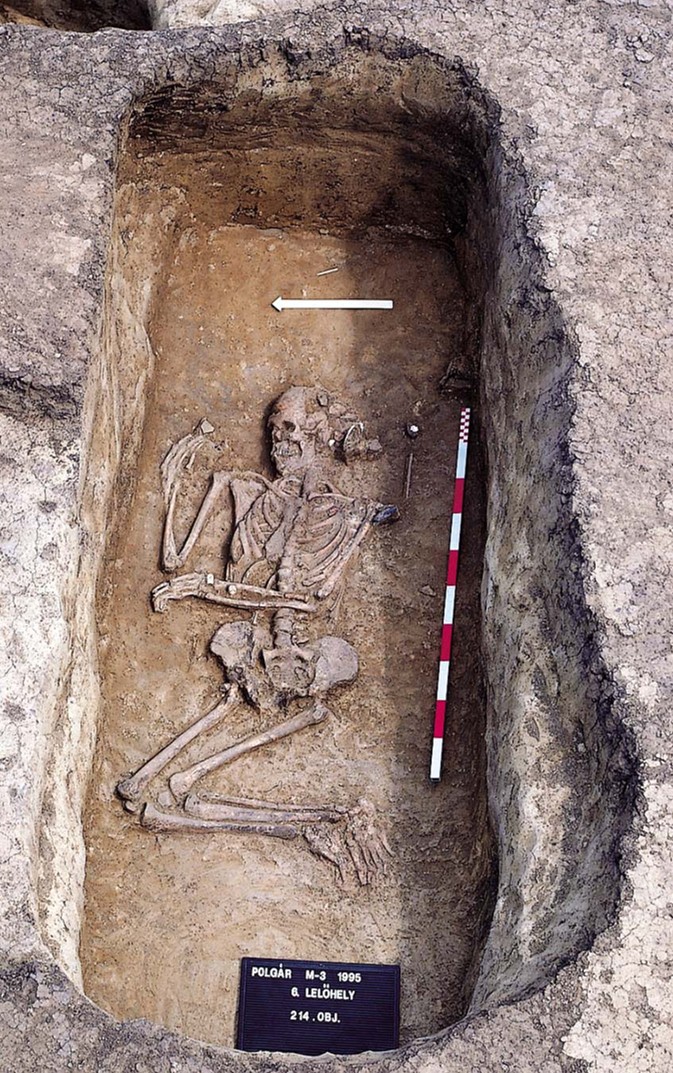
Burial methods were also different for men and women. In one cemetery, most female skeletons were placed on the left side and buried with belts of shell beads, while most male skeletons were placed on the right side and buried with polished stone tools. However, the study found that the two male and five female skeletons were buried differently than expected, indicating that the link between biological sex and body position at death is not absolute.

The burial of one elderly woman was particularly unusual. Hers was the only female skeleton researchers had found buried with polished stone tools, and her toes revealed a pattern of kneeling activity much like those of the men in the cemetery. The researchers said the burial suggests that “women may have held roles traditionally associated with men” in society and that gender roles were “fluid and shaped by multiple intersecting factors.”

The study’s lead author, Sébastien Vilot, a researcher at France’s National Center for Scientific Research, told LiveScience in an email that there is no clear evidence that the woman had a unique social role, such as a shaman. Others buried in ways inconsistent with their biological sex may have had “individual trajectories that do not fit into the ‘ideal’ pattern,” Villotte said. “This was a period in Central Europe when people began to express pre-existing gender roles in a new setting.”

Vilot, S., Shenichey, T., Cacchie, S., Anders, A. (2026). Fixed and fluid: two aspects of gender roles—a combined study of activity patterns and burial practices in the European Neolithic. American Journal of Biological Anthropology, 189(2), e70217. https://doi.org/10.1002/ajpa.70217

Stone Age Quiz: What do you know about the Paleolithic, Mesolithic and Neolithic periods?

Get the world’s most fascinating discoveries delivered straight to your inbox.


Source link

#Biotechnology #ClimateScience #Health #Science #ScientificAdvances #ScientificResearch
Follow on Google News Follow on Flipboard
Share. Facebook Twitter Pinterest LinkedIn Tumblr Email Copy Link
Previous ArticleClaude Code rolls out voice mode functionality
Next Article JWST’s ‘small red dot’ may be the ‘parent’ of the universe’s first supermassive black hole
user
  • Website

Related Posts

Diagnostic dilemma: A doctor discovers the genetic mutation behind a family member’s mysterious tooth loss condition

March 4, 2026

Prehistoric aquatic freak with sideways teeth and twisted jaw was already a ‘living fossil’ 275 million years ago

March 4, 2026

JWST’s ‘small red dot’ may be the ‘parent’ of the universe’s first supermassive black hole

March 3, 2026
Add A Comment
Leave A Reply Cancel Reply

Latest Posts

Google settles with Epic Games, lowers Play Store fees to 20%

149 hacktivist DDoS attacks hit 110 organizations in 16 countries after Middle East conflict

X taps William Shatner to distribute an invitation to his payment service X Money

Father sues Google, claiming Gemini chatbot drove son into deadly delusions

Trending Posts

Subscribe to News

Subscribe to our newsletter and never miss our latest news

Please enable JavaScript in your browser to complete this form.
Loading

Welcome to Fyself News, your go-to platform for the latest in tech, startups, inventions, sustainability, and fintech! We are a passionate team of enthusiasts committed to bringing you timely, insightful, and accurate information on the most pressing developments across these industries. Whether you’re an entrepreneur, investor, or just someone curious about the future of technology and innovation, Fyself News has something for you.

Castilla-La Mancha Ignites Innovation: fiveclmsummit Redefines Tech Future

Local Power, Health Innovation: Alcolea de Calatrava Boosts FiveCLM PoC with Community Engagement

The Future of Digital Twins in Healthcare: From Virtual Replicas to Personalized Medical Models

Human Digital Twins: The Next Tech Frontier Set to Transform Healthcare and Beyond

Facebook X (Twitter) Instagram Pinterest YouTube
  • Home
  • About Us
  • Advertise with Us
  • Contact Us
  • DMCA
  • Privacy Policy
  • Terms & Conditions
  • User-Submitted Posts
© 2026 news.fyself. Designed by by fyself.

Type above and press Enter to search. Press Esc to cancel.