

Close Menu
  • Home
  • Identity
  • Inventions
  • Future
  • Science
  • Startups
  • Spanish
What's Hot

Malicious KICS Docker image and VS Code extension impact Checkmarx supply chain

Harvester uses Microsoft Graph API to bring Linux GoGra backdoor to South Asia

UK government says spyware that can hack people’s phones exists in 100 countries

Facebook X (Twitter) Instagram
  • Home
  • About Us
  • Advertise with Us
  • Contact Us
  • DMCA
  • Privacy Policy
  • Terms & Conditions
  • User-Submitted Posts
Facebook X (Twitter) Instagram
Fyself News
  • Home
  • Identity
  • Inventions
  • Future
  • Science
  • Startups
  • Spanish
Fyself News
Home » NASA has shut down another Voyager 1 instrument as humanity’s most distant spacecraft prepares for a dangerous ‘big bang’ flight to conserve power
Science

NASA has shut down another Voyager 1 instrument as humanity’s most distant spacecraft prepares for a dangerous ‘big bang’ flight to conserve power

By April 21, 2026No Comments3 Mins Read
Share Facebook Twitter Pinterest Telegram LinkedIn Tumblr Email Copy Link
Follow Us
Google News Flipboard
Share
Facebook Twitter LinkedIn Pinterest Email Copy Link

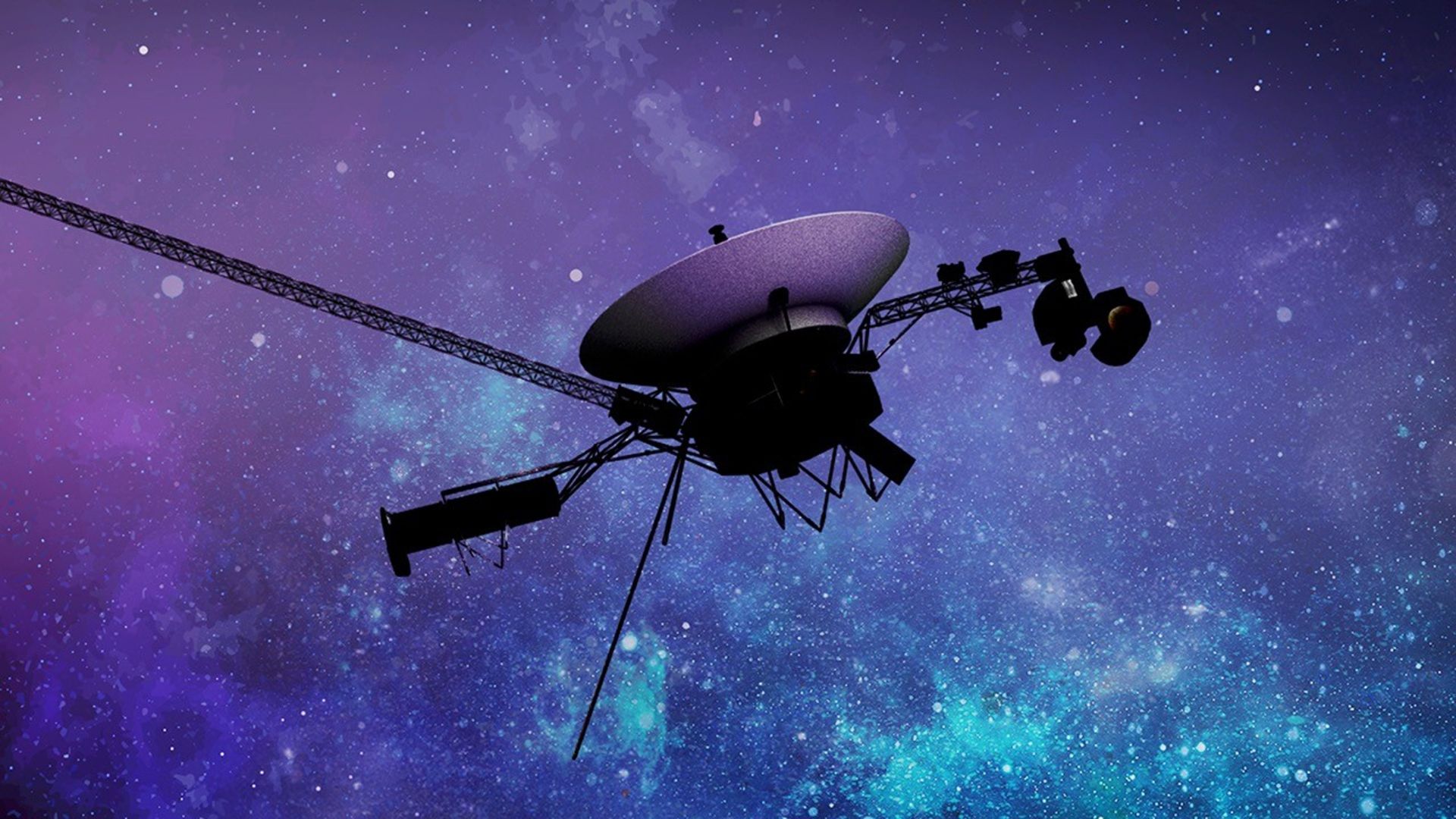
After nearly half a century in space, the Voyager 1 spacecraft has shut down one of its last remaining scientific instruments in a desperate attempt to conserve power. NASA’s decision to power down the instruments comes just before the final “big bang” moment that mission managers hope will further extend the lives of the two Voyager spacecraft later this summer.

On Friday (April 17), Voyager 1 was ordered to halt its Low Energy Charged Particle (LECP) experiment, which has been observing ions, electrons and cosmic rays around the spacecraft for the past 49 years.

But Voyager 1’s nuclear energy is currently critically low, especially after a planned roll maneuver on February 27 caused an unexpected power drop.

you may like

The spacecraft was launched in 1977 and was originally intended to explore Jupiter and Saturn, but its mission was extended multiple times. In 2012, Voyager 1 officially reached interstellar space, becoming the first spacecraft to transmit data from outside the solar system. It remains the most distant spacecraft in history.

The twin Voyager 2 probes, which explored every exoplanet from Jupiter to Neptune, entered interstellar space about six years later, and the two probes continue to communicate from the darkness.

But their time is running out. Both spacecraft rely on radioisotope thermoelectric generators that convert decaying plutonium into electricity. Spacecraft lose about 4 watts of power per year.

“With power margins so thin, the team must turn off heaters and instruments to conserve energy while also ensuring the spacecraft does not get so cold that its fuel lines freeze,” representatives from NASA’s Jet Propulsion Laboratory (JPL), which manages the Voyager program, wrote in an April 17 blog post.

Get the world’s most fascinating discoveries delivered straight to your inbox.

After the shutdown, only two of Voyager 1’s 10 scientific instruments remain powered, while Voyager 2 currently has three instruments operating. These instruments have helped scientists characterize the conditions of the universe beyond our solar system and the physical properties of the heliopause, the boundary where the solar wind collides with the interstellar medium.

“big bang”

This latest Voyager 1 instrument outage currently leaves the spacecraft with only about a year of lifespan, but there are plans to get even more out of it. JPL plans to use a “big bang” procedure to try to extend the dwindling power reserves of Voyager 2 as well as Voyager 1.

“The idea is to replace a series of power receiving devices at once, which is where its nickname comes from. By turning off some and replacing them with lower-power alternatives, you can keep the spacecraft warm enough to continue collecting science data,” JPL representatives wrote in a blog post.

Two instruments on Voyager 1 are currently studying magnetic fields and plasma (superheated gas) waves. But if all goes to plan, the team hopes to recover enough power from the Big Bang to turn LECP back on. In fact, the engineers decided to keep the small 0.5 watt motor for the LECP running for the time being to get the equipment back in service.

JPL plans to conduct big bang tests in May and June aboard Voyager 2, which has more power available and is slightly closer to Earth. If all goes well, the more dangerous Voyager 1 big bang moment won’t happen until July at the earliest.

Voyager 1 is 15 billion miles (25 billion kilometers) from Earth, so it takes 23 hours to send a command. After JPL relayed the command, the LECP shutdown process took just over three hours. Starting again may be a bit difficult, especially given the cold and distance.


Source link

#Biotechnology #ClimateScience #Health #Science #ScientificAdvances #ScientificResearch
Follow on Google News Follow on Flipboard
Share. Facebook Twitter Pinterest LinkedIn Tumblr Email Copy Link
Previous ArticleSystemBC C2 Server Reveals Over 1,570 Victims of Operation The Gentlemen Ransomware
Next Article Sam Altman criticizes Anthropic’s cyber model Mythos, calling it “fear-based marketing”

Related Posts

Neanderthal infants grew faster than modern humans, probably because they evolved in harsh environments

April 21, 2026

‘Countries need to prepare now’: Major Atlantic currents are much closer to collapse than scientists thought

April 21, 2026

New blood test aims to spot liver scarring before it’s still reversible and pave the way to cancer

April 21, 2026
Add A Comment
Leave A Reply Cancel Reply

Latest Posts

Malicious KICS Docker image and VS Code extension impact Checkmarx supply chain

Harvester uses Microsoft Graph API to bring Linux GoGra backdoor to South Asia

UK government says spyware that can hack people’s phones exists in 100 countries

EuroHPC and Bull collaborate to bring AI supercomputer to Mimer AIF

Trending Posts

Subscribe to News

Subscribe to our newsletter and never miss our latest news

Please enable JavaScript in your browser to complete this form.
Loading

Welcome to Fyself News, your go-to platform for the latest in tech, startups, inventions, sustainability, and fintech! We are a passionate team of enthusiasts committed to bringing you timely, insightful, and accurate information on the most pressing developments across these industries. Whether you’re an entrepreneur, investor, or just someone curious about the future of technology and innovation, Fyself News has something for you.

Castilla-La Mancha Ignites Innovation: fiveclmsummit Redefines Tech Future

Local Power, Health Innovation: Alcolea de Calatrava Boosts FiveCLM PoC with Community Engagement

The Future of Digital Twins in Healthcare: From Virtual Replicas to Personalized Medical Models

Human Digital Twins: The Next Tech Frontier Set to Transform Healthcare and Beyond

Facebook X (Twitter) Instagram Pinterest YouTube
  • Home
  • About Us
  • Advertise with Us
  • Contact Us
  • DMCA
  • Privacy Policy
  • Terms & Conditions
  • User-Submitted Posts
© 2026 news.fyself. Designed by by fyself.

Type above and press Enter to search. Press Esc to cancel.