


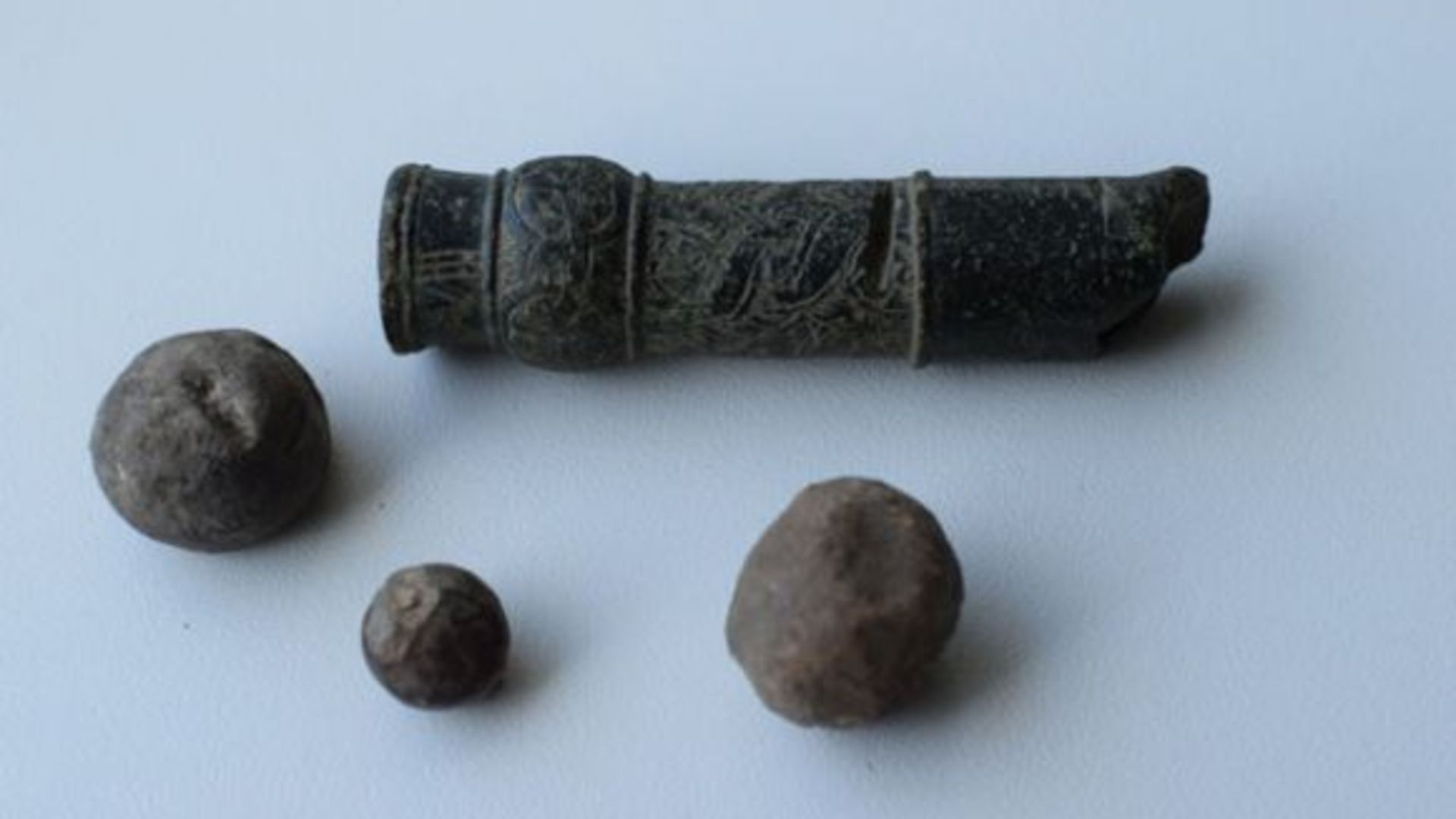
Fragments of an early handgun found in Brandenburg, Germany, may belong to Europe’s oldest known handheld gunpowder weapon, according to new research.
The artifact, about 2 inches (6 centimeters) long, may date back to 1390. If so, it would be nine years older than the famous Tannenberg rifle, which was created in 1399 and is widely considered to be Europe’s oldest hand-held firearm.
Article continues below
you may like
In 2023, volunteer heritage conservationist Matthias Dasse discovered fragments of a handgun during a site survey near Kretzke Castle in Germany’s Brandenburg region. Mr. Dasse took these fragments to Gordon Thalmann, director of the Lower Prignitz Monument Protection Bureau, who determined that the bronze castings were the barrels of early guns.
Researchers have given the artifact the nickname “Kretzker Handroa,” meaning “Kretzker Hand Cannon.” This is because they believe the fortress may be connected to the famous Siege of Kretzke Castle in 1390, which was the focus of a regional conflict in Brandenburg. According to the extant account of the Franciscan friar Detmar of Lübeck, the two dukes marched with 1,100 soldiers towards the castle, which was guarded by the powerful von Quitzow family. The defenders managed to secure the castle and drive off the attackers. The castle was renovated over the following centuries.
If the connection between siege warfare and the Kretzke hand cannon is confirmed, this object would provide valuable physical evidence of an early firearm that began to appear in late medieval warfare.
However, Krauskopf pointed out that the Kretzke hand cannon was probably not locally manufactured and may have been brought in by an outside attacker.
The discovery was announced on February 27 at the state Department of Archeology’s annual conference. Krauskopf will continue studying the fragments while Brandenburg authorities work to develop the Kretzke site for archaeological tourism.