
ARCHE2 supercomputer brings £4.2bn benefit to UK economy
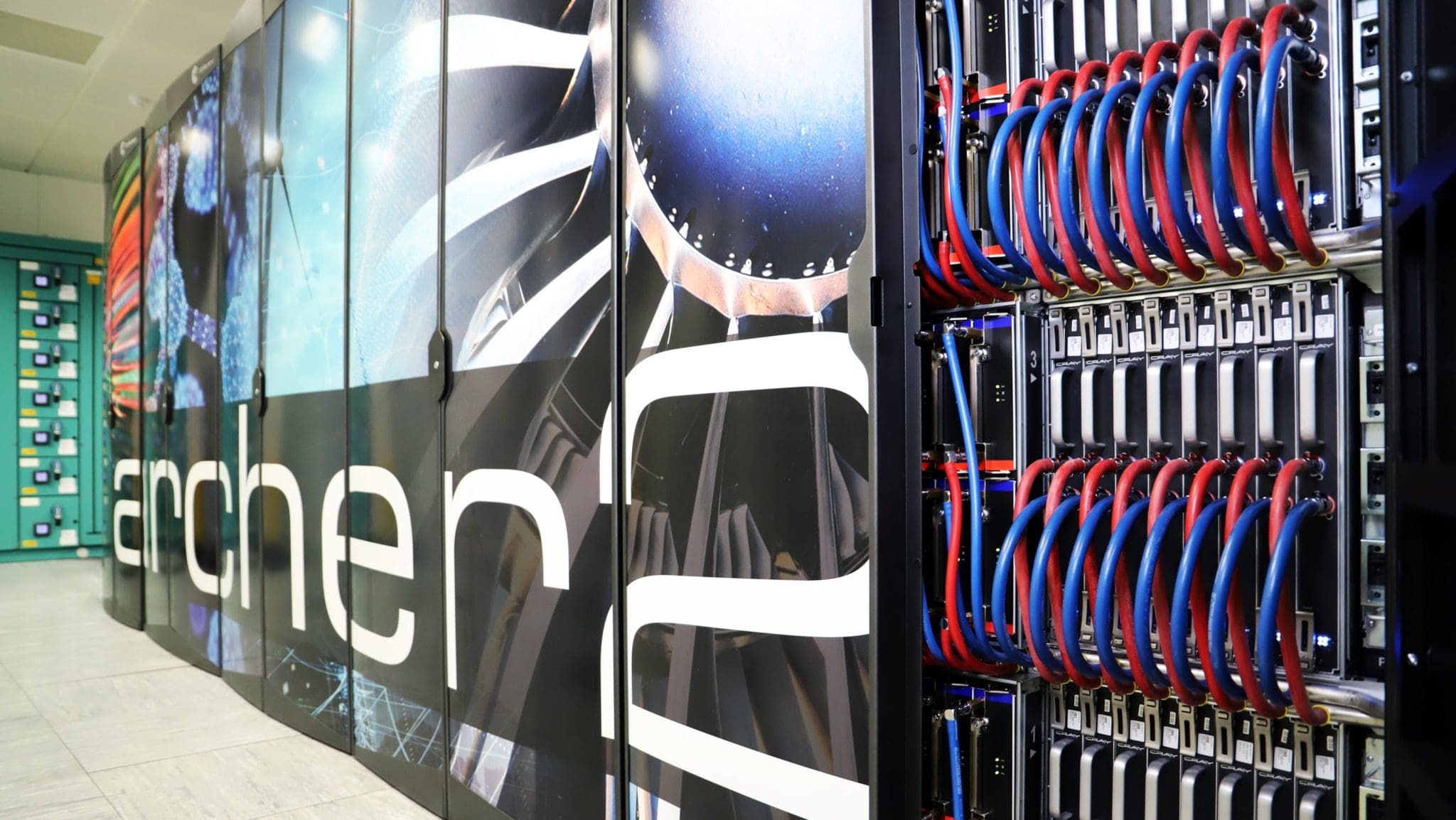
The UK’s National High Performance Computing System delivers more than eight times the return on public investment, while supporting world-class research results.
The UK’s flagship computing system, the ARCHER2 supercomputer, has generated an estimated economic value of £4.2 billion since its launch, according to a newly released independent assessment.
The findings suggest that the system, hosted at the EPCC at the University of Edinburgh, is delivering more than eight times the return on public funds invested in its development and operation.
The analysis, commissioned by UK Research and Innovation (UKRI) and carried out by London Economics, assesses both the economic and scientific contribution of ARCHER2 over its first five years of operation.
Economic impact of research and innovation
The report estimates that for every £1 of public funding allocated to the ARCHER2 supercomputer, around £8.30 is returned to the UK economy.
This calculation takes into account capital investment of around £100m to build the system and associated research funding of around £400m.
Most of the approximately £3.7bn of economic benefit comes from research and development activities enabled by ARCHER2.
According to the analysis, this includes downstream effects such as knowledge transfer, commercialization of academic research, and stimulation of additional private research and development.
The remaining £517m will go towards wider innovation outcomes. These include the creation of spin-out companies, the development of new technologies and services, and the transition of highly trained computational researchers into industry roles.
Professor Mark Parsons, Director of EPCC and Head of the School of Research Computing at the University of Edinburgh, said of the benefits of supercomputers:
“EPCC works extremely hard to provide a great service to our users and this report shows how they can reward our efforts by delivering world-class research and real value to the UK economy.”
Enabling research beyond the limits of experimentation
As the national supercomputer, ARCHER2 provides the computational power needed to model complex systems that cannot be easily studied with physical experiments.
Its applications span multiple areas, including climate modeling, drug development, and engineering simulations such as jet engine performance.
The system’s role in enabling advanced modeling makes it an important part of the UK’s research infrastructure, particularly in areas where large-scale data processing and simulation are essential.
Global scientific achievements and collaboration
The report also highlights the scientific achievements of ARCHER2. More than 2,100 academic publications have been created using this system, covering 20 different research areas.
These achievements include collaboration across a wide range of international networks. Researchers from more than 1,100 institutions in 88 countries contribute to research supported by supercomputers, highlighting the role of supercomputers in global scientific collaboration.
Strategic investment in future computing power
The assessment comes amid continued government investment in high-performance computing. In June 2025, it was confirmed that the UK’s next national supercomputer will also be located at the EPCC facility at the University of Edinburgh.
The planned investment, worth up to £750m, demonstrates a long-term commitment to maintaining the UK’s position in advanced computing and artificial intelligence.
It also builds on decades of expertise at EPCC, which was appointed as the UK’s first national supercomputing center in mid-2025.
Long-term impact on UK research infrastructure
This finding confirms the growing importance of large-scale computational systems in modern research ecosystems.
Beyond their direct economic benefits, infrastructure such as the ARCHER2 supercomputer plays a fundamental role in accelerating innovation, supporting interdisciplinary science, and strengthening international research partnerships.
As the demand for computing power continues to rise in all sectors, the report positions ARCHER2 as both a benchmark for public investment in research infrastructure and a case study in how supercomputing power can lead to measurable economic and scientific outcomes.
Source link

