
University of Bath bio-based polymer removes PFAS from water
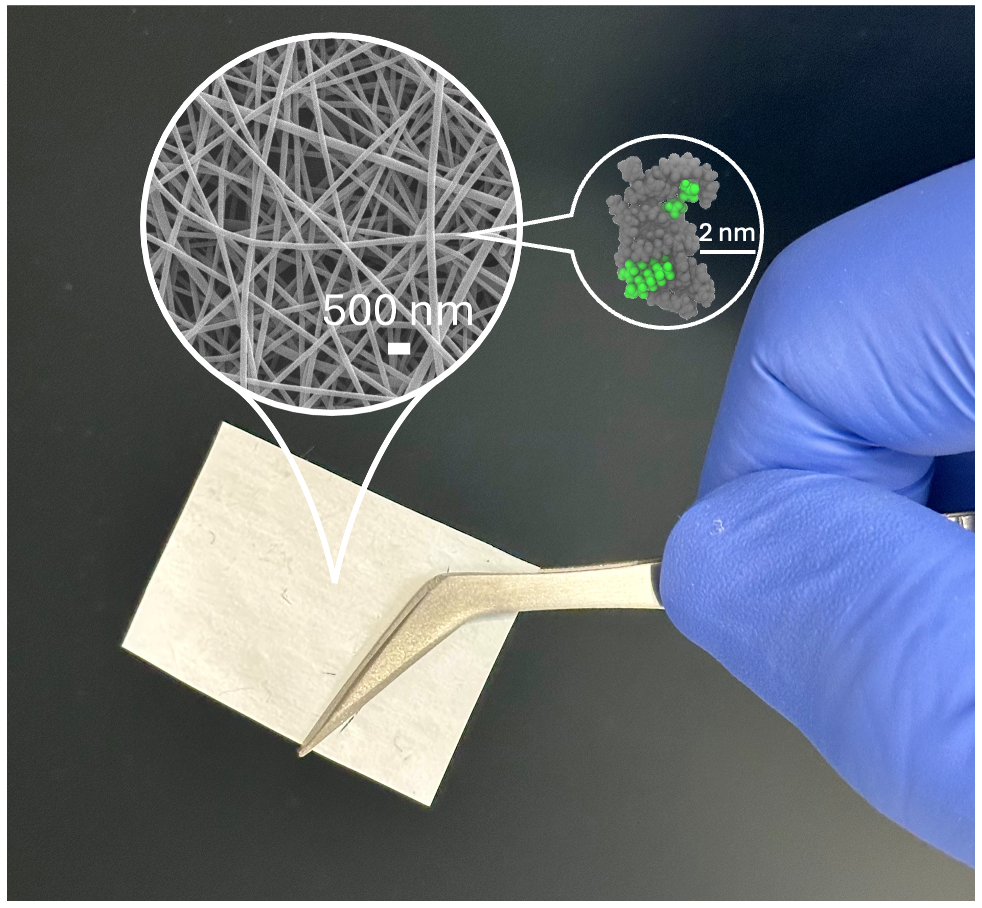
British scientists have developed a reusable bio-based membrane that is highly effective at capturing PFAS, potentially revolutionizing sustainable water treatment.
A research team at the University of Bath has developed a bio-based polymer membrane that can extract persistent per- and polyfluoroalkyl substances (PFAS), also known as permanent chemicals, from water while maintaining reusability. This is an advance that has the potential to reshape our approach to PFAS remediation.
PFAS, including perfluorooctanoic acid (PFOA), are widely detected contaminants that are associated with serious health risks, including cancer, endocrine disruption, and immune effects.
Because they are chemically stable, they are difficult to remove using existing treatment techniques, often involving trade-offs between efficiency, cost, and environmental impact.
Materials designed to react to water
The newly reported bio-based membrane is made from ultrafine polymer fibers derived from renewable raw materials rather than fossil-based inputs. These nanoscale engineered fibers exhibit unusual structural reactions when exposed to water.
The fiber network does not remain static; it absorbs moisture and reorganizes. This process causes the structure to contract, effectively tightening around contaminants suspended in the water. The result is a physical capture mechanism that functions without the need for additional chemical input.
According to lead author Xiang Ding, this behavior is markedly different from traditional petroleum-based nylons, which undergo minimal structural changes in aqueous environments.
The research team observed that this adaptive response enhanced the material’s ability to immobilize PFAS molecules within the polymer network.
“While traditional nylon materials such as nylon 6 and nylon 66 remain largely unchanged, our bio-based nanofibers structurally reorganize and tighten. This ability gives them an incredible ability to quickly trap stubborn PFAS contaminants inside the polymer network.”
performance and playback
Laboratory tests have shown that this membrane can remove more than 94% of PFOA from contaminated water. The adsorption process is relatively fast, with approximately half of the pollutant load captured within the first hour after exposure.
One of the major limitations of current PFAS treatment systems, such as activated carbon and ion exchange resins, is the need for frequent exchange or complex regeneration procedures. These processes can generate secondary waste streams and require large energy inputs.
In contrast, the bio-based polymers developed by Barth are designed for recyclable use. Once saturated, the membrane is heated to release the trapped contaminants.
This material can then be reprocessed into a new membrane form, recovering up to 93% of its original adsorption performance.
This regeneration capability positions this technology as a potential replacement for filtration media that are disposable or difficult to recycle.
Addressing scalability challenges in PFAS treatment
PFAS remediation remains a significant technical challenge, especially at large scale. Advanced degradation techniques such as electrochemical oxidation and photochemical processes can be used to degrade these compounds, but are often costly and complex to operate.
The approach taken here focuses on capture rather than destruction, but with an emphasis on sustainability. The researchers aim to reduce both life-cycle emissions and operational waste by combining renewable material inputs and recoverable adsorption systems.
This study also highlights the role of polymer design in environmental applications. Using furan-based chemical building blocks, the research team demonstrated that high-performance pollutant removal does not necessarily rely on fossil-derived materials.
Next steps and wider impact
The research, funded by Research England Development Fund through the Center for Innovation in Applied and Sustainable Technology (iCAST) in addition to support from the EPSRC Catalysis Hub and the University of Bath, is now moving beyond laboratory validation to testing the membranes under real-world conditions.
This includes evaluating performance in complex water matrices and extending the approach beyond PFOA to other PFAS compounds.
Further optimization of the regeneration process is also underway with the aim of improving efficiency and durability over repeated cycles.
If successfully scaled up, this technology could contribute to a new class of water treatment materials that combine performance and circularity. For utilities and industrial operators facing increasing regulatory standards regarding PFAS, such systems could provide a more sustainable compliance pathway.
Source link

