
Close Menu
  • Home
  • Identity
  • Inventions
  • Future
  • Science
  • Startups
  • Spanish
What's Hot

Trellix confirms source code breach due to unauthorized repository access

Replit’s Amjad Massad talks about the Cursor deal, the battle with Apple, and why he doesn’t want to sell

Musely secures $360 million from General Catalyst without giving up equity

Facebook X (Twitter) Instagram
  • Home
  • About Us
  • Advertise with Us
  • Contact Us
  • DMCA
  • Privacy Policy
  • Terms & Conditions
  • User-Submitted Posts
Facebook X (Twitter) Instagram
Fyself News
  • Home
  • Identity
  • Inventions
  • Future
  • Science
  • Startups
  • Spanish
Fyself News
Home » Two former SpaceX engineers use Sift to bring the software that helped launch rockets to the factory floor
Startups

Two former SpaceX engineers use Sift to bring the software that helped launch rockets to the factory floor

By March 25, 2026No Comments3 Mins Read
Share Facebook Twitter Pinterest Telegram LinkedIn Tumblr Email Copy Link
Follow Us
Google News Flipboard
Share
Facebook Twitter LinkedIn Pinterest Email Copy Link

A cry of “Atoms, not bits!” It’s a phrase that describes Silicon Valley’s growing obsession with physical manufacturing over digital products, culminating last week with Jeff Bezos saying he was raising $100 billion to ramp up and automate factories.

But factory automation is not purely a hardware issue. Increasing reliance on sophisticated software and AI tools is reshaping the companies that build the infrastructure of the physical manufacturing world.

Karthik Gollapudi, CEO of Sift, an El Segundo, Calif., company that provides tools to help design and build complex machines like spacecraft and cars, sees a shift under his feet. These changes, he says, have refocused his company over the past six months.

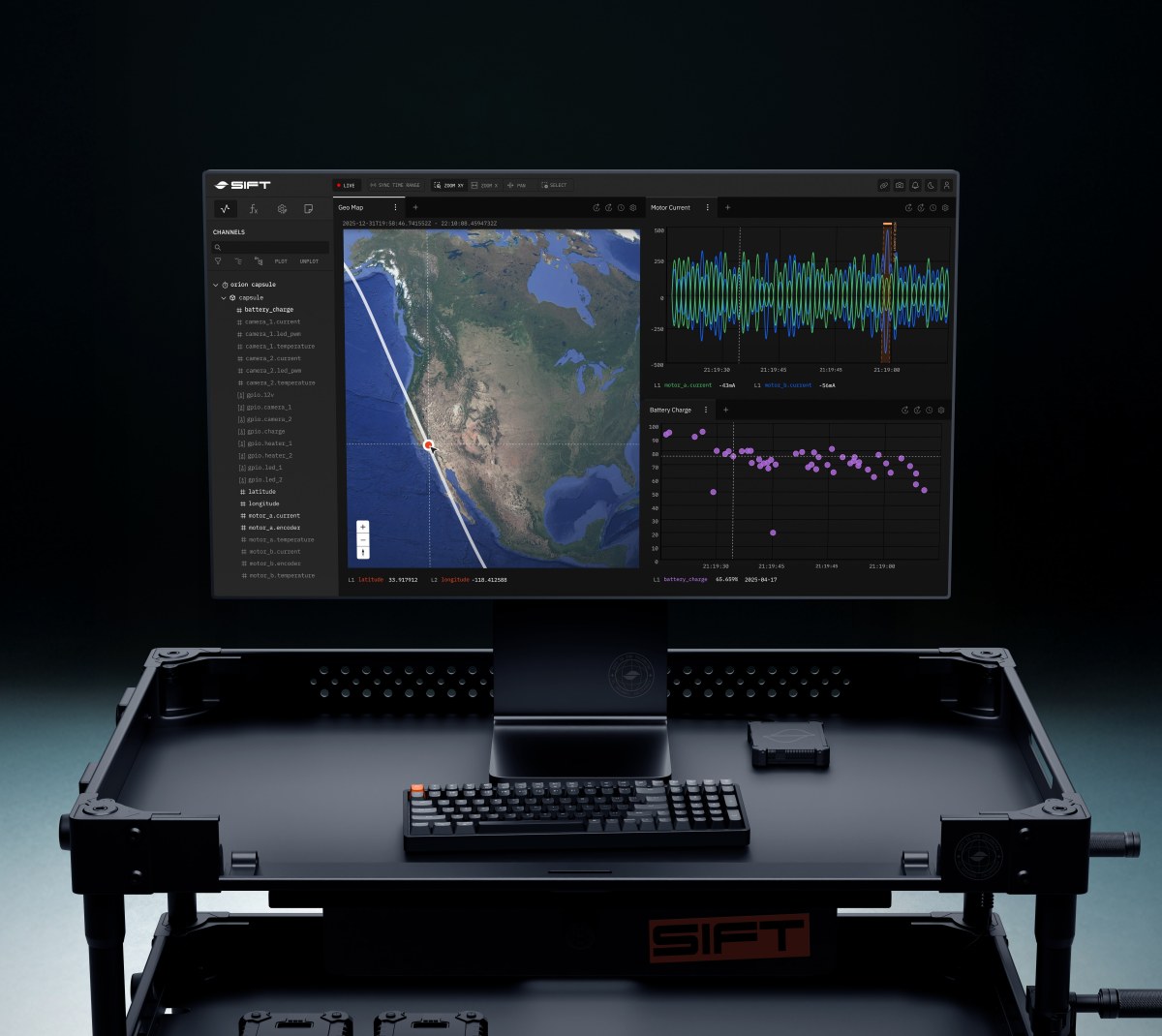
Gollapudi and his co-founder CTO Austin Spiegel founded the company in 2022 after working at SpaceX on software tools to manage vast amounts of telemetry data (real-time performance information streamed from sensors on physical components) during testing, manufacturing, and launches.

While most companies building advanced machines use off-the-shelf database tools or write their own Python scripts, Sift saw an opportunity to provide companies with best-in-class tools. Customers range from leading U.S. rocket manufacturer United Launch Alliance and other defense contractors to robotics and power grid management startups.

However, Gollapudi says the advent of AI tools for data analysis has forced changes in the business. The kind of customized workflows that once stood out as the company’s signature offering have become a key element in the world of AI and deep learning models. But the company’s ability to manage its data infrastructure suddenly became more valuable.

“Our long-term vision of seeing how this plays out over five years is really playing out this year,” Gollapudi told TechCrunch.

tech crunch event

San Francisco, California
|
October 13-15, 2026

This means managing the massive flow of data from today’s software-intensive machines. Some of the company’s vehicles are equipped with more than 1.5 million sensors that stream data simultaneously across multiple formats and time scales.

The company’s goal is to organize and store data for AI applications, and “a lot of the value is in exposing the data to be machine readable,” Gollapudi said. Sift’s goal is to make that data available to AI agents, whether they want to make manufacturing decisions or analyze test data to flag potential issues.

Jeff Dexter, vice president of software at Astranis, a satellite company that uses Sift to manage test, manufacturing, and operations, said a good data infrastructure is important for companies like his that may perform 10 million automated software tests a day.

“Inevitably, it’s going to cost millions of dollars a month just to store that data,” Dexter said. “It really feels like $1 million well spent. With technology like Sift, you don’t have to worry about how much data is there.”

Gollapudi told TechCrunch that Sift raised a $42 million Series B at a post-money valuation of $274 million in 2025, led by StepStone with participation from GV (Google’s venture arm), Riot Ventures, Fika Ventures, and CIV.


Source link

#Aceleradoras #CapitalRiesgo #EcosistemaStartup #Emprendimiento #InnovaciónEmpresarial #Startups
Follow on Google News Follow on Flipboard
Share. Facebook Twitter Pinterest LinkedIn Tumblr Email Copy Link
Previous ArticleUniversity of Bath bio-based polymer removes PFAS from water
Next Article Goonhilly Earth Station tracks Artemis II mission to the moon

Related Posts

Replit’s Amjad Massad talks about the Cursor deal, the battle with Apple, and why he doesn’t want to sell

May 1, 2026

Musely secures $360 million from General Catalyst without giving up equity

May 1, 2026

Meta acquires robotics startup to strengthen humanoid AI ambitions

May 1, 2026
Add A Comment
Leave A Reply Cancel Reply

Latest Posts

Trellix confirms source code breach due to unauthorized repository access

Replit’s Amjad Massad talks about the Cursor deal, the battle with Apple, and why he doesn’t want to sell

Musely secures $360 million from General Catalyst without giving up equity

Meta acquires robotics startup to strengthen humanoid AI ambitions

Trending Posts

Subscribe to News

Subscribe to our newsletter and never miss our latest news

Please enable JavaScript in your browser to complete this form.
Loading

Welcome to Fyself News, your go-to platform for the latest in tech, startups, inventions, sustainability, and fintech! We are a passionate team of enthusiasts committed to bringing you timely, insightful, and accurate information on the most pressing developments across these industries. Whether you’re an entrepreneur, investor, or just someone curious about the future of technology and innovation, Fyself News has something for you.

Castilla-La Mancha Ignites Innovation: fiveclmsummit Redefines Tech Future

Local Power, Health Innovation: Alcolea de Calatrava Boosts FiveCLM PoC with Community Engagement

The Future of Digital Twins in Healthcare: From Virtual Replicas to Personalized Medical Models

Human Digital Twins: The Next Tech Frontier Set to Transform Healthcare and Beyond

Facebook X (Twitter) Instagram Pinterest YouTube
  • Home
  • About Us
  • Advertise with Us
  • Contact Us
  • DMCA
  • Privacy Policy
  • Terms & Conditions
  • User-Submitted Posts
© 2026 news.fyself. Designed by by fyself.

Type above and press Enter to search. Press Esc to cancel.
