
NASA outlines phased moon base strategy
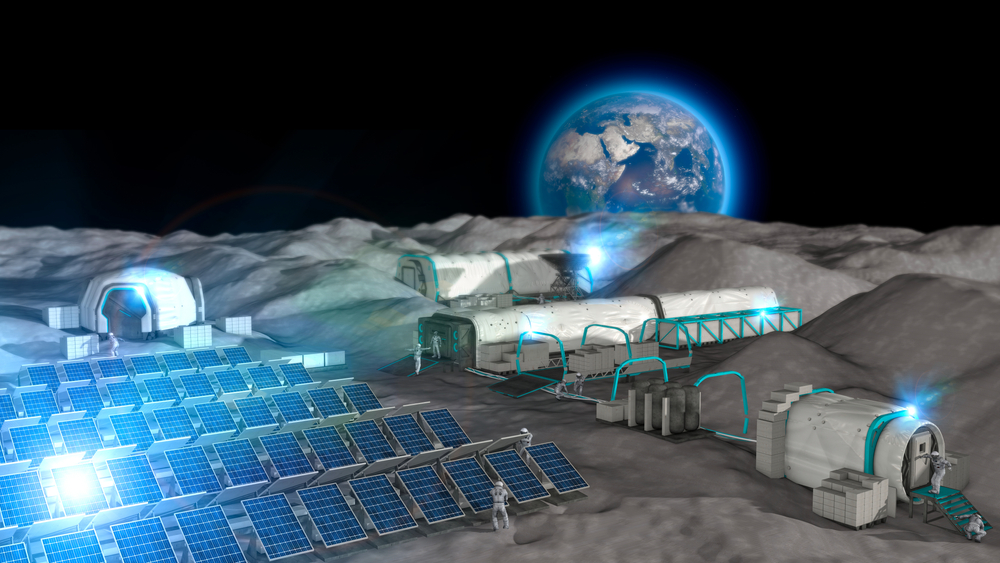
NASA’s new roadmap links lunar infrastructure, commercial partnerships, and nuclear propulsion to long-term exploration goals.
A comprehensive series of policy and program updates by NASA signal a structural shift in how the United States plans to operate in space over the next decade.
The changes, announced at a recent agency-wide briefing, are consistent with the current administration’s national space policy, which places sustainable lunar base development at the center of future exploration strategies.
The plan reconfigures existing lunar exploration missions, expands the role of private industry, and introduces new approaches to maintaining a continued human presence both in orbit and on the Moon. It also advances long-discussed ambitions for nuclear propulsion and deep space infrastructure.
Artemis program refocuses on continuing lunar activities
NASA’s updated roadmap builds on prior adjustments to the Artemis program, a major effort to return astronauts to the moon.
The agency has standardized the configuration of its Space Launch System (SLS) rocket and added additional missions ahead of a planned manned moon landing later this decade.
Under the revised order, Artemis III, currently targeted for 2027, will prioritize integrated system testing in Earth orbit rather than attempting an immediate moon landing. The first landing under this updated architecture is expected to follow Artemis IV.
Beyond these missions, NASA is moving to a higher pace of lunar activity. The agency aims to move from isolated, high-cost missions to a more regular schedule, potentially reaching manned landings every six months as the system matures and costs come down.
A key element of this change is the increasing use of commercially developed and reusable hardware, which reflects a broader trend of public-private collaboration in spaceflight.
A three-phase plan that sets a path to a lunar base
Central to NASA’s long-term vision is a structured, multi-phase plan to establish a permanent lunar base. This approach is designed to expand capabilities while gradually incorporating lessons learned from previous missions.
Phase 1: Iteration and technology validation
The first phase will focus on increasing mission frequency and testing key technologies. NASA will rely heavily on the Commercial Lunar Payload Services (CLPS) program to deliver scientific instruments, robotic systems, and experimental hardware to the lunar surface.
These missions will support progress in several key areas, including:
Ground mobility and autonomous navigation Power generation, including nuclear-based systems Communication and positioning infrastructure Scientific research in the field
The goal is to build a repeatable operational model rather than a bespoke mission architecture.
Phase 2: Initial infrastructure and international integration
Once baseline functionality is verified, NASA plans to begin deploying semi-permanent infrastructure. This phase supports long-term astronaut stays and more regular logistics operations.
International partnerships will play an important role. Contributions are expected from institutions such as the Japan Aerospace Exploration Agency, which is developing pressurized rovers, and other collaborators who will provide scientific payloads and transportation systems.
This stage marks the transition from experimental missions to sustained existence.
Phase 3: Permanent habitation of the Moon
The final stage aims to establish continuous human activity on the lunar surface. Heavier cargo systems provide the necessary infrastructure for long-term occupancy, such as living quarters, mobile platforms, and logistics support systems.

Planned contributions include a habitat module from the Italian Space Agency and a ground vehicle from the Canadian Space Agency. Additional partnerships continue to be considered, particularly in areas such as ground transportation and supply chain.
This stage effectively transforms the Moon from a destination to an operational environment.
Reduce gateways in favor of surface features
As part of the realignment, NASA is reevaluating the planned Lunar Gateway Station. Although not completely abandoned, its current form would deprioritize the program and direct resources to infrastructure that directly supports ground operations.
The agency has indicated that existing hardware and international commitments will continue to be used where possible, suggesting partial reuse rather than complete discontinuation.
Low Earth orbit strategy moves towards commercial transition
Alongside its moon ambitions, NASA is also working on the future of human activity in low Earth orbit. After more than 20 years of operation, the International Space Station (ISS) is nearing the end of its life cycle.
To avoid gaps in orbital capabilities, NASA is considering a hybrid transition model. In this approach, government agencies first install government-owned modules on the ISS, followed by commercially developed modules. These will be tested in orbit before eventually being separated into independent, privately operated stations.
The long-term goal is to establish a competitive commercial ecosystem in which NASA acts as a customer rather than a primary operator.
To stimulate this market, the agency is considering expanding opportunities such as private astronaut missions, shared command roles, and award-based incentives for industry innovation.
Science missions remain at the center of strategy
Despite operational changes, NASA continues to prioritize scientific research across multiple disciplines.
Existing missions such as the James Webb Space Telescope and the Parker Solar Probe are already providing important data, while planetary defense and Earth observation programs remain active.

Future missions are expected to build on this momentum. The Nancy Grace Roman Space Telescope is scheduled to launch as early as this year and will focus on dark energy and cosmology. Meanwhile, the Dragonfly program is scheduled to send a nuclear-powered rotorcraft to Saturn’s moon Titan in the 2030s.
Mars exploration is also a prominent feature. NASA will support the delivery of the Rosalind Franklin rover, developed by the European Space Agency, along with advanced instruments designed to analyze organic compounds on the surface of Mars.
In parallel, a new Earth science mission aims to improve predictions of extreme weather events by analyzing storm dynamics in unprecedented detail.
Expanding lunar science and payload opportunities
The development of a lunar base is expected to significantly increase scientific research opportunities. NASA is targeting a surge in robotic moon missions, potentially reaching dozens of landings a year by the late 2020s.
These missions cover a wide range of payloads, including spacecraft, airborne systems, and fixed instruments. The agency is focused on accelerating innovation and workforce development and is inviting universities, research institutes and private organizations to participate.
Short-term missions include the VIPER spacecraft and the LuSEE Night project, both aimed at advancing science and technology on the moon.
Nuclear power promotion plan moves towards deployment
One of the more important announcements concerns the acceleration of nuclear propulsion systems. NASA has confirmed plans to launch its first nuclear-powered interplanetary spacecraft, known as Space Reactor 1 Freedom, by the end of the 2020s.
The spacecraft will demonstrate nuclear-electric propulsion, a technology considered essential for efficient deep space travel. Unlike traditional propulsion systems or solar power systems, nuclear propulsion allows continuous operation far from the sun and supports heavier payloads.
Once on Mars, the rover is expected to deploy a series of aerial vehicles derived from the Ingenuity helicopter design, expanding the range of planetary surface exploration.
The program is being developed in collaboration with the Department of Energy (DOE) and aims to establish the technical and regulatory foundation for future missions to Mars and beyond.
Labor force and procurement reforms to support strategy
NASA is also implementing internal changes to enhance its execution capabilities. These include converting contractor roles into civil service positions and expanding recruitment channels for both early career professionals and experienced industry players.
The agency plans to embed technical experts throughout the supply chain to improve oversight, reduce bottlenecks and accelerate development schedules.
In parallel, a series of Requests for Information (RFIs) and draft procurement documents will be published to hone industry partnerships and align investments with long-term goals.
A strategic shift reflecting broader competition in space
These announcements represent a significant recalibration of US space strategy. NASA is aiming for a more sustainable and scalable presence beyond Earth by prioritizing a lunar base, expanding commercial participation, and promoting nuclear propulsion.
This approach reflects both the technological opportunity and the geopolitical context, as competition in space intensifies and operational frontiers extend deep into the solar system.
Source link

