
EU approves €6 billion to scale up renewable hydrogen production in Italy
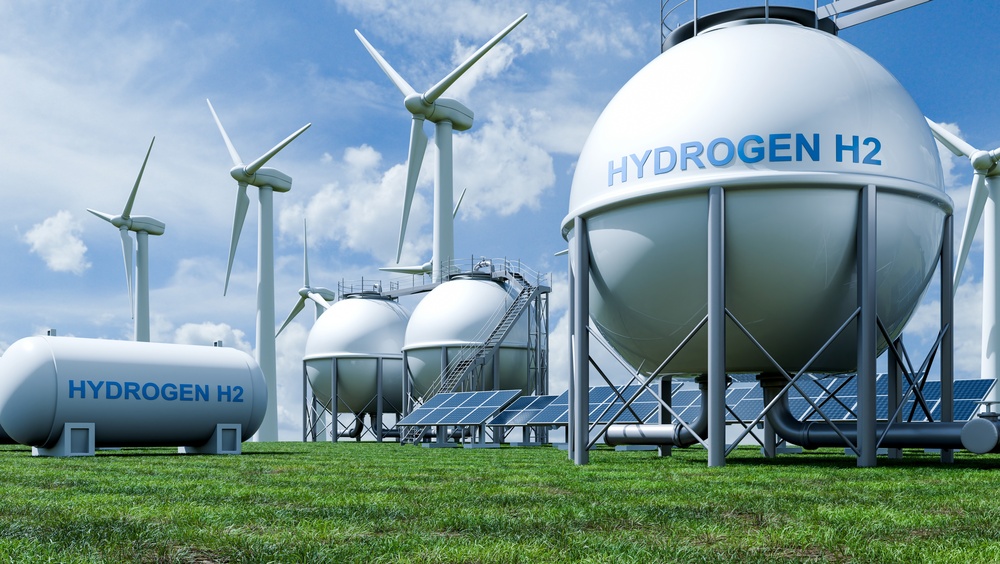
The European Commission has approved Italy’s €6 billion support mechanism to expand renewable hydrogen production, an important policy step towards decarbonizing energy-intensive sectors.
The program targets large-scale production of low-emission hydrogen for use in transport and industry, in line with broader EU climate and industrial strategy objectives.
Teresa Rivera, Executive Vice President for Clean, Fair and Competitive Transition, commented on the financial support: “This plan will support Italy’s renewable hydrogen production in areas where it can make the most contribution to reducing emissions.”
“This plan will contribute to a clean, fair and competitive transition.”
Financing model targeting market gaps
Italy’s system is structured around two-way contracts for difference (CfD), a financial mechanism aimed at stabilizing hydrogen producers’ profits. In this model, developers bid a fixed “strike price” for hydrogen through a competitive process.
If the market price of conventional fuel falls below the agreed level, the Italian government will compensate producers for the shortfall.
Conversely, if the price of fossil fuels rises above the strike price, producers will return the difference to the government. This approach is designed to reduce investment risk while maintaining market discipline.
This scheme is valid until the end of 2029.
Expanding renewable hydrogen production capacity
The initiative aims to achieve up to 200,000 tonnes of renewable hydrogen production per year.
Eligible projects include hydrogen produced by electrolysis with renewable electricity and biogenic output using biological and thermochemical processes.
This dual pathway reflects a broader EU commitment to diversify the clean hydrogen supply chain while accelerating large-scale deployment.
Regulatory approval and state aid assessment
The Commission evaluated the measures taken under EU state aid rules, in particular the provisions that allow support for economic activities that promote environmental and energy goals.
The assessment concluded that public funding is needed to close the cost gap that currently limits the competitiveness of clean hydrogen.
Officials also determined that a competitive bidding framework would ensure proportionality and encourage efficient project selection while preventing excessive compensation.
Climate impact and industrial decarbonization
From a policy perspective, this system is expected to contribute to reducing emissions in sectors that are difficult to electrify, such as heavy transport and industrial manufacturing. These sectors are central to the EU’s long-term decarbonization goals.
The European Commission’s approval reflects a balance of environmental benefits against potential market distortions, concluding that the positive climate impacts outweigh the risks to competition.
Strategic background for clean hydrogen
Italy’s program forms part of a Europe-wide effort to scale up clean hydrogen as a cornerstone of energy transition strategies.
By addressing cost barriers and investment uncertainty, policymakers aim to accelerate adoption and build a competitive hydrogen economy across member states.
Source link

