
If you’re giving a commencement speech in 2026, it’s best not to mention AI
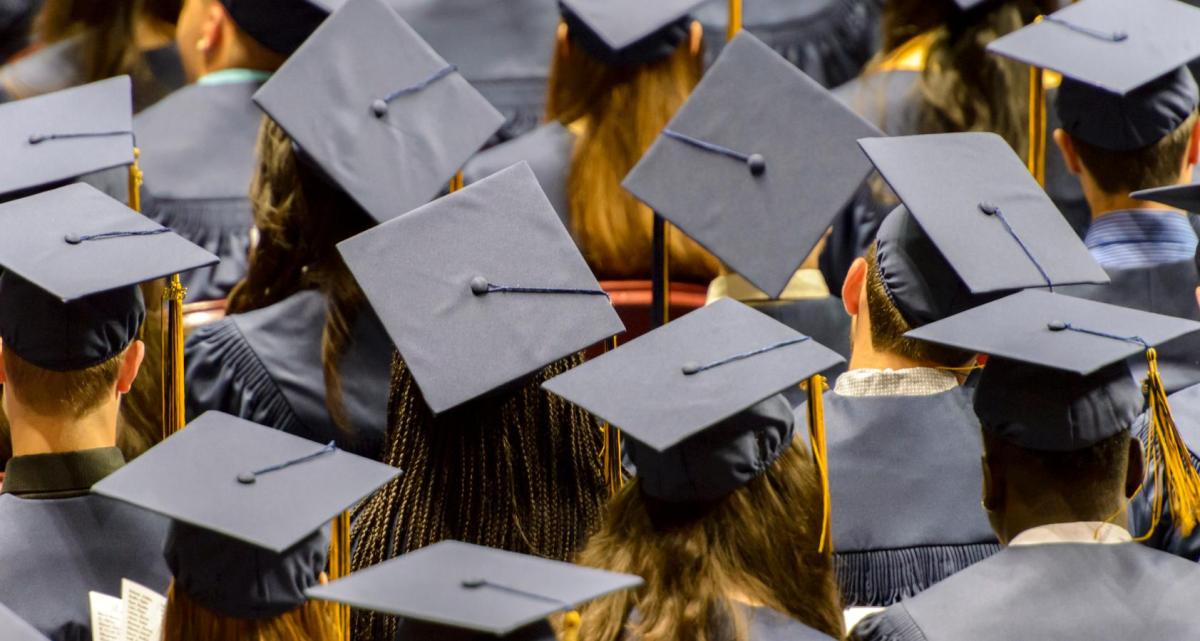
Graduation ceremony season has arrived once again. And this year, some speakers found it difficult to get graduates excited about a future shaped by artificial intelligence.
Last week, Gloria Caulfield, an executive at real estate firm Tavistock Development Company, spoke at the University of Central Florida and acknowledged that we live in a time of “profound change” that is both “exciting” and “daunting.”
“The rise of artificial intelligence is the next industrial revolution,” Caulfield declared. The students in the audience started booing, and it got louder and louder until Mr. Caulfield chuckled, turned to the other speakers and asked, “What happened?”
“Okay, that struck a chord with me,” she said. Caulfield then tried to resume his speech, saying, “Just a few years ago, AI wasn’t an element of our lives,” but was interrupted again, this time by the audience. This time there was loud cheers and applause.
Former Google CEO Eric Schmidt faced a similar reaction when he mentioned AI in a speech at the University of Arizona on Friday.
In Schmidt’s case, the criticism actually started before the speech itself, with some student groups calling for Schmidt to be removed as the commencement speaker because of a lawsuit in which a former girlfriend and business partner accused him of sexual assault. (He denies the charges.) According to local news, the booing began even before Schmidt took the stage.
But Schmidt also drew loud boos when he told the students, “You will be helping to shape artificial intelligence.” The boos were so persistent that Schmidt tried to quell them, arguing that “you can assemble a team of AI agents to help you with things you could never accomplish on your own. If someone offers you a seat on a rocket ship, you don’t ask which seat you want to sit, you just jump in.”
To be fair, AI isn’t the third rail at every graduation ceremony. When Nvidia CEO Jensen Huang recently spoke at Carnegie Mellon University’s commencement ceremony and said that AI has “reinvented computing,” there didn’t seem to be any noticeable backlash.
Still, it’s no surprise that some students are in a booing mood. A recent Gallup poll found that only 43% of Americans ages 15 to 34 say now is a good time to find a job locally, down from 75% in 2022.
That pessimism isn’t just a reaction to the rise of AI (a change that even tech industry workers are worried about), but journalist and tech industry commentator Brian Merchant suggested that for many students, AI has become “the brutal new face of hyper-scaling capitalism.”
“Me too, if I were unemployed in my early twenties with dreams for the future bigger than filling out a prompt for an LLM, I would boo loudly at the prospect of this next industrial revolution,” Merchant wrote.
Even if AI was not explicitly mentioned in commencement speeches, “resilience” was a recurring theme this year. Schmitt himself admitted: “There is a fear in your generation that the future has already been written, that we will inherit machines, jobs will disappear, the climate will collapse, our politics will be divided, and we will inherit a mess that we did not create.”
On the other hand, Ms. Caulfield may have misread her audience as arts and humanities graduates. One student said Caulfield had already begun to lose touch with artificial intelligence with his “general” praise for business executives like Jeff Bezos before even mentioning it.
Another graduate, Alexander Rose Tyson, told the New York Times: “It wasn’t just one person who started booing. It was a group of people who were like, ‘This sucks.'”
If you buy through links in our articles, we may earn a small commission. This does not affect editorial independence.
Source link

