
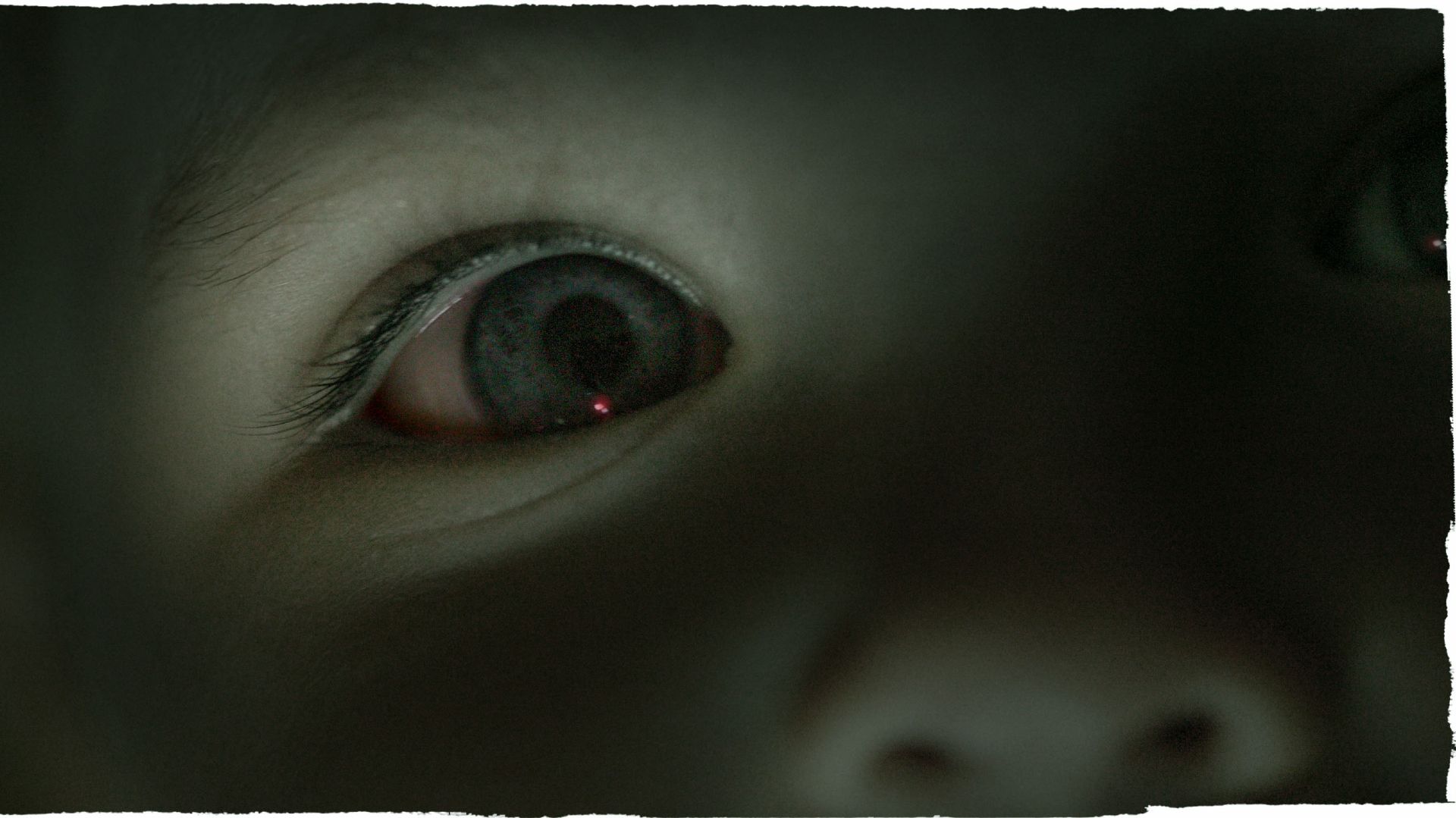
Scientists have discovered a way to treat a rare type of cancer at the back of the eye without damaging nearby structures by using molecules derived from pig semen.
The approach, tested in mice, targets a cancer called retinoblastoma and exploits sperm’s ability to pass through barriers. If this new technology proves safe and effective in humans, it could allow retinoblastoma patients, primarily young children, to receive chemotherapy without facing painful, potentially eye-damaging injections.
Article continues below
you may like
Retinoblastoma affects 1 in 18,000 children. Almost all are under 5 years old, and two-thirds are under 2 years old. In retinoblastoma, the tumor is located in the innermost part of the eye. To reach the drug, it must pass through either the cornea (the protective layer in front of the eye) or the side of the eyeball. Chemotherapy for this condition is usually given by injection, which can damage the eyes.
To get around this problem, Zhang’s team wanted to design a safer, less painful way to deliver chemotherapy to the retina. They considered what natural biological systems are particularly good at transporting substances across barriers, and found inspiration in sperm exosomes.
This allowed us to investigate whether semen-derived exosomes also have the ability to cross the ocular barrier.
Yu Zhang, pharmaceutical researcher at Shenyang Pharmaceutical University, China
Exosomes are tiny fatty bubbles that cells use to transport proteins and other substances from inside the cell to the outer membrane. In semen, exosomes are carried into the ejaculate and carry proteins that help sperm cells pass through the protective layer of cells surrounding the egg and fertilize it. Although the cells in the eye are very different, the mechanism for crossing this biological barrier appeared to be similar to Zhang’s team. “This led us to investigate whether semen-derived exosomes also have the ability to cross the ocular barrier,” Zhang told Live Science.
The researchers tested this on pig semen because pigs are already widely used in biological research and material from pigs is generally safe to use in clinical research. Zhang’s team administered eye drops containing porcine semen extracellular vesicles (SEVs), or exosomes, to mice and showed that they could potentially treat retinoblastoma in the back of the eye.
This proof-of-concept delivery system was used to deliver carbon dots, nanostructures made of carbon atoms, to the back of the mouse eye. Although carbon dots are not yet routinely used in cancer treatment, other researchers are studying how these tiny structures can be used to kill tumor cells by producing high levels of “reactive oxygen species” that destroy the cells’ DNA. To ensure that exosomes target tumor cells rather than healthy eye cells, their lipid layer contains additional molecules that increase the production of reactive oxygen species in the presence of hydrogen peroxide, which cancer cells consume at high levels to proliferate and spread.
In the new study, published March 27 in Science Advances, Zhang and colleagues showed that the eye drops penetrated the eye layers of mice and killed tumor cells. After 30 days, the tumors were only 2-3% the size of tumors in untreated mice.
The study provides some interesting insights into the application of this technology, Owen Davis, an expert on extracellular vesicles at Loughborough University in the UK, told Live Science in an email. However, he noted that other types of exosomes, such as those derived from stem cells, may work as well.
Zhang believes that exosomes could also be used to treat eye diseases other than retinoblastoma, such as macular degeneration.
Dr. Shiri Zait Saudri, an ophthalmologist at Tel Aviv University Rabin Medical Center who was not involved in the study, agreed, saying in an email that the new technology “has truly transformative potential.” However, she cautioned that extensive testing is still needed to show whether it can be used to treat other diseases, and potential applications will need to go through human clinical trials.
Zhao, J., ying, T., Deng, Y., Liu, H., Wei, M., Chu, C., Liang, X., Bi, X., He, H., Gou, J., Tang, X., and Zhang, Y. (2026). Utilization of semen-derived exosomes for non-invasive fundus drug delivery: A paradigm for exosome-based fundus therapy. Science Advances, 12(13), eadw7275. https://doi.org/10.1126/sciadv.adw7275
