
Close Menu
  • Home
  • Identity
  • Inventions
  • Future
  • Science
  • Startups
  • Spanish
What's Hot

TrueConf zero-day exploited to attack Southeast Asian government networks

Healthcare data giant CareCloud announces that hackers have accessed patient medical records

Rivian spinoff also plans to build autonomous delivery vehicles for DoorDash

Facebook X (Twitter) Instagram
  • Home
  • About Us
  • Advertise with Us
  • Contact Us
  • DMCA
  • Privacy Policy
  • Terms & Conditions
  • User-Submitted Posts
Facebook X (Twitter) Instagram
Fyself News
  • Home
  • Identity
  • Inventions
  • Future
  • Science
  • Startups
  • Spanish
Fyself News
Home » Artemis II launch live: NASA prepares for historic space mission launch on Wednesday
Science

Artemis II launch live: NASA prepares for historic space mission launch on Wednesday

By March 31, 2026No Comments6 Mins Read
Share Facebook Twitter Pinterest Telegram LinkedIn Tumblr Email Copy Link
Follow Us
Google News Flipboard
Share
Facebook Twitter LinkedIn Pinterest Email Copy Link

refresh

2026-03-31T13:57:38.239Z

Who else walked on the moon?

We gave away Gene Cernan’s name as a giveaway, but do you know who else walked on the moon? Take our quiz to see how much you know.

2026-03-31T13:37:18.543Z

When was the last time Americans went to the moon?
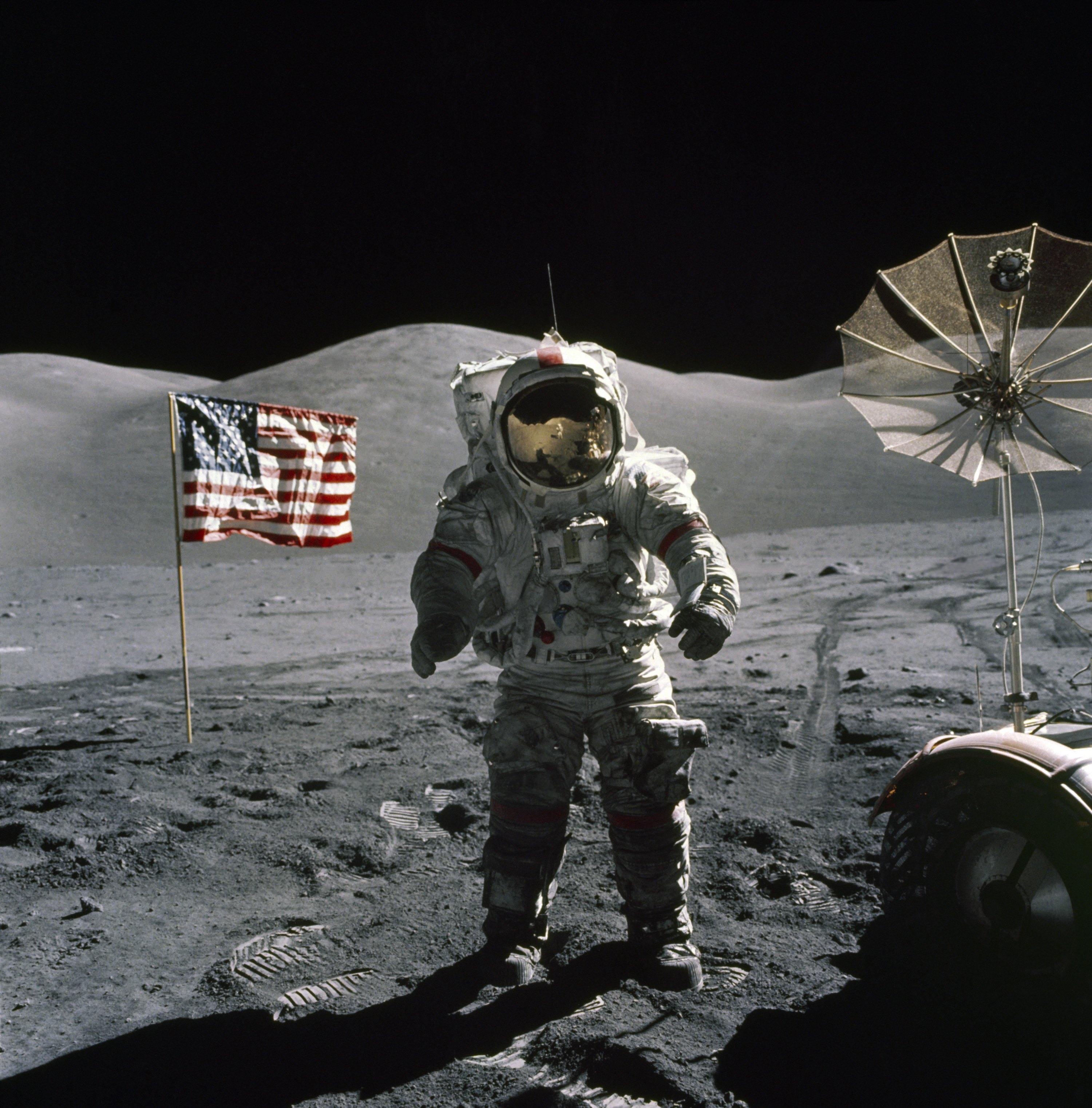
Apollo 17 commander Eugene A. Cernan stands next to the American flag on the moon.

Apollo 17 Commander Eugene ‘Gene’ Cernan on the moon, December 14, 1972 (Image credit: NASA/Donaldson Collection via Getty Images)

The last person to set foot on the moon was Gene Cernan, commander of NASA’s Apollo 17 mission. Cernan, the last of the 12 humans to walk on the moon, left the last human footprint on the moon on December 14, 1972.

And while Artemis II marks NASA’s return to the moon, the mission is more akin to the Apollo 8 mission on Dec. 21, 1968, which sent three NASA astronauts on a six-day trip around the moon. Like Artemis II, Apollo 8 was an important step in testing the flight system and trajectory before attempting the moon landing.

ben turner

ben turner

Trend News Deputy Editor

2026-03-31T12:30:08.124Z

Why go back to the moon anyway?

View of the Earth from the surface of the Moon.

NASA will soon begin construction of a permanent lunar base. (Image credit: NASA)

This will be the first time in more than 50 years that NASA has sent humans to the moon, famously taking 12 astronauts to the moon as part of the Apollo program from 1969 to 1972.

But that doesn’t mean it’s easy to undo what was accomplished decades ago. Space travel is a difficult endeavor with great risks, and the moon remains a demanding goal in 2026.

So why bother going back?

Artemis II is planned as a lunar flyby, so astronauts aboard the Orion spacecraft will not actually land on the moon. But if the 10-day trip around the moon and return to Earth is successful, it will test the system ahead of NASA’s planned Artemis IV and Artemis V moon missions in 2028, when they aim to land on the moon.

NASA aims to establish a sustained presence on the moon and pave the way for future missions to Mars. That means Artemis II could ultimately be a key step toward humanity colonizing another planet.

Want to know more? You can read my analysis story here.

Patrick Pester's photo

patrick pester

Popular news writer

2026-03-31T11:14:48.681Z

Mission timeline
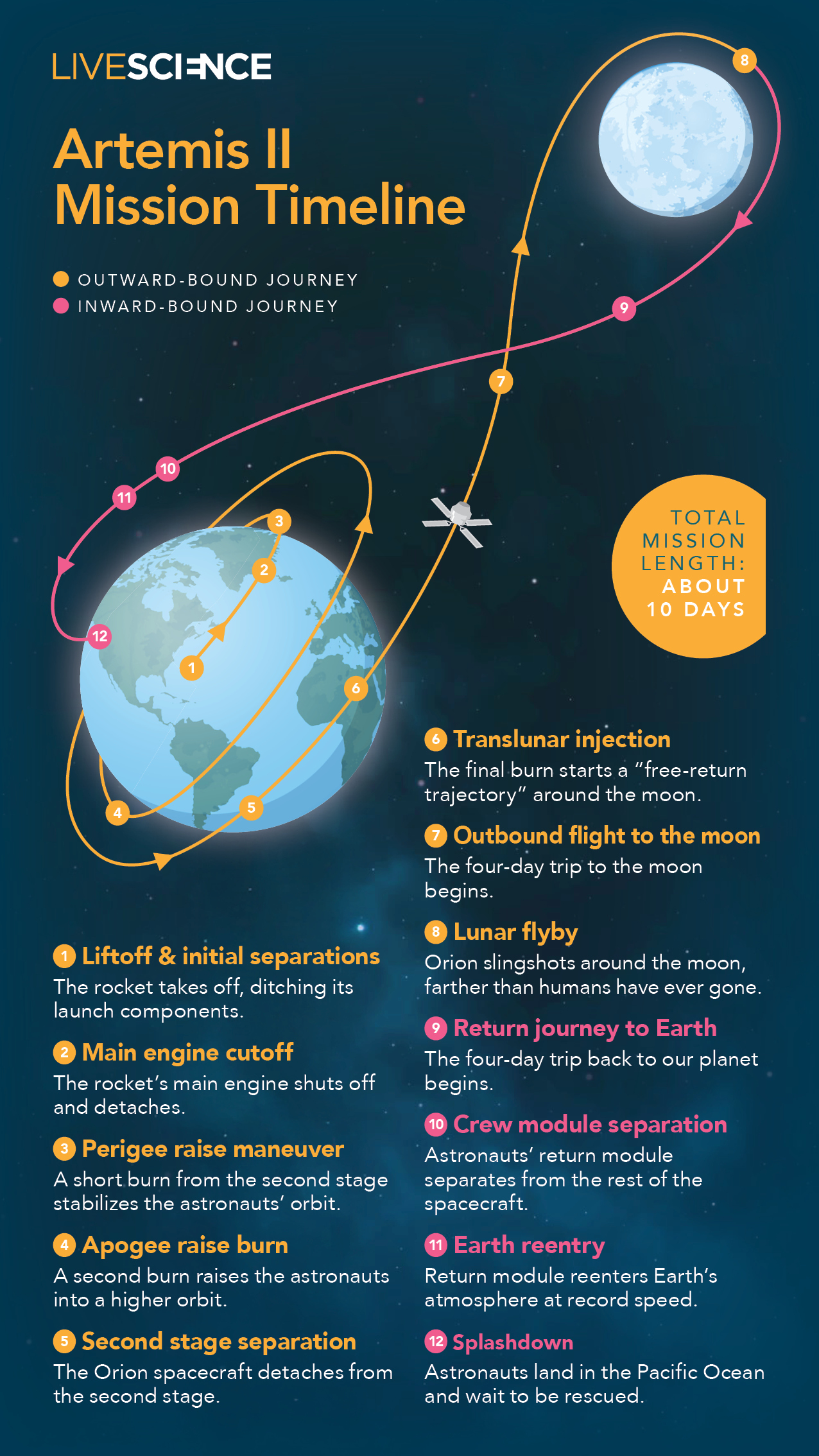
Infographic showing the 12 steps of the Artemis II mission and the Orion spacecraft's slingshot path around the moon

The 12 steps of the Artemis II mission and the path the Orion spacecraft follows as it slingshots around the moon. (Image credit: John Strike from Live Science)

Hello Artemis lovers! Senior Staff Writer Harry Baker shares a little about the timeline of NASA’s historic return to (and return to) the Moon.

The Artemis II mission will officially begin as soon as operators give the green light for launch, and the launch team is already hard at work completing a long list of initial pre-flight checks. The quarantined astronauts are also making final preparations before heading to the launch pad at Kennedy Space Center in Florida tomorrow (April 1).

We divided the 10-day mission into 12 critical steps, covering everything from launch and maneuvers in low-Earth orbit to a lunar slingshot, record-breaking atmospheric entry, and eventual splashdown in the Pacific Ocean.

Personally, my favorite stage is “prox opps”. This will take place approximately three and a half hours after liftoff, and Artemis II pilot Victor Glover will briefly take control of the Orion spacecraft to test its manual thrusters and maneuverability, providing critical data for future Artemis III and Artemis IV missions.

You can read my full text here.

Also, be sure to bookmark this page so you can visit it anytime in the coming weeks.

A man in a pink shirt holding a glass certificate in front of a bookshelf

harry baker

senior staff writer

2026-03-31T11:08:24.464Z

record breaking return
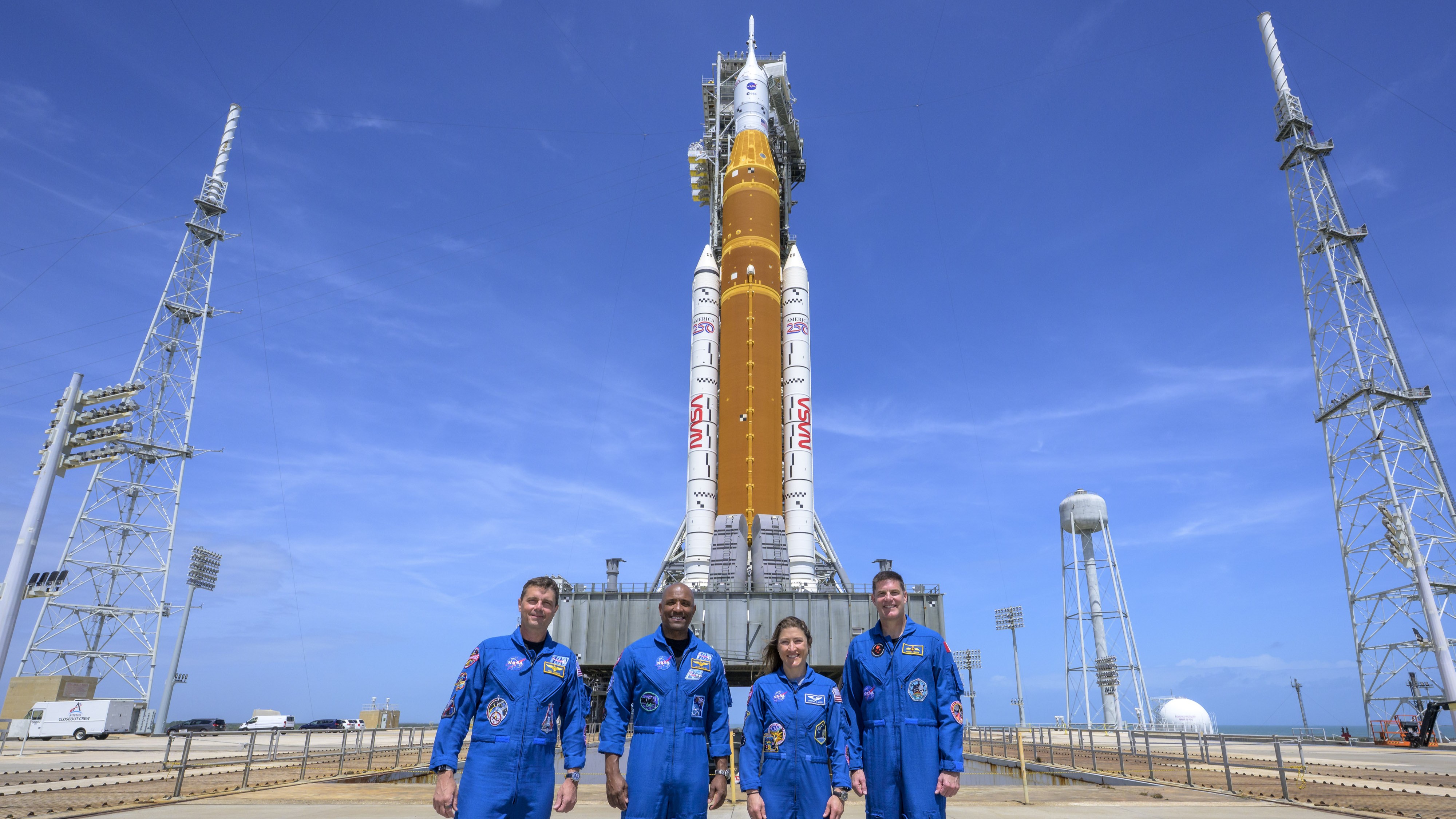
The crew of Artemis II stands in front of the rocket.

NASA Astronaut Reed Wiseman, Artemis II Captain (left), Victor Glover, Artemis II Pilot (center left), Christina Koch, Artemis II Mission Specialist (center right), and Canadian Space Agency Astronaut Jeremy Hansen, Artemis II Mission Specialist (right) pose in front of NASA’s Artemis II Space Launch System rocket and Orion spacecraft on March 30, 2026. (Image source: Getty Images)

It took a while to get here, but after numerous delays, NASA has announced that the Artemis II mission is finally ready for launch. In addition to being the first step toward NASA’s long-awaited return to the moon, this mission will accomplish a number of firsts. Its crew included the first black astronaut, the first woman, and the first non-American astronaut to visit the moon.

The crew will also break long-standing records. For example, they will be the fastest humans ever to return to Earth, re-entering Earth’s atmosphere at just over 25,000 mph (40,200 km/h) before splashdown in the Pacific Ocean, which would surpass the 1969 re-entry record currently held by the Apollo 10 astronauts.

That’s not all that’s new and record-breaking about this flight. For more information, senior staff writer Harry Baker has the full story here.

2026-03-31T11:02:04.406Z

go to the moon and come back
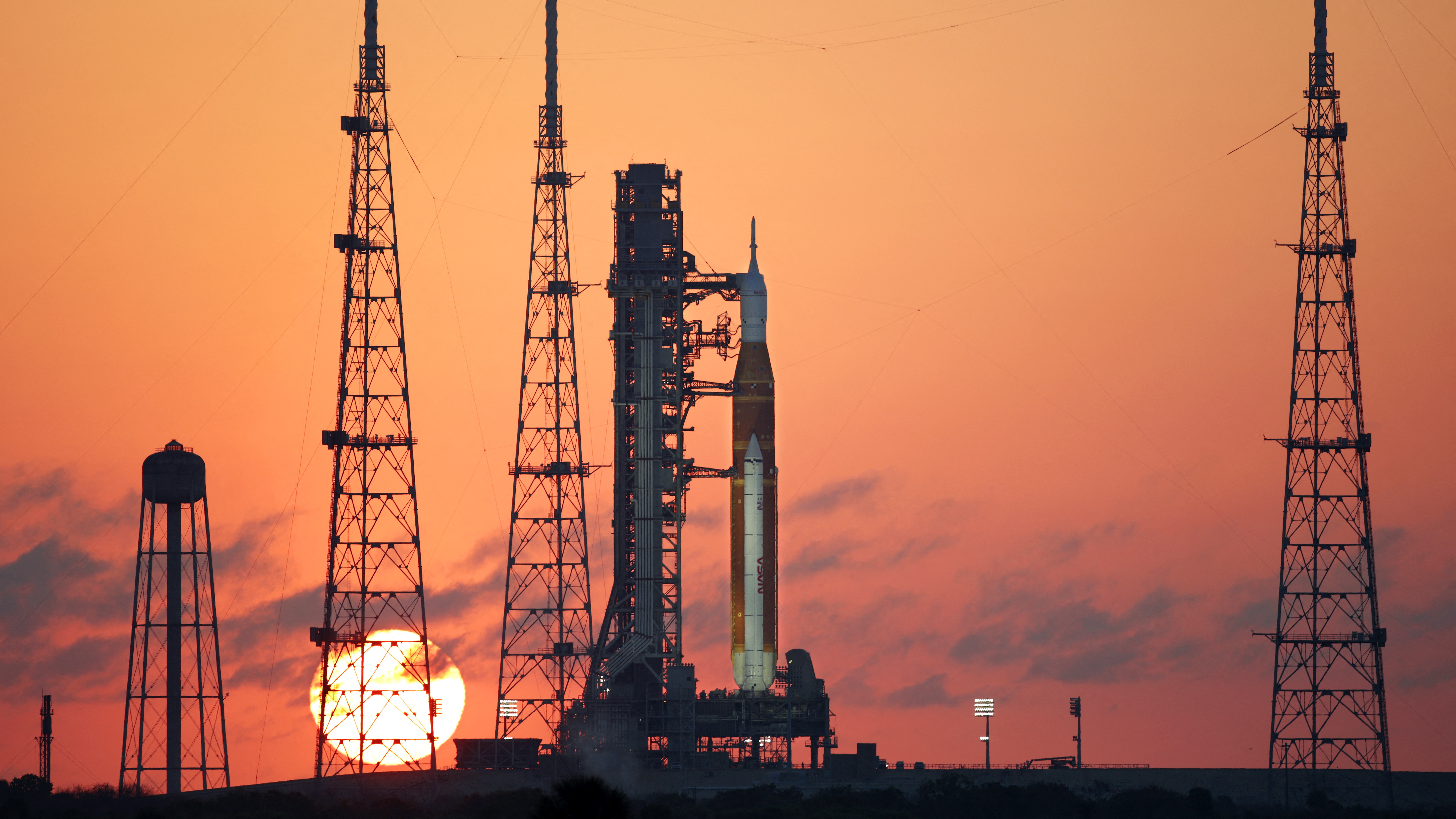
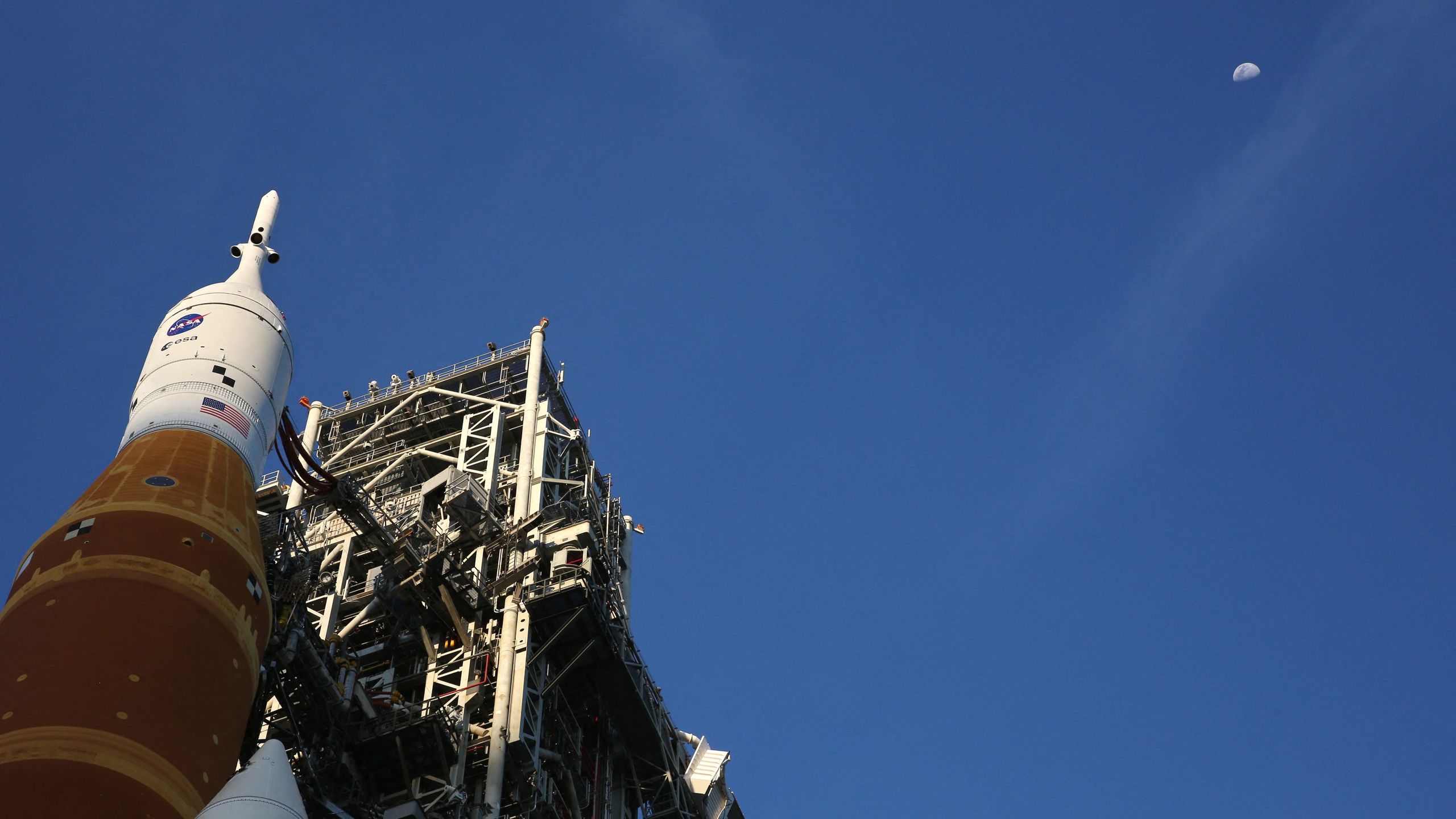
Artemis II rocket on the launch pad at Kennedy Space Center in Florida at sunrise.

Artemis II rocket on the launch pad at sunrise at Kennedy Space Center, Florida, March 24, 2026 (Image credit: Gregg Newton/AFP, Getty Images)

Good morning, science fans. For the first time since 1972, the countdown clock at NASA’s Kennedy Space Center in Florida is now ticking away the hours, minutes and seconds until the launch of a manned mission beyond low-Earth orbit.

With just over a day left until NASA’s Artemis II launch, the mission’s four-person astronaut crew said they are ready for the 10-day, 685,000-mile (1.1 million-kilometer) journey around the moon and back. They will be sent into space by a giant rocket stack 300 feet (98 meters) taller than the Statue of Liberty, which will provide more than 8.8 million pounds (4 million kilograms) of thrust to a capsule the size of a camper.

Live Science will track every moment of this journey, providing the latest information, commentary, expert insights and exclusive coverage from the historic launch.

So buckle up, stop moping, and get ready for humanity to return to its heavenly neighbors.

ben turner

ben turner

Trend News Deputy Editor

Please follow our community guidelines. ” data-join-the-conversation-text=”Join the conversation”>

You must verify your public display name before commenting

If you log out and log back in, you will be asked to enter a display name.

Logout


Source link

#Biotechnology #ClimateScience #Health #Science #ScientificAdvances #ScientificResearch
Follow on Google News Follow on Flipboard
Share. Facebook Twitter Pinterest LinkedIn Tumblr Email Copy Link
Previous ArticleEU clarifies packaging and packaging waste regulatory rules
Next Article The AI ​​arms race – why integrated exposure management is becoming a board priority

Related Posts

Tasmanian tiger discovered in indigenous rock art in Australia, suggesting these marsupials lived much longer than thought

March 30, 2026

NASA’s Artemis II mission gets green light for launch on April 1st, countdown begins

March 30, 2026

Mouse study suggests pig semen molecules may bring chemotherapy to hard-to-reach eye cancers

March 30, 2026
Add A Comment
Leave A Reply Cancel Reply

Latest Posts

TrueConf zero-day exploited to attack Southeast Asian government networks

Healthcare data giant CareCloud announces that hackers have accessed patient medical records

Rivian spinoff also plans to build autonomous delivery vehicles for DoorDash

Meta launches two new Ray-Ban glasses designed for prescription wearers

Trending Posts

Subscribe to News

Subscribe to our newsletter and never miss our latest news

Please enable JavaScript in your browser to complete this form.
Loading

Welcome to Fyself News, your go-to platform for the latest in tech, startups, inventions, sustainability, and fintech! We are a passionate team of enthusiasts committed to bringing you timely, insightful, and accurate information on the most pressing developments across these industries. Whether you’re an entrepreneur, investor, or just someone curious about the future of technology and innovation, Fyself News has something for you.

Castilla-La Mancha Ignites Innovation: fiveclmsummit Redefines Tech Future

Local Power, Health Innovation: Alcolea de Calatrava Boosts FiveCLM PoC with Community Engagement

The Future of Digital Twins in Healthcare: From Virtual Replicas to Personalized Medical Models

Human Digital Twins: The Next Tech Frontier Set to Transform Healthcare and Beyond

Facebook X (Twitter) Instagram Pinterest YouTube
  • Home
  • About Us
  • Advertise with Us
  • Contact Us
  • DMCA
  • Privacy Policy
  • Terms & Conditions
  • User-Submitted Posts
© 2026 news.fyself. Designed by by fyself.

Type above and press Enter to search. Press Esc to cancel.