
Close Menu
  • Home
  • Identity
  • Inventions
  • Future
  • Science
  • Startups
  • Spanish
What's Hot

Android developer verification rollout begins ahead of September enforcement

Whoop’s valuation triples to $10 billion

TrueConf zero-day exploited to attack Southeast Asian government networks

Facebook X (Twitter) Instagram
  • Home
  • About Us
  • Advertise with Us
  • Contact Us
  • DMCA
  • Privacy Policy
  • Terms & Conditions
  • User-Submitted Posts
Facebook X (Twitter) Instagram
Fyself News
  • Home
  • Identity
  • Inventions
  • Future
  • Science
  • Startups
  • Spanish
Fyself News
Home » Tasmanian tiger discovered in indigenous rock art in Australia, suggesting these marsupials lived much longer than thought
Science

Tasmanian tiger discovered in indigenous rock art in Australia, suggesting these marsupials lived much longer than thought

By March 30, 2026No Comments5 Mins Read
Share Facebook Twitter Pinterest Telegram LinkedIn Tumblr Email Copy Link
Follow Us
Google News Flipboard
Share
Facebook Twitter LinkedIn Pinterest Email Copy Link

Australian archaeologists have discovered centuries-old Aboriginal rock art depicting the Tasmanian devil and now-extinct Tasmanian tiger, a new study reports. The findings suggest that Tasmanian tigers may have lived on mainland Australia much more recently than previously thought.

Researchers said in a statement that they have documented about 14 new petroglyphs of the carnivorous marsupial (Thylacinus cynocepalus), also known as the Tasmanian tiger, and two of the Tasmanian devil (Thylacinus cynocepalus) in Arnhem Land, northern Australia. Arnhem Land’s government is run by the region’s Aboriginal people, the population is approximately 16,000 people, the population density is relatively low, and the environment is largely preserved.

Tasmanian tigers are thought to have become extinct on mainland Australia about 3,000 years ago, researchers report in a study. However, marsupials survived on Tasmania until 1936, when the last recorded marsupial died in a zoo. There are claims that this species still survives in Tasmania, but these reports have not been confirmed. The Tasmanian devil is extinct on mainland Australia, but still survives on the island of Tasmania. Once upon a time, a devil lived in Arnhem Land.

you may like

Tasmanian tigers may have lived on mainland Australia until just under 1,000 years ago, according to a new study published March 30 in the journal Oceanic Archaeology.

“The newly recorded artworks, some of which are less than 1,000 years old, raise the possibility that these species have existed in the northern region for longer than previously thought,” the researchers said in a statement.

One of the paintings depicting the Tasmanian devil was discovered in 2023 on a rock art panel with human and other animal figures. The Tasmanian devil statue is 1.3 feet (0.4 meters) long, and part of it has a painting of an eel-tailed catfish (Tandanus Tandanus), researchers wrote in the study. It had a stout, short body, a rounded head with “prominent whiskers,” and dog-like hind legs, the researchers said.

Another painting of a Tasmanian devil is 2 feet (0.6 m) long and shows sharp, pointy teeth through a slightly open mouth. A fish is also drawn on the legs.

Get the world’s most fascinating discoveries delivered straight to your inbox.

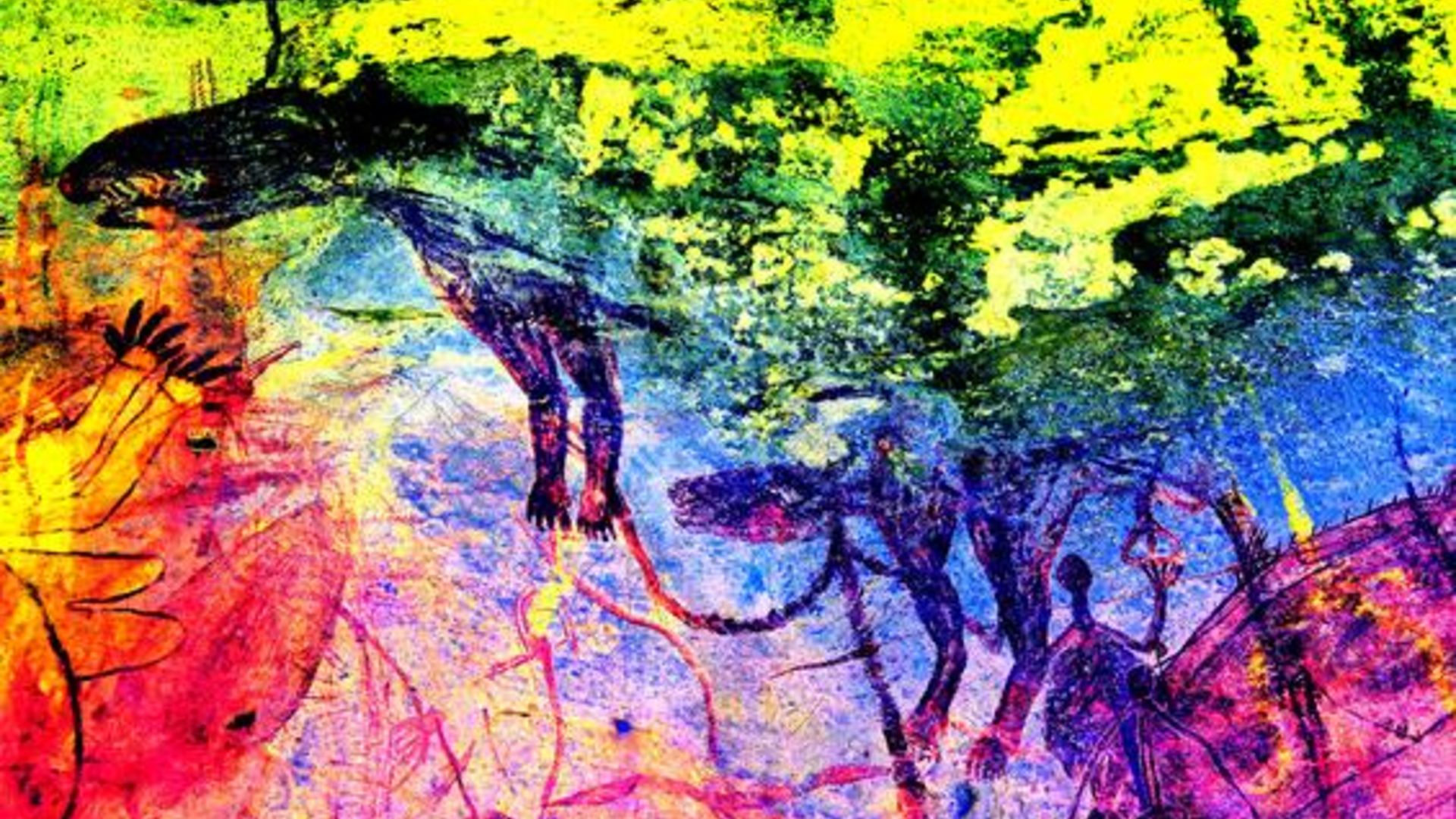
On the other hand, paintings of Tasmanian tigers depict dog-like animals with striped patterns, rounded ears, and long muzzles. The longest painting is 4.7 feet (1.4 m) long. Some of the paintings depict tigers with stripes, others without. This suggests that ancient artists did not necessarily go out of their way to create striped patterns, the researchers said in their paper.
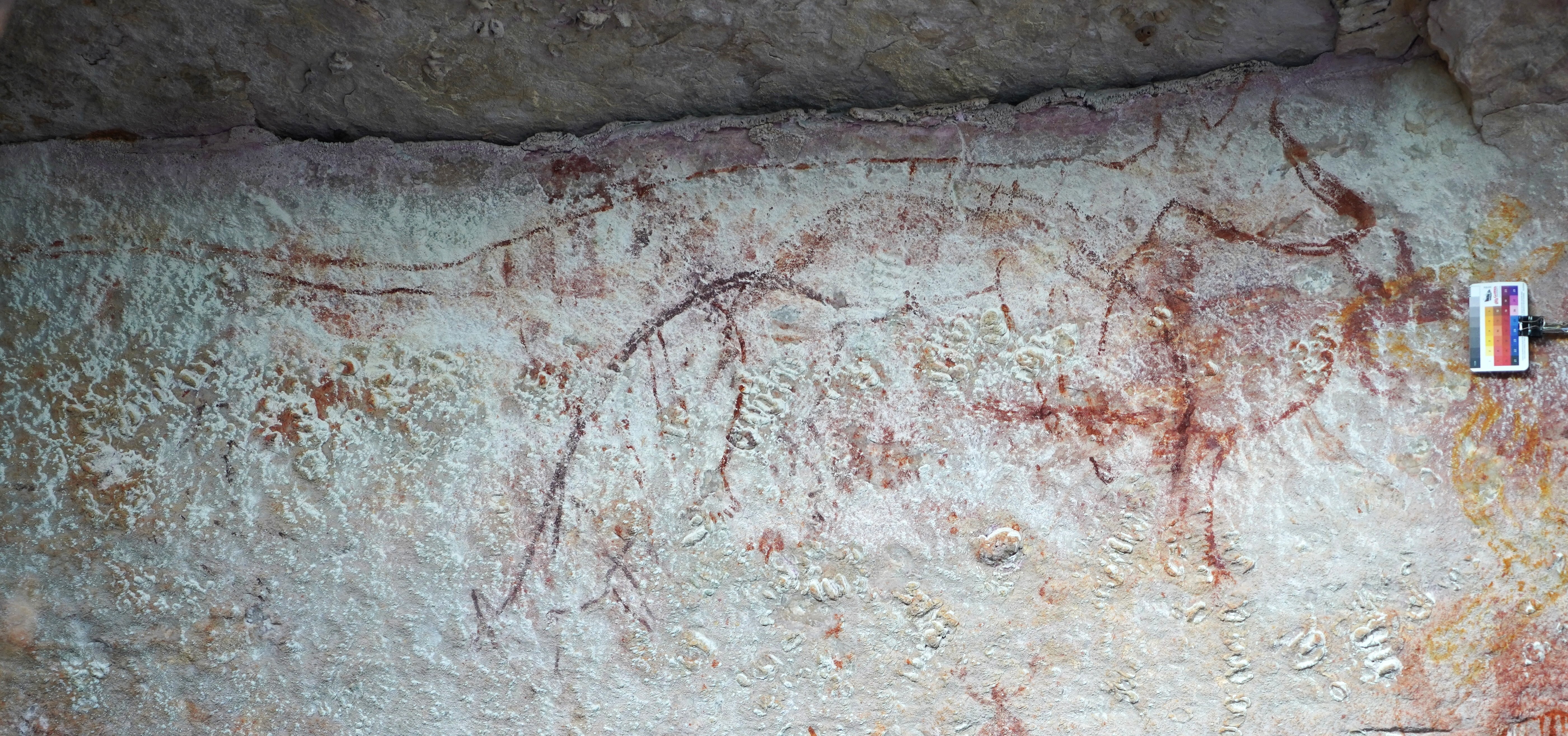
A close-up of a reddish painting painted on a gray rock surface.

One of the newly recorded depictions of the now extinct possum, also known as the Tasmanian tiger. The last known individual of this marsupial died in 1936. (Image credit: Paul SC Taçon)

Some of the newly documented rock art shows a Tasmanian tiger painted in kaolin (also known as pipe clay). Kaolin is a white pigment and tends not to last as long as other colors such as red ocher, the researchers wrote in their study. This raises the question whether the people who painted some of these depictions may have lived more recently and may have actually seen quolls in northern Australia.

“Artists who painted more recent paintings may have actually seen living quolls, and some of these creatures may have survived longer in Arnhem Land,” study lead author Paul Tassone, professor of anthropology and archeology and chair of rock art research at Australia’s Griffith University, said in a statement. “Alternatively, the artists may have taken inspiration from earlier paintings.”

What to read next
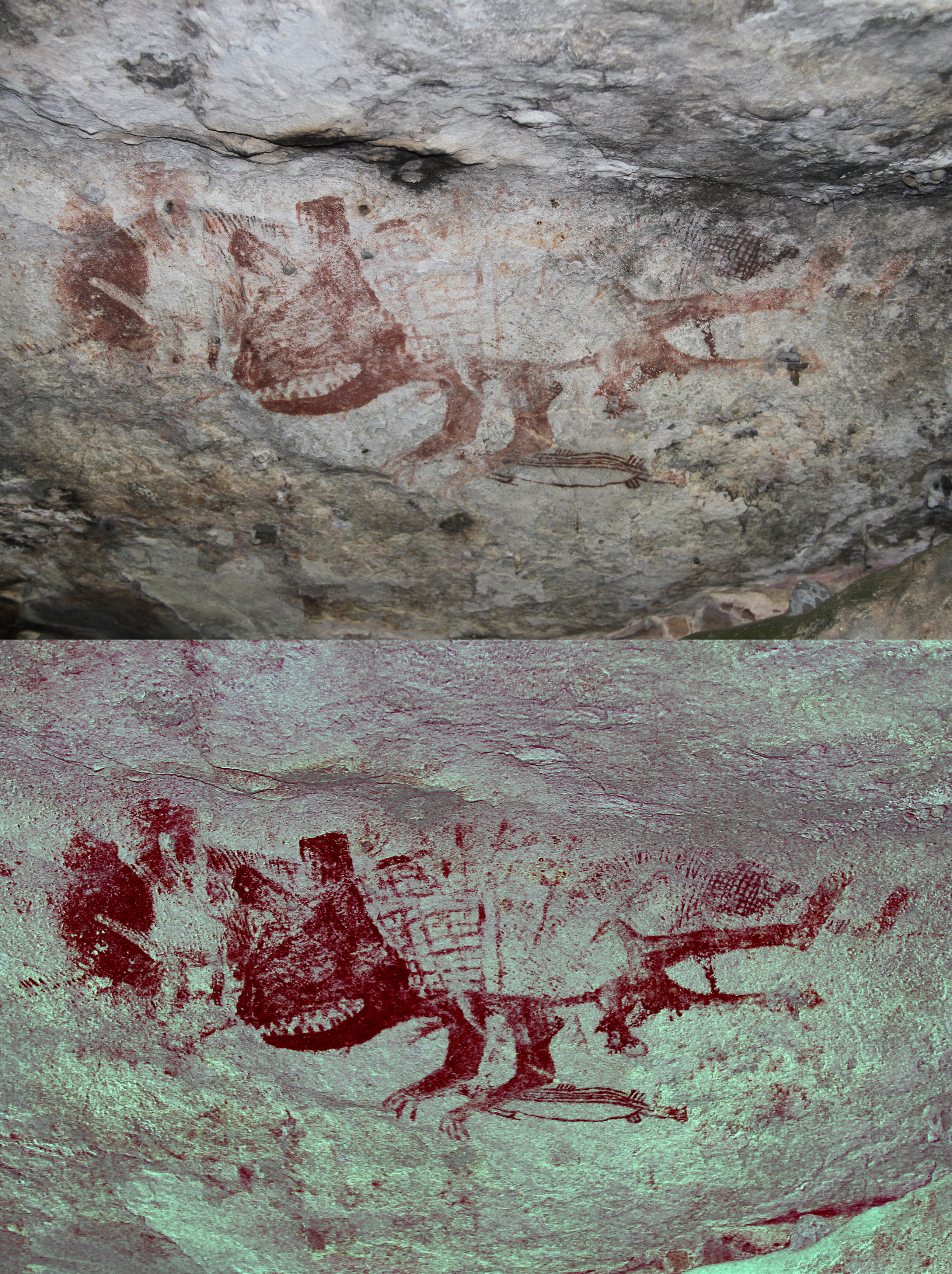
Two images show a reddish drawing of a four-legged creature with a large mouth and pointy teeth. The image below has a greenish tint, making the drawing stand out more against the gray rock surface.

Rock art of a recently recorded Tasmanian devil. The image below has been corrected using computer software. (Image credit: Paul Taccone)

cultural heritage

Prior to this study, there were approximately 150 confirmed Tasmanian tiger rock paintings and 23 known Tasmanian devil paintings on mainland Australia. “Differences in the number of rock art depictions suggest that the sugar glider was more widespread and culturally important on mainland Australia than the Tasmanian devil,” the researchers wrote in their study.

The team is working with Aboriginal communities to further understand how important the Tasmanian tiger and devil were to our ancestors. Joey Ganjimira, one of the study’s co-authors, is from an Aboriginal group known as the Jarama. He said in the video that some of the headdresses of the people depicted in the rock art near the Tasmanian tiger were similar to the headdresses used by Jarama in modern ceremonies.

According to Aboriginal oral history, the Tasmanian tiger was “a pet of the Rainbow Serpent and lived in rock pools,” the researchers said in a statement. The Rainbow Spirit is a deity associated with creation and rainfall in Australian Aboriginal beliefs.

Mr Tassone said the Tasmanian tiger “remains of cultural significance” to the people of Oceana.

“The sugar glider continues to live on in western Arnhem Land, not as a ghost of the past, but as a meaningful creature of the present,” the researchers wrote in the journal article.

Tassong, PSC, A. Jalandoni, SK May, J. Gangimira, and C. Mungurda. 2026. “The devil is in the details: Paintings of Tasmanian devils and Tasmanian tigers from Aungbana and Injarrak Hill, Northern Territory, Australia.” Archeology of Oceania. https://doi.org/10.1002/arco.70024


Source link

#Biotechnology #ClimateScience #Health #Science #ScientificAdvances #ScientificResearch
Follow on Google News Follow on Flipboard
Share. Facebook Twitter Pinterest LinkedIn Tumblr Email Copy Link
Previous ArticleFormer Coatue partner raises massive $65M seed for enterprise AI agent startup
Next Article Axios supply chain attack pushes cross-platform RAT via compromised npm account

Related Posts

Artemis II launch live: NASA prepares for historic space mission launch on Wednesday

March 31, 2026

NASA’s Artemis II mission gets green light for launch on April 1st, countdown begins

March 30, 2026

Mouse study suggests pig semen molecules may bring chemotherapy to hard-to-reach eye cancers

March 30, 2026
Add A Comment
Leave A Reply Cancel Reply

Latest Posts

Android developer verification rollout begins ahead of September enforcement

Whoop’s valuation triples to $10 billion

TrueConf zero-day exploited to attack Southeast Asian government networks

Healthcare data giant CareCloud announces that hackers have accessed patient medical records

Trending Posts

Subscribe to News

Subscribe to our newsletter and never miss our latest news

Please enable JavaScript in your browser to complete this form.
Loading

Welcome to Fyself News, your go-to platform for the latest in tech, startups, inventions, sustainability, and fintech! We are a passionate team of enthusiasts committed to bringing you timely, insightful, and accurate information on the most pressing developments across these industries. Whether you’re an entrepreneur, investor, or just someone curious about the future of technology and innovation, Fyself News has something for you.

Castilla-La Mancha Ignites Innovation: fiveclmsummit Redefines Tech Future

Local Power, Health Innovation: Alcolea de Calatrava Boosts FiveCLM PoC with Community Engagement

The Future of Digital Twins in Healthcare: From Virtual Replicas to Personalized Medical Models

Human Digital Twins: The Next Tech Frontier Set to Transform Healthcare and Beyond

Facebook X (Twitter) Instagram Pinterest YouTube
  • Home
  • About Us
  • Advertise with Us
  • Contact Us
  • DMCA
  • Privacy Policy
  • Terms & Conditions
  • User-Submitted Posts
© 2026 news.fyself. Designed by by fyself.

Type above and press Enter to search. Press Esc to cancel.