
Biometrics in Zero Trust Architectures: Reimagining security around identity
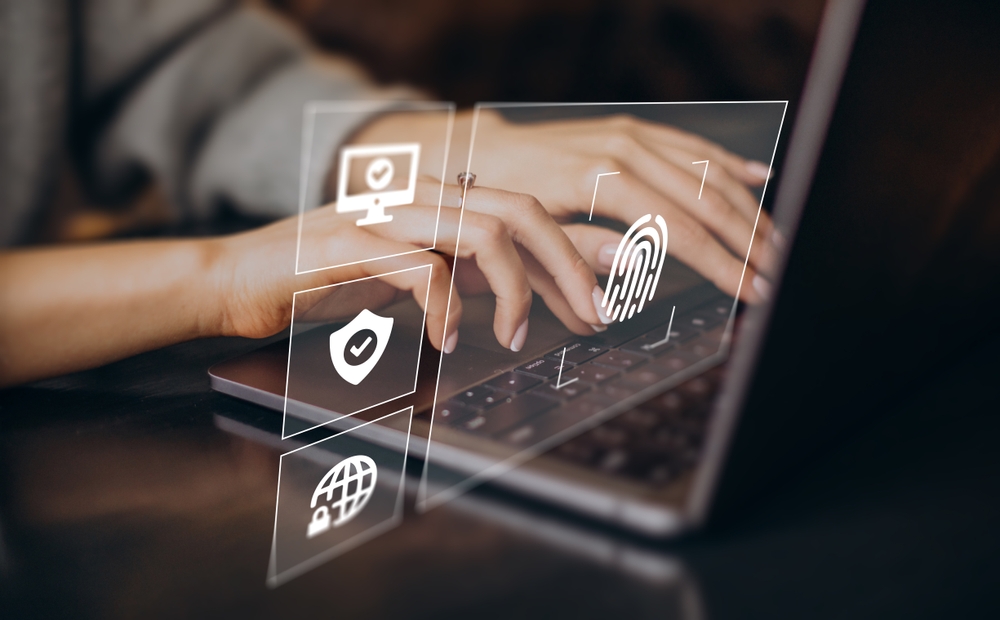
As cyberattacks become increasingly sophisticated, cybersecurity must adopt a zero trust policy that verifies, verifies, and authenticates at every step. Biometrics can help reduce friction in this process.
For years, cybersecurity has been built on the flawed premise that users can be trusted once they are inside a network. That premise has collapsed under the weight of cloud computing, remote work, and increasingly sophisticated attacks. Today, credentials are routinely stolen, sessions are hijacked, and systems are compromised through logins rather than intrusions.
Zero Trust architecture is the industry response. The logic is simple but uncompromising. Trust nothing and verify everything. All requests must be authenticated, authorized, and continually verified. At the heart of this model is identity.
Biometrics are now taking on a core role, not just as a convenience feature, but as a high-assurance signal in how modern systems establish trust.
Identity becomes the new boundary
In a Zero Trust environment, traditional network boundaries disappear. Rather, what matters is whether the system can reliably see who is making the request, from what device, and under what conditions.
Historically, identities have been built on a combination of credentials and tokens.
Password or PIN A physical device such as a smartphone or security key
Both are still useful, but both are vulnerable. Passwords are phished or reused. Your device may be stolen or compromised. An attacker does not need to break the encryption if he can impersonate a legitimate user.
Biometrics changes the equation by tying authentication to the individual. Fingerprints and facial scans cannot be easily shared, inferred, or reused at scale. In a Zero Trust model, this strengthens the foundation of identity verification.
From unlocking your phone to protecting your system
Biometrics first gained traction as a way to improve the user experience by quickly unlocking mobile phones, approving payments, and bypassing passwords. But their role has expanded.
In corporate security, biometrics currently serves as a reliable form of identity proof. They answer questions that passwords cannot answer: Is the authorized user physically present?
This distinction is important in high-risk scenarios.
Remotely access sensitive corporate systems Authorize financial transactions Perform privileged administrative actions
In moments like these, requiring a biometric check adds a layer of assurance beyond knowledge or possession. Anchor your identity to what is intrinsically connected to your users.
Continuous authentication instead of one-time login
Zero Trust is not about a single checkpoint at login. It’s about continuous verification.
This is where biometric authentication is evolving beyond static inputs like fingerprints. Behavioral biometrics (patterns of how people interact with devices) are becoming part of the authentication process.
These systems monitor signals such as:
The cadence and cadence of typing The patterns of mouse movements How to hold or operate a device
Individually, these indicators are probabilistic. But together they create a dynamic profile of the user. If there is a significant deviation in behavior, the system may trigger re-authentication or restrict access.
The effect is subtle but important. Authentication is continuous, not temporary. Trust is not earned once. It is maintained.
Trusted device role
Another change in biometric security is where the verification takes place. Biometric data is increasingly processed locally on the user’s device, rather than being sent to a central server.
This architecture is important for two reasons.
First, systemic risk is reduced. A centralized biometric database is an attractive target. Keeping data on-device limits the impact of a single breach.
Second, it strengthens the relationship between identity and device authenticity. A zero trust model continually evaluates whether devices are secure, updated, and compliant with policy.
When biometrics are associated with a trusted device, two conditions are met simultaneously:
User is authenticated Device is authenticated
This combined signal is very difficult for an attacker to replicate.
Strengthening multi-factor authentication
Multi-factor authentication remains essential in a Zero Trust framework, but its effectiveness depends on the strength of each factor.
Not all methods are the same. SMS codes can be intercepted. App-based tokens can be phished. Hardware keys, while powerful, only depend on you owning them.
Biometrics enhances multi-factor authentication by reinforcing the “being yourself” element. When combined with device-based cryptographic credentials, it forms a layered defense against common attack paths.
Modern authentication flows typically mix several signals.
Trusted devices with embedded encryption keys Biometric steps Contextual data such as location, network, and behavior
The result is a more intelligent risk assessment than just multiple factors.
Actual implementation across the industry
Biometrics are now being integrated into corporate security strategies, especially in areas where identity assurance is important.
In financial services, biometrics are used to authorize high-value transactions and protect customer accounts. In the healthcare field, patient records can be quickly accessed without relying on shared or weak credentials. Government systems support identity verification for sensitive operations.
It’s not just recruitment that has changed, it’s integration. Biometrics is no longer a standalone tool. These are part of a broader identity and access management system. This allows organizations to enforce granular policies, monitor access in real-time, and maintain a clear audit trail.
Manage risk without losing momentum
Biometric authentication is not without its challenges. Concerns regarding spoofing, data protection, and persistence of biometric signatures are well documented.
But technology has advanced in response.
Liveness detection has become a standard feature and analyzes depth, movement, and subtle facial cues to distinguish between real users and replicas. The biometric data itself is typically stored as an encrypted template rather than a raw image, reducing the risk of misuse.
Importantly, zero trust architectures don’t rely solely on biometrics. Treat them as one signal among many. This multi-layered approach means that even if one component is compromised, the entire system remains resilient.
Enabling the transition to passwordless security
Zero Trust is closely aligned with the broader movement towards passwordless authentication. Both aim to eliminate weaknesses that attackers can most easily exploit.
Biometrics will be central to this transition. These provide a secure and intuitive way to authenticate without relying on memorized secrets.
In practice, a passwordless system combines:
Encrypted credentials bound to the device Biometric authentication Real-time risk assessment
This reduces the operational burden of password management while strengthening your overall security posture.
human factor
Security systems often fail not because of technical flaws, but because of the way people operate them. Complex requirements lead to shortcuts such as password reuse, disabling protection, and workarounds.
Biometrics addresses this issue by reducing friction. Authentication becomes faster and more natural, promoting consistent use of security features.
That behavioral change is important. Proper user engagement with security systems reduces overall risk, not by tightening the rules but by aligning them with human behavior.
Identity, reconsidered
As organizations continue to operate across cloud-based and distributed environments, identity is becoming the primary control point for cybersecurity.
Although biometrics are not a complete solution, they are becoming an important part of how identity is established and maintained. Its strength lies in its combination with trusted devices, behavioral signals, and contextual analysis.
Together, these elements form a more adaptive security model that reflects how people actually work and how attackers actually operate.
Zero trust requires continuous verification. Biometrics helps make that verification stronger and more practical.
As such, its role has expanded from a convenient unlocking mechanism to a fundamental element of modern cybersecurity.
Source link

