
EuroHPC JU launches €8.5 million ‘Lucy’ photonic quantum computer
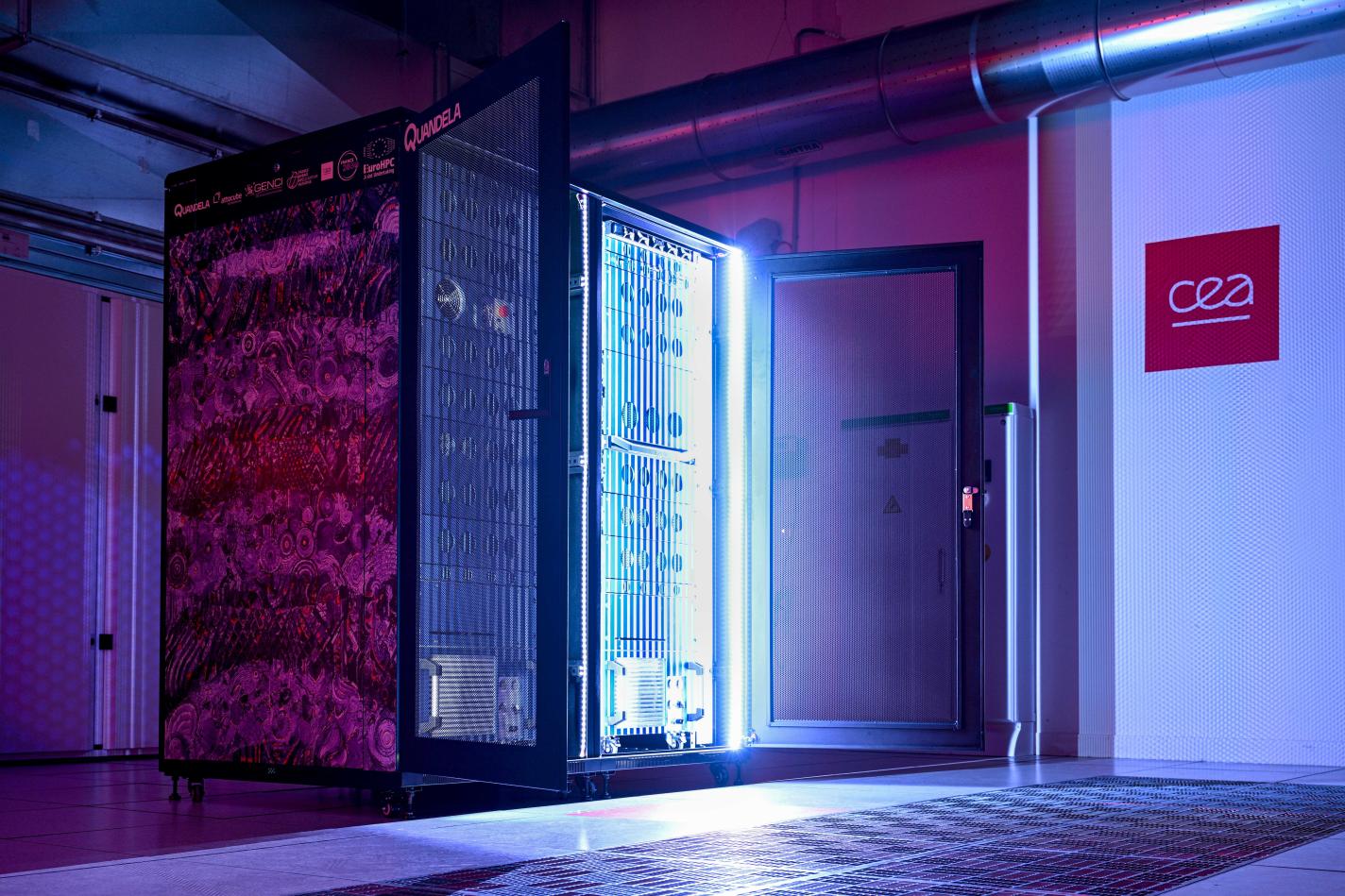
Europe has taken another step in the global race for advanced computing with the unveiling of a new optical quantum computer near Paris.
The system, named Lucy, reflects a broader strategy to strengthen technological sovereignty while accelerating research across science and industry.
The machine was deployed under EuroHPC Joint Undertaining (EuroHPC JU), a pan-European initiative to build cutting-edge supercomputing and quantum infrastructure.
Its arrival signals both technological progress and political intent. Europe wants to compete at the highest level in next-generation computing.
Strategic launch in France’s leading supercomputing hub
The inauguration took place at the Tre Grand Center de Carcle (TGCC) in Bruyère-le-Châtel, one of France’s leading high-performance computing (HPC) centers. This event was organized by CEA in collaboration with GENCI.
Senior policymakers and European officials were in attendance and emphasized the importance of the project. Among them were Anne Le Henenff, Kilian Gross and Anders Jensen.
Their presence reflects how quantum computing has moved beyond research institutions and into the realm of strategic infrastructure.

Anders Jensen, Executive Director of EuroHPC JU, highlighted Lucy’s transformative potential:
“This brings new quantum capabilities to the European supercomputing ecosystem and marks another important milestone for our technological sovereignty.
“By bringing together quantum computing and high-performance computing, EuroHPC JU will enable researchers and industry to tackle complex challenges and unlock new opportunities for innovation across strategic sectors.”
What is the difference between Lucy
At the core of Lucy is a photonic quantum computer developed by Quandela. The system, known as MOSAIQ-12, uses photons (particles of light) as the basis for calculations and can operate with up to 12 physical qubits.
Unlike many quantum platforms that require ultracold temperatures, photonic systems operate at room temperature. This removes a major engineering barrier and facilitates integration with traditional supercomputers.
Lucy is connected to the Joliot-Curie system, enabling a hybrid workflow that combines quantum and classical processing.
The architecture is based on Linear Optical Quantum Computing (LOQC), a widely known model that shows promise for scalability. Because the system is modular and fiber-based, it can be deployed in standard data center environments rather than highly specialized facilities.
From theory to real-world application
The introduction of optical quantum computers into production supercomputing environments is designed to enable practical use cases.
Researchers and industrial users will be able to experiment with hybrids of quantum-classical algorithms in areas such as:
Advanced materials discovery Climate and weather modeling Energy optimization Complex engineering simulation
By combining HPC and quantum acceleration, Lucy aims to reduce computational times for problems that cannot currently be solved using classical methods alone.
The system is currently being finalized and will be available to European users in the near future.
European cooperative efforts
Lucy is not an independent effort. It forms part of a broader network of quantum systems funded and coordinated by EuroHPC JU.
The project is supported by a consortium led by GENCI and includes institutions such as the Bucharest University of Technology, Jülich Construction Center and the Irish High-End Computing Center.
The system itself was delivered through a French-German partnership involving Quandela and attocube Systems AG.
At a total cost of €8.5 million, the investment is jointly funded by EuroHPC JU and the French government.
Michaël Krajecki, CEO of GENCI, added: “Together with Lucy, EuroHPC JU, CEA and GENCI are delivering unique hybrid and sovereign quantum computing capabilities to the European and French scientific and industrial communities.
“Freely accessible, Lucy is becoming a cutting-edge sovereign asset for research and innovation. Thanks to Quandera’s photonic technology hosted at TGCC, the transition to industrial scale in the quantum era looks closer than ever. This is a major milestone for France and Europe.”
Europe’s expanding quantum ecosystem
Lucy is one of several quantum systems being deployed across Europe. Recent deployments include machines in Poland, the Czech Republic, and Germany, each based on different quantum technologies such as trapped ions, superconducting circuits, and neutral atoms.
This diversification is intentional. Rather than betting on a single approach, Europe is building a portfolio of quantum platforms to explore complementary strengths and applications.
In parallel, analog quantum simulators such as Jade and Ruby are already in place, and additional systems are planned in the Netherlands and Luxembourg.
Europe’s position in the quantum computing race
The launch of Lucy highlights Europe’s ambition to lead the way in quantum computing, not only scientifically but also industrially.
Incorporating optical quantum computers into operational HPC environments brings the region closer to real-world deployments.
The broader purpose is clear. The aim is to provide researchers and companies with access to cutting-edge tools and reduce their dependence on non-European technologies.
If successful, efforts like Lucy’s could help define Europe’s role in the next era of computing, in which photons rather than electrons may power the world’s most advanced calculations.
Source link

