
Close Menu
  • Home
  • Identity
  • Inventions
  • Future
  • Science
  • Startups
  • Spanish
What's Hot

Newly discovered PowMix botnet uses randomized C2 traffic to attack Czech workers

Ban on PFAS products expands in 2026 as US state law takes effect

DESI completes the largest space map in history

Facebook X (Twitter) Instagram
  • Home
  • About Us
  • Advertise with Us
  • Contact Us
  • DMCA
  • Privacy Policy
  • Terms & Conditions
  • User-Submitted Posts
Facebook X (Twitter) Instagram
Fyself News
  • Home
  • Identity
  • Inventions
  • Future
  • Science
  • Startups
  • Spanish
Fyself News
Home » AI predicts early skin cancer risk with 73% accuracy
Inventions

AI predicts early skin cancer risk with 73% accuracy
By April 16, 2026No Comments2 Mins Read
Share Facebook Twitter Pinterest Telegram LinkedIn Tumblr Email Copy Link
Follow Us
Google News Flipboard
Share
Facebook Twitter LinkedIn Pinterest Email Copy Link

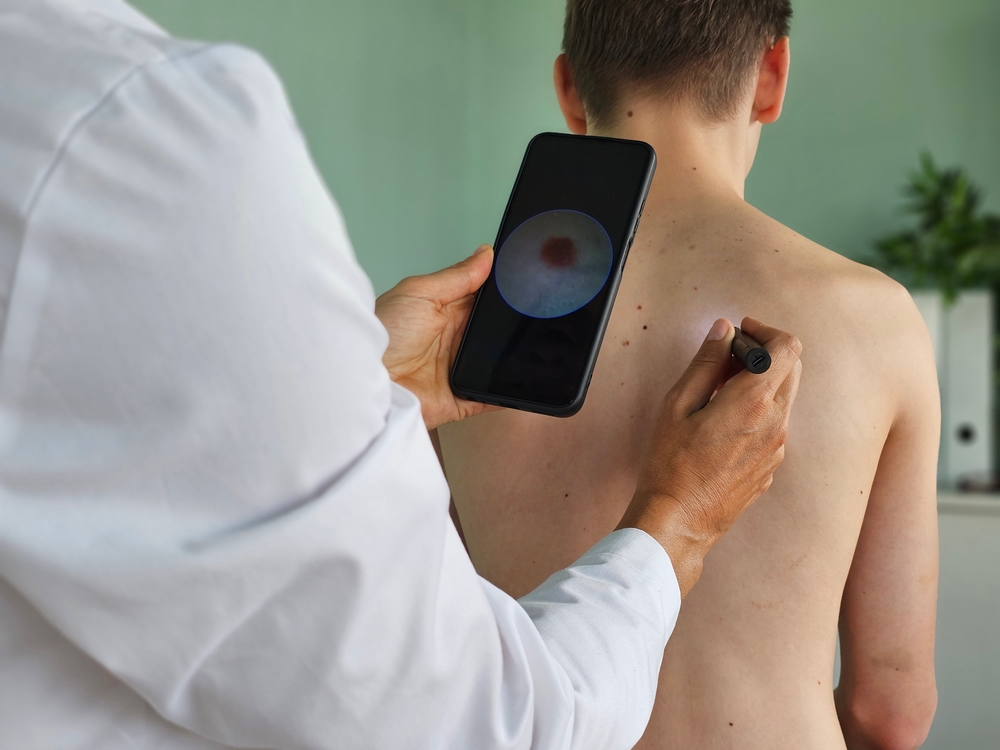
A study of the entire Swedish adult population, analyzing registry data on age, gender, diagnosis, and socio-economic status, found that artificial intelligence (AI) models were able to predict melanoma incidence with almost 73% accuracy.

A collaboration between the University of Gothenburg and Chalmers University of Technology applied an analytical AI model to a data pool containing more than 6 million Swedish adults.

Using registry data from 6,036,186 people, the AI ​​was able to identify small groups at high risk of developing melanoma with a high level of accuracy, based on demographic factors such as age and gender.

This data focuses on over 38,000 cancer diagnoses

When only age and gender were incorporated into the registry data, the AI ​​model was able to distinguish between people who later developed melanoma with about 64% accuracy. A more advanced model leveraging comprehensive demographic data increased accuracy to 73%.

Providing the model with diagnostic, medication, and sociodemographic data can identify a smaller high-risk group with a 33% risk of developing melanoma within five years.

Of the 6,036,186 people studied through registry data, 38,582 (0.64%) were diagnosed with melanoma during the 5-year study.

Make your cancer screening strategy more efficient

“Our study shows that data already available within the healthcare system can be used to identify individuals at high risk of melanoma,” says Martin Gilstedt, PhD student at Sahlgrenska Academy, University of Gothenburg and statistician at the Department of Dermatology and Venereal Diseases at Sahlgrenska University Hospital.

“Although this is not a form of decision support currently available in routine healthcare, our results clearly demonstrate that registry data can be used more strategically in the future.”

The study, published in Acta Dermato-Venereologica, was led by Sam Polesie, associate professor of dermatology and venereology at the University of Gothenburg and dermatologist at Sahlgrenska University Hospital.

“Our analysis suggests that selectively screening small, high-risk groups could lead to both more accurate monitoring and more efficient utilization of health care resources. This includes incorporating population data into precision medicine and complementing clinical assessments.”

The paper cautions that the use of AI models trained on registry data is still evolving and requires further research. However, early results like those from this study suggest that AI has the potential to make future skin cancer screening strategies more effective.


Source link

#CreativeSolutions #DigitalTransformation. #DisruptiveTechnology #Innovation #Patents #SocialInnovation
Follow on Google News Follow on Flipboard
Share. Facebook Twitter Pinterest LinkedIn Tumblr Email Copy Link
Previous ArticleHidden passenger? How to route Taboola logged in banking sessions to Temu?
Next Article Cisco patches four critical identity services, Webex flaw that allows code execution

Related Posts

Ban on PFAS products expands in 2026 as US state law takes effect

April 16, 2026

DESI completes the largest space map in history

April 16, 2026

EuroHPC Federation Platform launched to simplify access to supercomputing in Europe

April 16, 2026
Add A Comment
Leave A Reply Cancel Reply

Latest Posts

Newly discovered PowMix botnet uses randomized C2 traffic to attack Czech workers

Ban on PFAS products expands in 2026 as US state law takes effect

DESI completes the largest space map in history

Defender 0-Day, SonicWall Brute-Force, 17-Year-Old Excel RCE and 15 More Stories

Trending Posts

Subscribe to News

Subscribe to our newsletter and never miss our latest news

Please enable JavaScript in your browser to complete this form.
Loading

Welcome to Fyself News, your go-to platform for the latest in tech, startups, inventions, sustainability, and fintech! We are a passionate team of enthusiasts committed to bringing you timely, insightful, and accurate information on the most pressing developments across these industries. Whether you’re an entrepreneur, investor, or just someone curious about the future of technology and innovation, Fyself News has something for you.

Castilla-La Mancha Ignites Innovation: fiveclmsummit Redefines Tech Future

Local Power, Health Innovation: Alcolea de Calatrava Boosts FiveCLM PoC with Community Engagement

The Future of Digital Twins in Healthcare: From Virtual Replicas to Personalized Medical Models

Human Digital Twins: The Next Tech Frontier Set to Transform Healthcare and Beyond

Facebook X (Twitter) Instagram Pinterest YouTube
  • Home
  • About Us
  • Advertise with Us
  • Contact Us
  • DMCA
  • Privacy Policy
  • Terms & Conditions
  • User-Submitted Posts
© 2026 news.fyself. Designed by by fyself.

Type above and press Enter to search. Press Esc to cancel.