
LVK collaboration reports 161 new gravitational wave detections
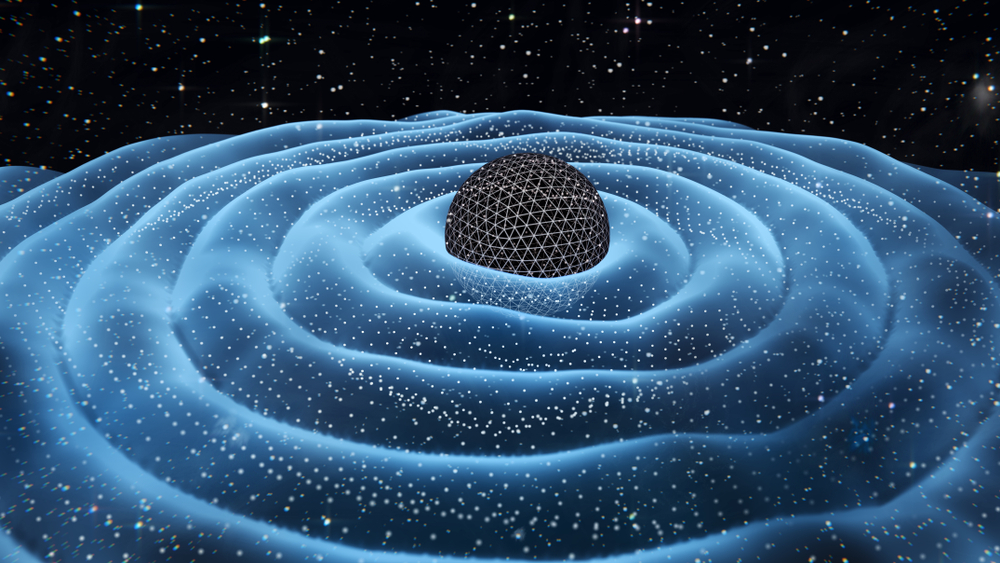
Scientists from the international LIGO-Virgo-KAGRA (LVK) collaboration have published an updated catalog of gravitational wave detections, adding 161 newly identified signals from colliding black holes, bringing the total number of confirmed events to 390.
The discovery, announced in Gravitational Wave Transient Catalog 5.0 (GWTC-5), marks a significant advance in gravitational astronomy and provides researchers with an unprecedented dataset to study some of the universe’s most extreme phenomena.
The new catalog includes observations collected by the US LIGO detector, Italy’s Virgo detector, and Japan’s KAGRA detector from April 2024 to January 2025.
The increasing number of gravitational wave detections is helping scientists improve measurements of black holes, test fundamental physical laws, and refine estimates of the rate of expansion of the universe.
Some of the most important achievements include evidence for the existence of second-generation black holes, the most precise localization of a gravitational wave source ever achieved, and the clearest gravitational wave signal ever recorded.
These discoveries highlight how rapidly the field has matured since the first direct detection of gravitational waves in 2015.
Gravitational wave detection rate continues to rise
The latest release reflects the growing sensitivity of gravitational wave observatories around the world.
During recent observation runs, the network has been detecting three to four events per week, and this pace is expected to increase as upgrades improve detector performance.
Researchers update the catalog approximately every six months following a period of data collection and detector refinement. Each new observation expands the available dataset, allowing for more detailed investigations into the origin and evolution of black holes and neutron stars.
The addition of Virgo observations is particularly important in improving the accuracy of sound source localization.
With more detectors working simultaneously, astronomers will be able to pinpoint the origin of gravitational wave phenomena with much greater precision, increasing the chances of tying the signal to a specific galaxy.
Record-breaking black hole merger identified
One of the standout discoveries in the catalog is an event designated GW240615.
This signal, detected by both the LIGO facility and Virgo, achieved the most precise sky localization ever recorded for a gravitational wave source. Scientists have narrowed down its origin to an area of just 6 square degrees in the sky.
The phenomenon occurred when two black holes, roughly 26 and 30 times the mass of the Sun, merged more than 3 billion light-years from Earth.
The unprecedented localization accuracy could prove valuable for future efforts to identify host galaxies and improve cosmological measurements obtained from gravitational wave detection.
The clearest signals enable precision physics
Another groundbreaking observation, GW250114, is said to be the strongest gravitational wave signal ever observed. The event reached Earth in January 2025 and was caused by the merger of two black holes with masses of approximately 32 and 34 solar masses.
Its extraordinary signal-to-noise ratio allowed researchers to perform the most rigorous test yet of Einstein’s theory of general relativity.
The data also provided further support for theoretical predictions about black hole behavior, including the principle that the total surface area of a black hole’s event horizon increases after a merger.
Scientists were also able to analyze the “ringdown” phase of newly formed black holes with surprising precision. These oscillations produced after merging provide valuable insight into the structure of spacetime under extreme conditions.
Evidence of second-generation black holes revealed
This catalog also strengthens the evidence for the existence of second-generation black holes.
Two phenomena known as GW241011 and GW241110 observed in late 2024 showed features suggesting that at least one black hole in each system was previously formed by an initial black hole merger.
Such objects are thought to occur in dense stellar environments where repeated collisions are more likely. Their identification provides new clues about the diverse pathways by which black holes form and evolve.
Analysis of hundreds of gravitational wave detections also reveals a pattern linking black hole mass and spin, suggesting there may be multiple channels of formation throughout the universe. Researchers believe these trends are becoming more pronounced as the catalog expands.
Growth tools for understanding the universe
Beyond black hole physics, the latest catalog is expected to contribute to one of cosmology’s most pressing questions: the rate of expansion of the universe.
By combining distance measurements from gravitational wave signals with improved source location, researchers can refine their estimates of the Hubble constant and compare them with other methods.
Expanded data sets, combined with faster analysis tools and more sensitive detectors, will give scientists a clearer picture of the population of compact objects across the universe.
As future observations detect more gravitational waves, researchers hope they will gain further insight into the formation of black holes and neutron stars, and the large-scale evolution of the universe.
Source link

