
C-Lock builds a universal livestock methane measurement framework
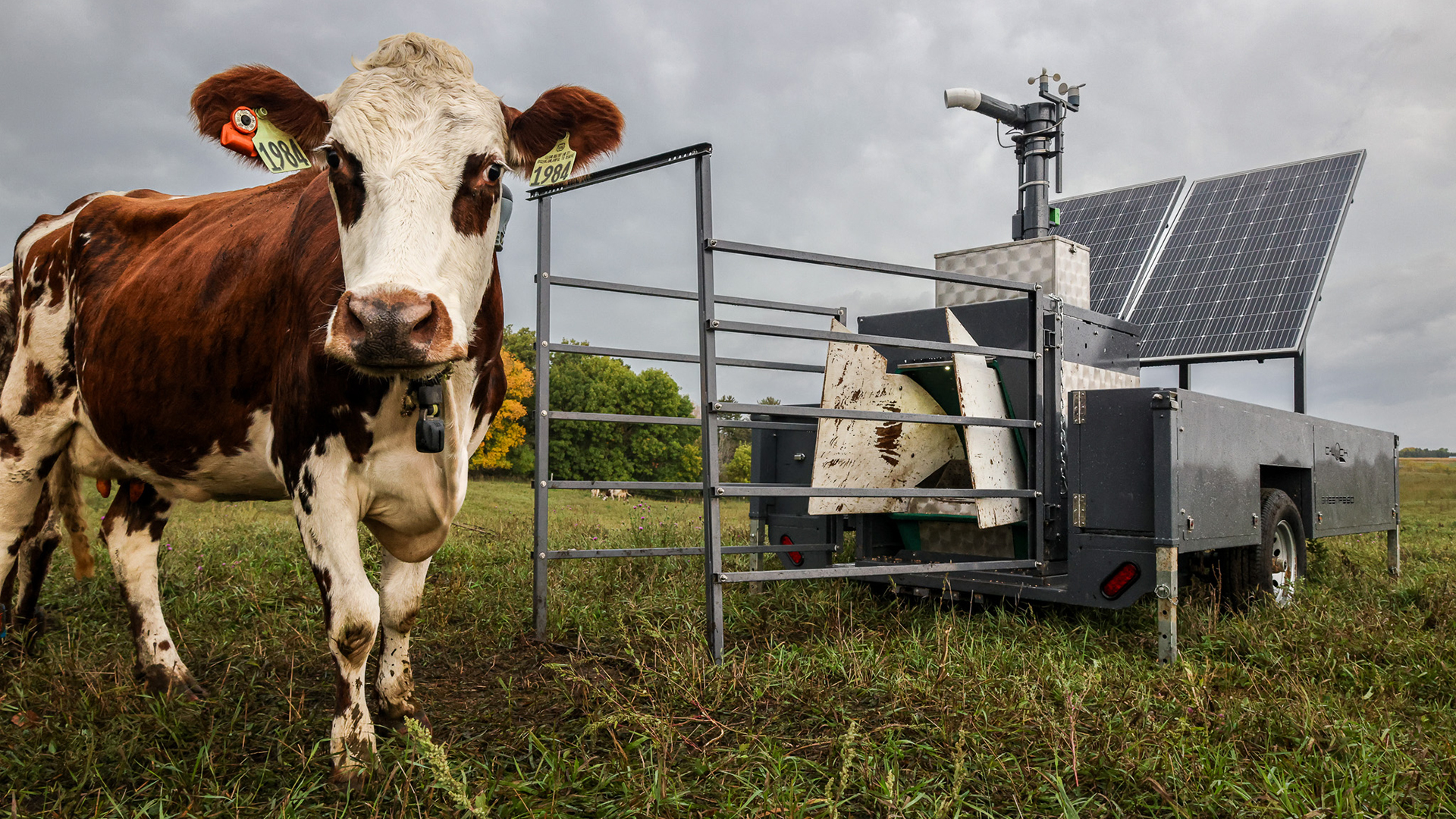
C-Lock Inc. discusses the urgent need for a standardized measurement framework in livestock methane research to enhance emissions reductions and address current discrepancies.
Animal agriculture is at the center of some of the most urgent and contentious debates in climate science. Intestinal fermentation is a digestive process in which ruminants break down plant material in their stomachs, producing methane as a natural byproduct. That methane has a global warming potential over 80 times greater than carbon dioxide over 20 years. With global demand for meat and dairy products expected to increase in cattle numbers, the scientific community faces significant pressure to develop, validate, and scale solutions that meaningfully reduce these emissions.
Billions of dollars are currently flowing into reducing methane in livestock through feed additives, breeding programs, rumen microbiome research, precision agriculture techniques, and more. The government is introducing policy obligations. The carbon credit framework has been expanded to cover agricultural emissions. The industry is mobilizing no matter how you look at it.
However, there is a fundamental problem that undermines this entire study. It lies in the science of measurement, not in the science of reduction. Across laboratories, universities, and research institutions around the world, scientists are studying the same biological processes using incompatible methodologies, producing data that cannot be reliably compared, replicated, or incorporated into authoritative global policy. Until the research community unites around a validated and standardized measurement framework, the promise of livestock methane science will only be partially fulfilled.
Measurement discrepancy issues
Methane measurements in livestock research have historically relied on a small number of established techniques, each with significant limitations. Breathing chambers are large enclosures that confine animals while gases are measured, and while they provide high accuracy, they are expensive and logistically demanding, making them impractical for field conditions and large-scale studies. Sulfur hexafluoride (SF6) tracer gas technology, which involves placing a gas-filled osmotic tube within the animal’s rumen and collecting exhaled breath samples via a canister worn around the neck, is easily portable but inherently labor-intensive and integrated. This means they are unable to capture diurnal variations in methane production, which is important for understanding how feed, time of day, and diet composition interact.
Sniffers and laser-based sensors offer speed and scalability, but there are significant trade-offs in accuracy for individual animals. Studies directly comparing these methodologies have consistently reported inconsistent results.
The results are not easy. If a research team in Europe evaluates a new feed additive using a breathing chamber, and a research team in North America evaluates the same additive using an SF6 tracer, the resulting emissions figures can be significantly different, even if the biological effects of the additives are identical. Meta-analyses become unreliable. Regulatory submissions will be contested. And the broader scientific literature has accumulated a body of findings that are difficult to integrate into practical guidance.
Why is it important to the research community?
The risk of measurement discrepancies is particularly high for researchers and universities working in animal science, ruminant nutrition, and agricultural sustainability. Scientific reproducibility, the basis of reliable research, requires not only that experiments be well designed, but also that the tools used to generate data perform consistently across different settings, operators, and time points.
Funding bodies are raising awareness of this issue. Grant applications proposing methane mitigation research are under intense scrutiny for how they are measured, and for good reason. Studies that cannot demonstrate measurement validity cannot make meaningful claims about emissions reductions. As carbon credit schemes such as Japan’s J-Credit System and Denmark’s National Emissions Framework begin to formalize data quality requirements, the bar for what constitutes an acceptable measurement protocol is rapidly rising.
There are also issues of scientific impartiality. Researchers at institutions with access to well-resourced facilities can conduct respiratory chamber studies. Those working in field conditions, large herds, or environments with few resources must rely on indirect methods. Without portable, validated, non-invasive standards that work across environments, the most important contexts for global methane research, large-scale grazing systems, small farms, and diverse breed populations remain systematically underrepresented in the literature.
What is a global standard?
Defining a global metric for livestock methane is not simply a matter of designating one existing tool as preferred. This requires solutions that simultaneously meet a rigorous set of scientific and operational criteria.
First, it must be measured at the individual animal level. Herd averages obscure genetic, dietary, and physiological variations that create meaningful research questions, especially in breeding programs and feed additive testing. Second, it must be non-invasive and have minimal impact on the animal’s normal behavior to ensure that the measured emissions reflect real-world situations rather than the stress response of confined or handled animals. Third, it must be able to capture diurnal variation, the natural variation in methane production throughout the day, rather than providing a single snapshot that may not be representative. Fourth, it must be deployable not only in controlled research facilities but also in pastures, commercial farms, and international research settings. And fifth, and perhaps most importantly, we need to generate data that is consistent and comparable over time across sites and studies, data that forms the basis of reliable global standards.
Green Feed and C-Lock: Setting a Global Standard
C-Lock Inc., the South Dakota-based developer of the GreenFeed emissions monitoring system, has spent more than a decade building equipment that precisely meets these standards.
The GreenFeed system operates as an automated headchamber unit that measures the flow of gases such as methane (CH4), carbon dioxide (CO2), hydrogen (H2), and oxygen (O2) from individual animals as they voluntarily approach the unit to feed. Attractants in the form of small pellets draw animals to the station multiple times a day. Each visit provides a 3-5 minute window during which exhaled breath emissions are captured and recorded in real time. The system works entirely on the basis of free-choice behavior, so animals are never restrained, handled, or removed from their natural environment. Data is automatically recorded, processed remotely, and accessible from anywhere in the world via an online interface.

Founded in 2005 and selling its first unit in 2011, C-Lock currently has approximately 1,000 GreenFeed systems installed worldwide and is widely adopted worldwide. To date, the GreenFeed system has been referenced in over 800 peer-reviewed scientific publications, with comparable validation of comparable technologies. Early adopters included leading agricultural science companies such as DSM, which used the device in a pivotal trial of the methane inhibitor Bobal, now the world’s first FDA-approved methane-reducing feed ingredient.
The capabilities of this system go far beyond standard emissions monitoring. At Colorado State University’s AgNext Research Facility, the GreenFeed unit allows us to collect individual methane data from cows at a scale and efficiency previously unattainable. C-Lock’s GreenFeed is also subject to an updated standardization protocol published in collaboration with the USDA, providing the research community with a consistent, peer-reviewed framework for using the system across contrasting experimental settings, livestock types, and management conditions. This kind of methodological infrastructure, a validated tool supported by a published protocol and an evidence base of 800 studies, is exactly what a global measurement standard requires.
A call for scientific integrity
The science of reducing methane in livestock is rapidly evolving. Feed additives are reaching regulatory approval. The breeding program incorporates shedding traits. Carbon markets are beginning to reward verified reductions. But all these advances are built on a foundation of data, and data is only as useful as the tools used to generate it.
The research community is currently facing a critical crossroads. As demand for livestock methane data increases from funding agencies, regulators, carbon registries and industry partners, the pressure to standardize measurement methods will only increase. Institutions that build their research programs on validated and reproducible tools will be best placed to contribute to the global evidence base, attract funding, and influence the policy frameworks that govern agricultural emissions for decades to come.
C-Lock Inc. is committed to supporting that adjustment. C-Lock Inc. has the most widely deployed, widely validated and scientifically recognized measurement platform in the field, giving researchers more than just an instrument, it provides a partnership based on a common commitment.
Please note: This is a commercial profile
This article will also be published in the quarterly magazine issue 26.
Source link

