


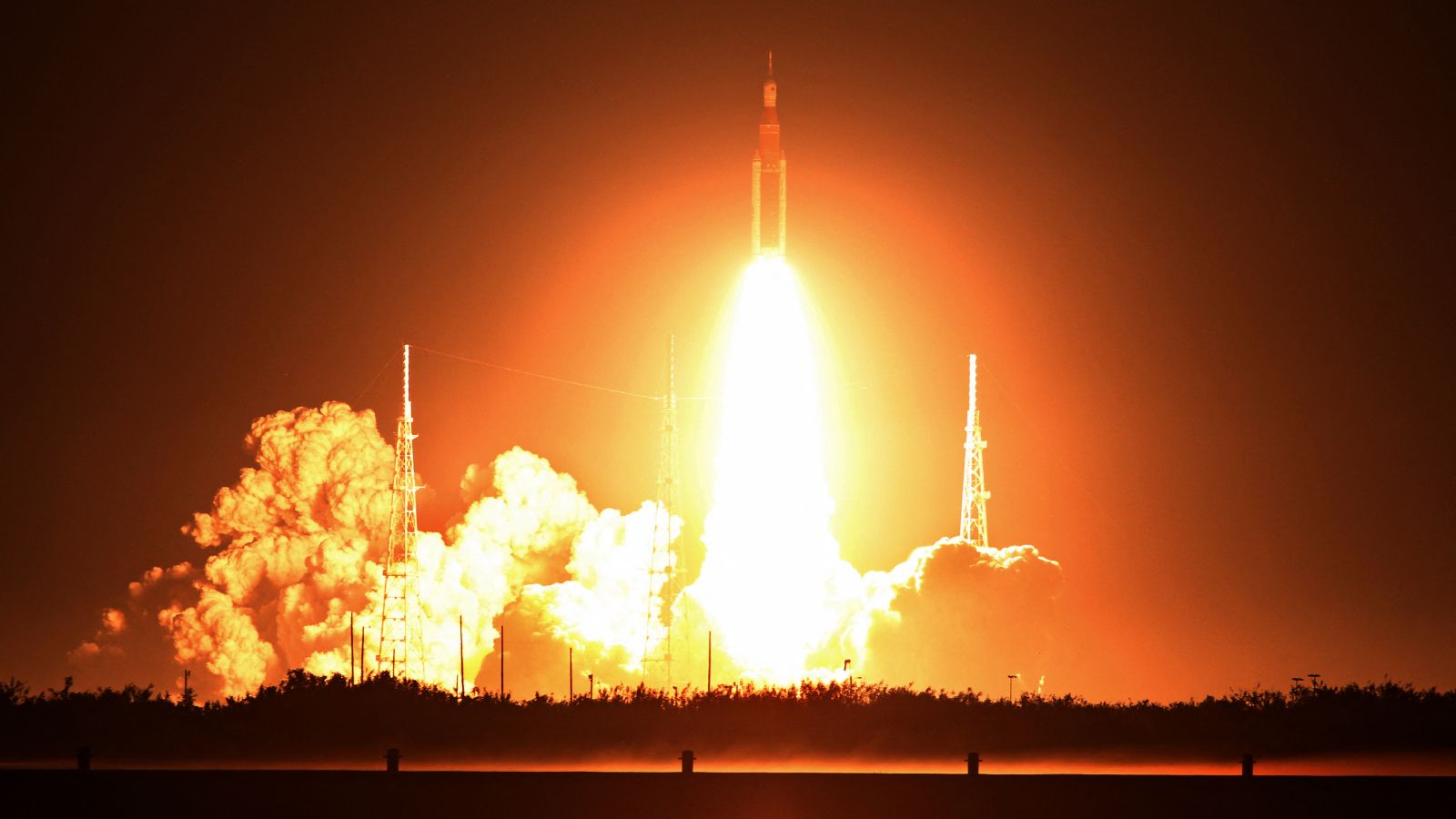
Artemis II’s successful lunar orbit was a historic achievement, marking the first manned lunar flyby in more than 50 years and the longest distance ever reached by humans from the Pale Blue Dot.
The mission was marked by engineering, scientific, and technological feats by NASA and other astronauts and teams that delivered the crew safely.
you may like
Artemis II deserves to be celebrated. However, this celebration should not exclude political scrutiny.
Moon power and resources
Artemis II is one mission in the United States’ broader plan to begin construction of a permanent moon base by 2030.
This is more than just an exploration. As US President Donald Trump has said, it’s about asserting “American space supremacy,” establishing a “sustained American presence,” and developing a lunar economy. The American colonial idea of ”manifest destiny to the stars” returns.
The bigger picture is that the United States sees itself in a “space race” with China, which NASA Administrator Jared Isaacman calls a “geopolitical adversary.”
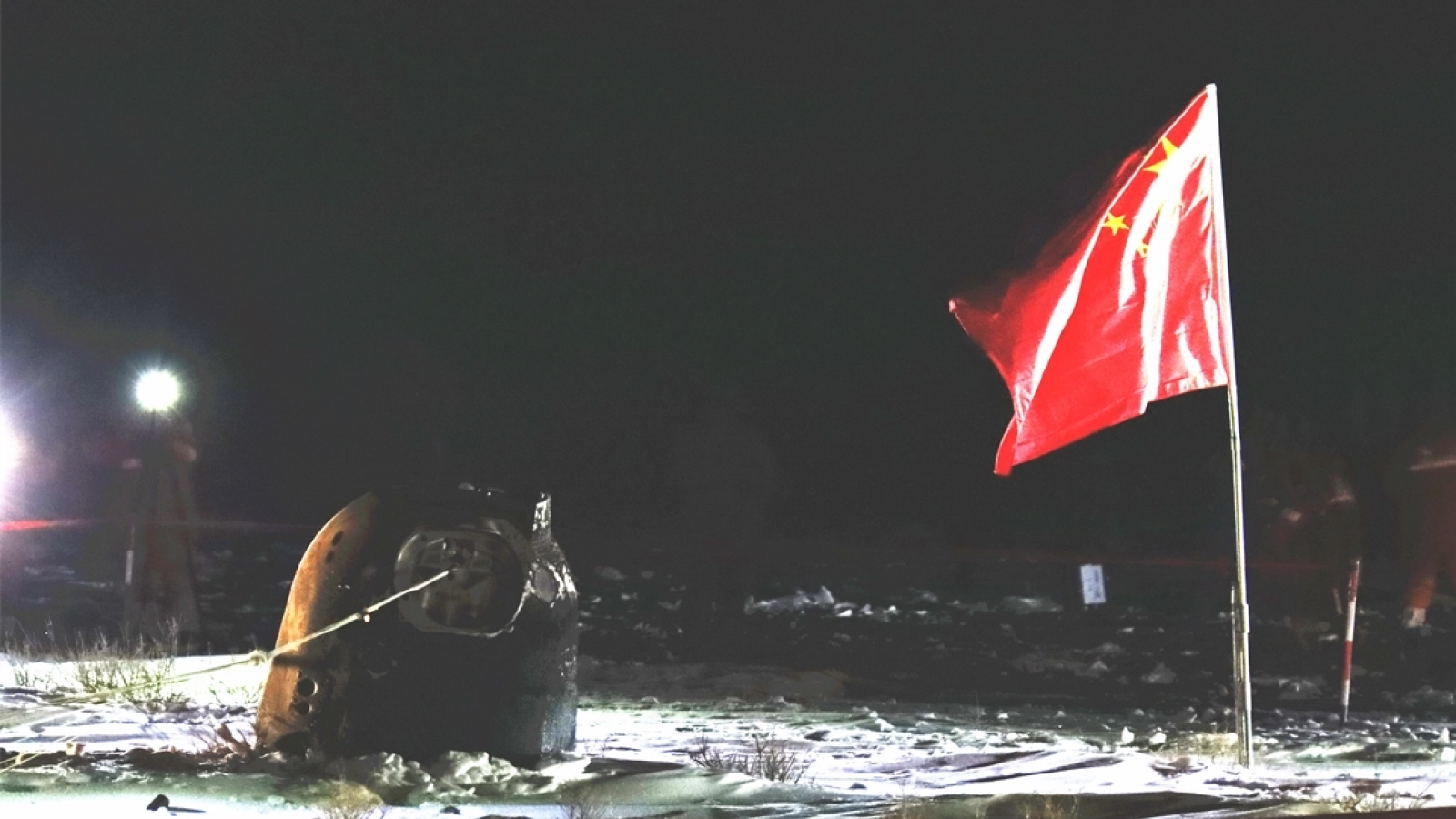
One point of conflict is access to the finite and valuable resources at the moon’s south pole. Water ice could support life there and provide rocket fuel for missions to Mars. More speculative and profit-driven visions are also playing a role, from mining helium-3 to extracting resources from asteroids and bringing them to Earth.
Global Rules — Beyond the Earth
The International Outer Space Treaty, established primarily during the Cold War of the 20th century, makes little reference to the appropriation of extraterrestrial resources.
The US wants to shape the rules, and the US-led Artemis Accords are part of that effort. These are non-binding principles, but they are consequential.
What to read next
It provides a “blueprint” for how to manage resource activities and other unresolved topics under the 1967 Outer Space Treaty.
Many observers view the Artemis Accords as more transparent and open than its Chinese counterpart, the International Lunar Research Station. But critics argue that the Artemis Accord undermines the multilateral consensus-based process.
61 countries have signed the Artemis Accords. Since Trump returned as US president, there have been just nine new signatories, compared to 19 the year before. It remains to be seen whether this trend will continue.
Why America’s leadership in space needs scrutiny
America’s leadership in space is often discussed only in contrast to China. This dualistic perspective could help the United States evade scrutiny, especially from its allies.
Consider America’s recent actions here on Earth. As Artemis II turned our gaze to the skies, the United States and Israel’s war against Iran was escalating.
In an expletive-filled post on Truth Social, President Trump threatened that “the entire civilization will perish tonight” if Iran does not reopen the Strait of Hormuz and threatened a nuclear attack.
The US also reportedly threatened to target civilian infrastructure, with airstrikes on schools reportedly killing more than 150 people.

All of this comes amid an ongoing crisis and civilian casualties in Gaza, where President Trump’s Peace Commission has come under fire for trying to act as an “alternative United Nations.”
President Trump also revived his territorial ambitions for Greenland, saying, “We need it.” He proposed annexing Canada as the 51st state of the United States. He spoke of the “honor of occupying Cuba.” He declared he would “run” Venezuela.
All of these locations have natural resources, including important minerals and oil, that give the United States a strategic advantage.
This practice has raised concerns from international lawyers and international organizations. Even US allies who have criticized President Trump for not joining the Iran war spoke out.
Tough questions about the future of US-led space
The disregard for international law on Earth leads to questions about how the United States will ultimately act in space.
Scholars of the Global South, particularly law professor Anthony Anghie, have long argued that the United States uses international law selectively to serve its own interests. This is nothing new for President Trump, even if the pattern is now more visible and more intense. What may be changing is that more countries around the world are taking notice, including those that once benefited from the status quo.
At the World Economic Forum in Davos this year, Canadian Prime Minister Mark Carney said the “rules-based order” was “partly false” and that “international law applies with different rigor depending on the identity of the defendant or victim.” He’s not talking about space, but his point still applies here.
This puts a question mark on US leadership in space and whether the US will abide by agreed upon rules when the management of lunar resources is no longer just a hypothetical matter. Even America’s own Artemis Accord principles may prove optional if it becomes inconvenient to American interests.
This question is worth considering, given that President Trump has already justified withdrawing from a number of international institutions and organizations on this basis. Even NATO might be next.
No superpower, on Earth or elsewhere, should escape scrutiny.
This edited article is republished from The Conversation under a Creative Commons license. Read the original article.