
EEA highlights barriers slowing growth of European circular economy
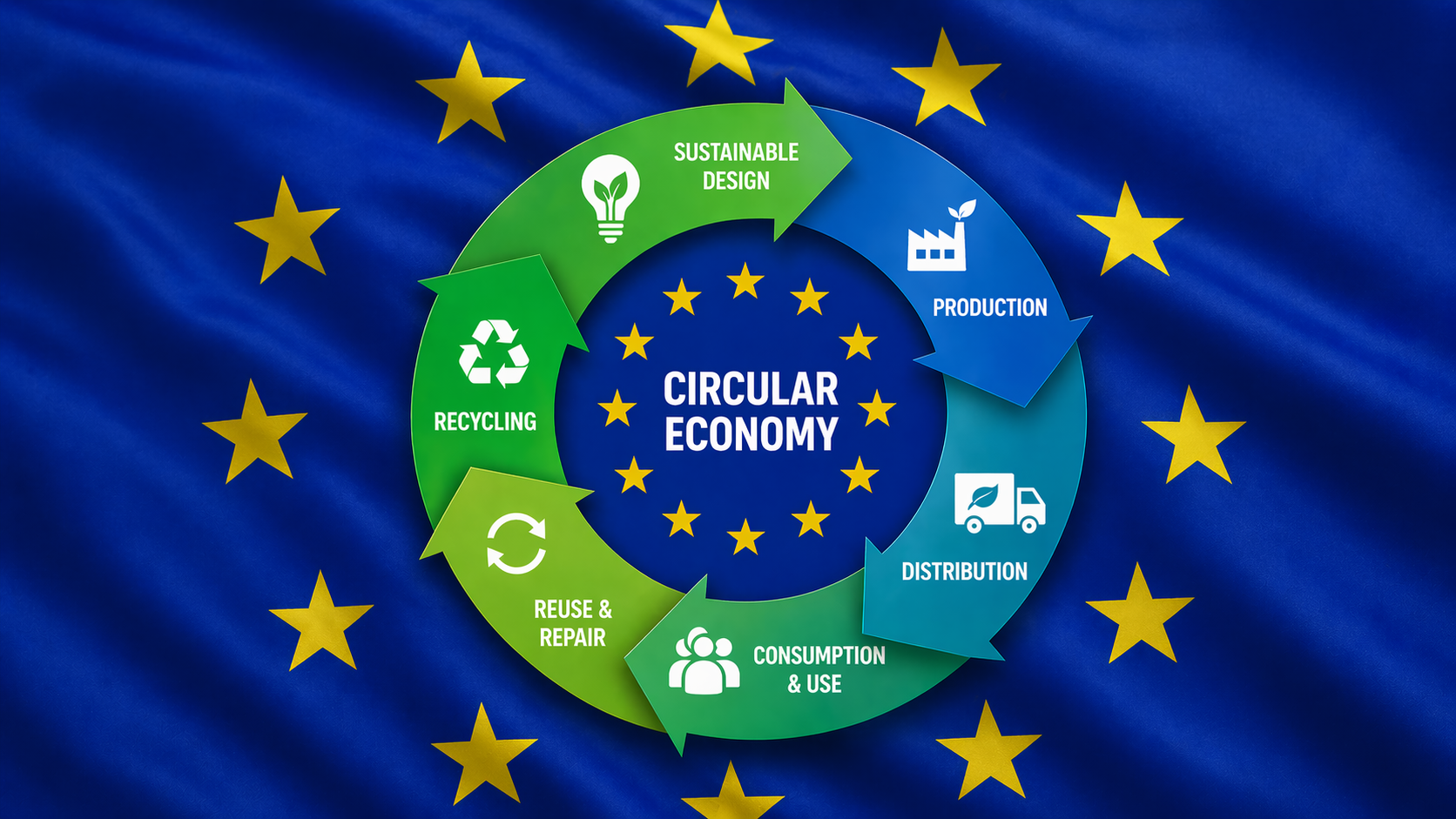
Europe’s commitment to a more sustainable economic model is entering a decisive phase.
Two new assessments published by the European Environment Agency (EEA) argue that achieving a functioning European circular economy depends not just on ambition, but on how well policies work for people, from entrepreneurs to workers to consumers.
EEA Director-General Leena Ila-Mononen explained:
“This circular transition will further boost our prosperity and emerging circular businesses must have a level playing field, while workers must benefit from decent work, skills development and opportunity.
“Circular economy is as much an economic policy as it is a social equity one, and a tool to protect the environment and climate.”
A system that works for people
The report highlights central issues. That means circularity cannot scale unless it is practical, accessible, and equitable.
Companies that incorporate circular principles, such as reducing waste, extending product lifecycles, and rethinking ownership models, often struggle to grow beyond their niche markets.
This creates a disconnect between policy goals and reality on the ground. Although the European Union has set out a strong framework that includes future circular economy legislation, gaps in implementation still remain.
Entrepreneurs face regulatory frictions, limited financing options, and insufficient market incentives. At the same time, the workforce aspect is becoming increasingly important. The transition must not just provide jobs, but quality jobs that are stable, fairly paid, and accessible to all skill levels.
Expansion of circular business models remains a bottleneck
A key finding is that circular business expansion remains the exception rather than the norm. The EEA has identified three different ways in which this scaling should occur.
Scale out: Extend your customer reach and enter new markets Scale up: Restructure the broader systems in which your business operates Deep scale: Influence cultural norms and consumer behavior
All three are essential if Europe’s circular economy is to move beyond being an isolated success story.
Currently, many circular models focus on waste management and processing of used products. Although important, this narrow focus limits impact.
The report calls for stronger support for models that extend the life of products and promote reuse through rental, leasing and sharing systems, approaches that have greater long-term environmental benefits.
Policy and market barriers continue to hinder growth
For circular businesses to grow, the EEA has identified several structural issues that need to be addressed.
Regulations need to evolve to create a level playing field and ensure circular models are not disadvantaged compared to traditional linear models.
Access to finance is also a major constraint. Investors and insurance companies often perceive circular ventures as being risky and restricting the flow of capital. Growth can be achieved by fostering innovation that reduces operational costs and leveraging targeted financial tools.
There’s also a social aspect. Grassroots initiatives and community-led projects can play an important role in changing consumer behavior, but they require policy support and visibility.
Increase in employment and points to note
This transition is already reshaping Europe’s labor markets. Between 2014 and 2023, circular economy employment in the 27 EU countries grew by 10%, reaching around 4.4 million roles.
As we look to the future, the possibilities become even greater. Under the Clean Industries Pact, up to 500,000 additional jobs could be created by 2030 in Europe’s remanufacturing sector alone.
However, the quality of these jobs varies. Some roles are low-paying or precarious, but higher-skilled opportunities tend to benefit those who are already well-positioned. Without intervention, this risk will widen existing inequalities.
A just transition matters
The second EEA briefing focuses specifically on equity in the European circular economy.
The conclusion is clear. Policies are more effective when they integrate inclusion, equity, and participation from the start.
It is essential to improve the quality of work, expand access to training and ensure broad participation in the circular sector. These measures not only support workers, but also strengthen public confidence, a key element for long-term policy success.
The way forward for a circular economy in Europe
The EEA findings arrive at a crucial time as the EU prepares circular economy legislation.
This message is not aspirational, but practical. Europe already has many of the necessary tools, but they must be adapted to real-world conditions.
If policymakers can remove barriers, support innovation and prioritize equity, Europe’s circular economy has the potential to deliver environmental benefits as well as economic resilience.
But without that alignment, there is a risk that progress will stall, ambitions will remain unfulfilled, and opportunities will remain unrealized.
Source link

