


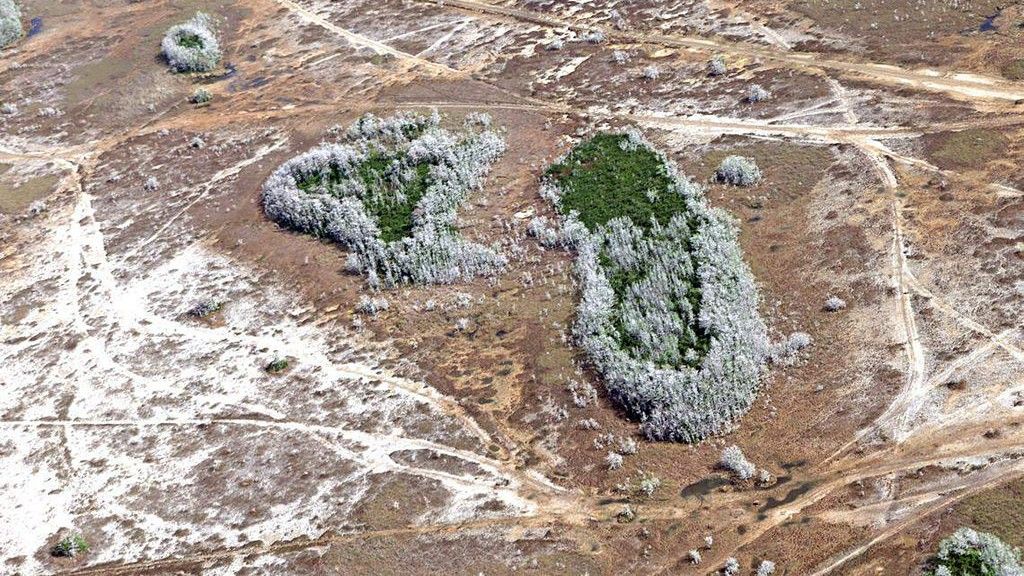
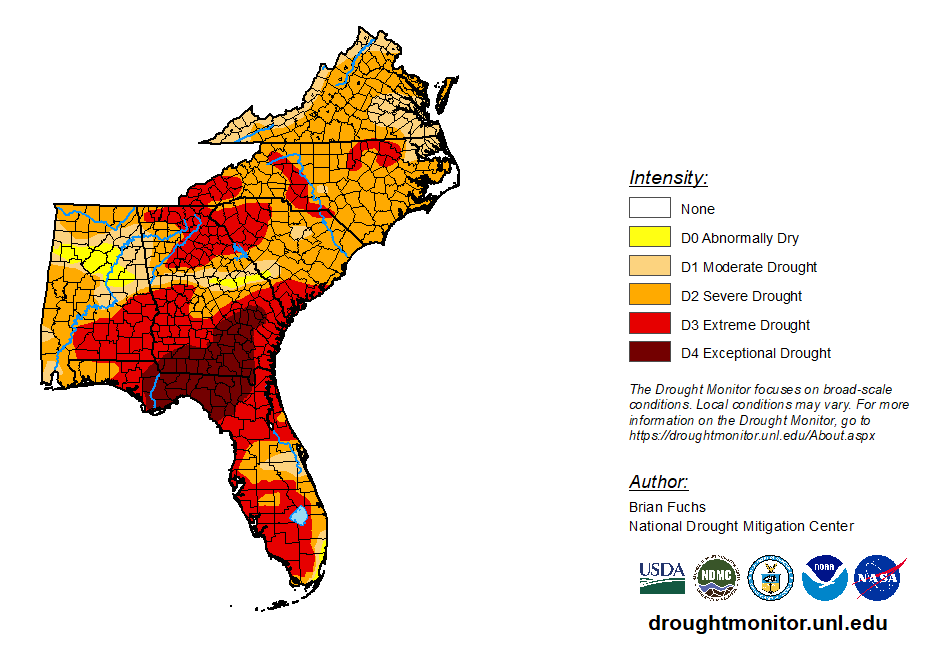
Florida is experiencing its most severe drought in 15 years, with more than 70% of the Sunshine State experiencing what the U.S. Drought Monitor calls “extreme” to “exceptional” drought.
The latest drought data shows northern Florida is experiencing the driest conditions in the state, with recent rainfall providing little relief. With no rain in the forecast and warmer temperatures next week, the situation is likely to get worse before it gets better, experts told Live Science.
you may like
Why is Florida experiencing a drought?
Florida, along with Georgia and other parts of the southeastern United States, is currently under a ridge of high pressure that has been moving in and out of the area since last fall, but has remained stationary since March. This means the air over the Southeast sinks and becomes compressed, reducing humidity and inhibiting cloud formation.
“Rain doesn’t form in sinking air, so it just stays warm and dry,” Pam Knox, an agroclimatologist at the University of Georgia and director of the Georgia Weather Network, told Live Science in an email.
Florida and other parts of the Southeast have been experiencing several weeks of sunny skies. But it’s not just high pressure that is causing the current drought, as rainfall has been below average in recent months. Florida has been unusually dry for much of last year, with many areas receiving less than 50% of normal precipitation since September 1, 2025, according to the National Weather Service.
“So it’s about 20 to 25 inches.” [50 to 65 centimeters] We’re below what would be considered average precipitation,” Knox said.
La Niña occurred after months of dry weather, causing the jet stream to move north. This led to colder and wetter conditions in the northern United States and Canada, and warmer and drier conditions in the southern United States.
“This is a combination of the lack of tropical storms last year and the La Niña winter weather, which typically results in warmer and drier-than-normal conditions,” Knox said.
What to read next
Why is Florida’s current drought so bad?
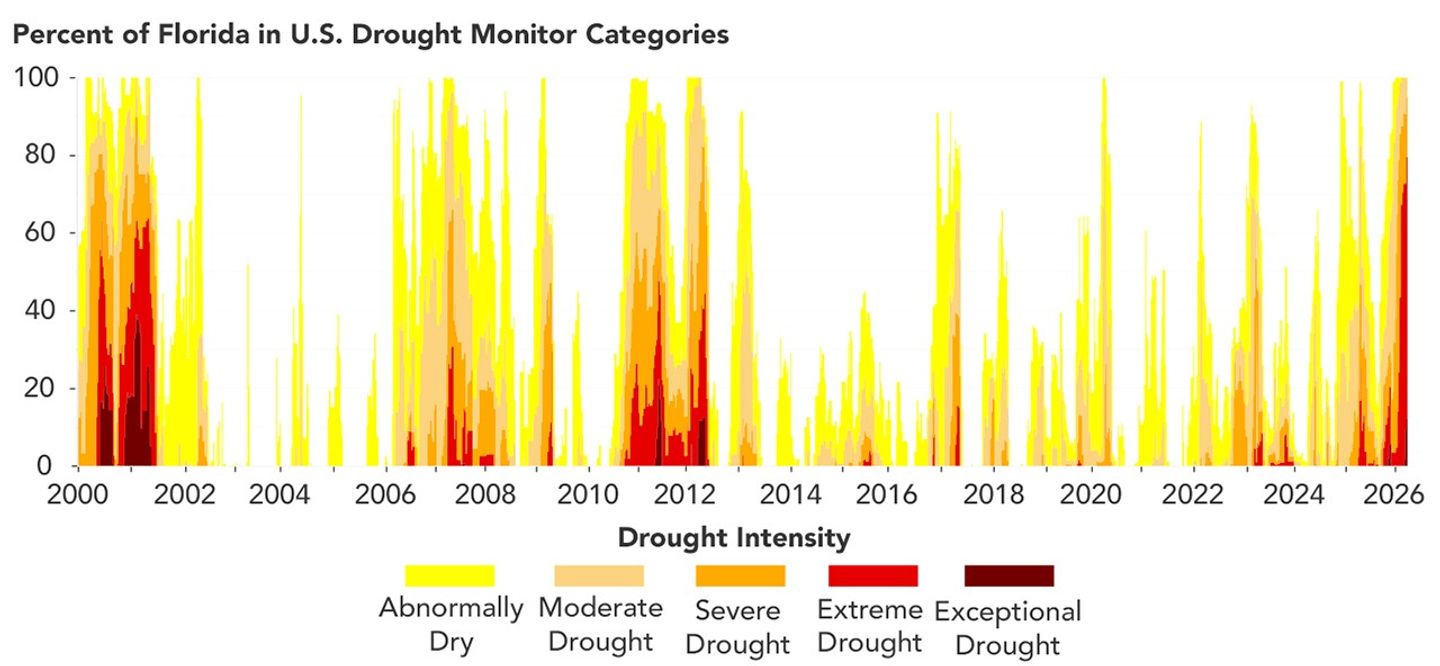
Florida’s current drought is different from previous severe droughts because it hit in the spring rather than the summer. The last time U.S. drought monitors recorded such abnormally dry conditions in the Sunshine State was in June 2011, but the beginning of the year hasn’t been this dry since 2000, Knox said.
This season’s La Niña weather, low precipitation and fewer storms are due to natural fluctuations, but changes in the water cycle due to global warming and rising temperatures may be contributing to the dryness, Knox said.
Without proper attribution studies, it is difficult to disentangle the effects of climate change from natural variation, Mullens agreed.
How long will Florida’s drought last?
Florida’s current drought conditions will likely worsen through the end of April, but are expected to improve slightly in May as atmospheric high pressure moves away from the southeast.
“Northern Florida and southern Georgia are experiencing the worst of the drought in the Southeast, but with warmer temperatures and less rain in the forecast, other regions are likely to get worse in the coming weeks,” Knox said. “We expect the weather pattern to change towards the end of the month as the high pressure system contracts to the east and a cold front that could bring rain could move back into the Southeast.”
It is unclear how the situation will evolve into the summer, but large amounts of moisture will be needed to end the drought. Ideally, a stalled tropical storm or front should bring enough rain to hydrate plants and replenish soil moisture over the next few weeks.
“It’s hard to come out of a drought in the summer because plant growth and evaporation tend to use all the rain that falls,” Knox said.
Mullens said a strong El Niño event is on the horizon and could bring wet weather this summer. But a clear picture of this year’s drought will only become clear once it ends. Scientists will then be able to more accurately compare its length to the droughts that hit Florida in 2000 and 2011.
What is the impact?
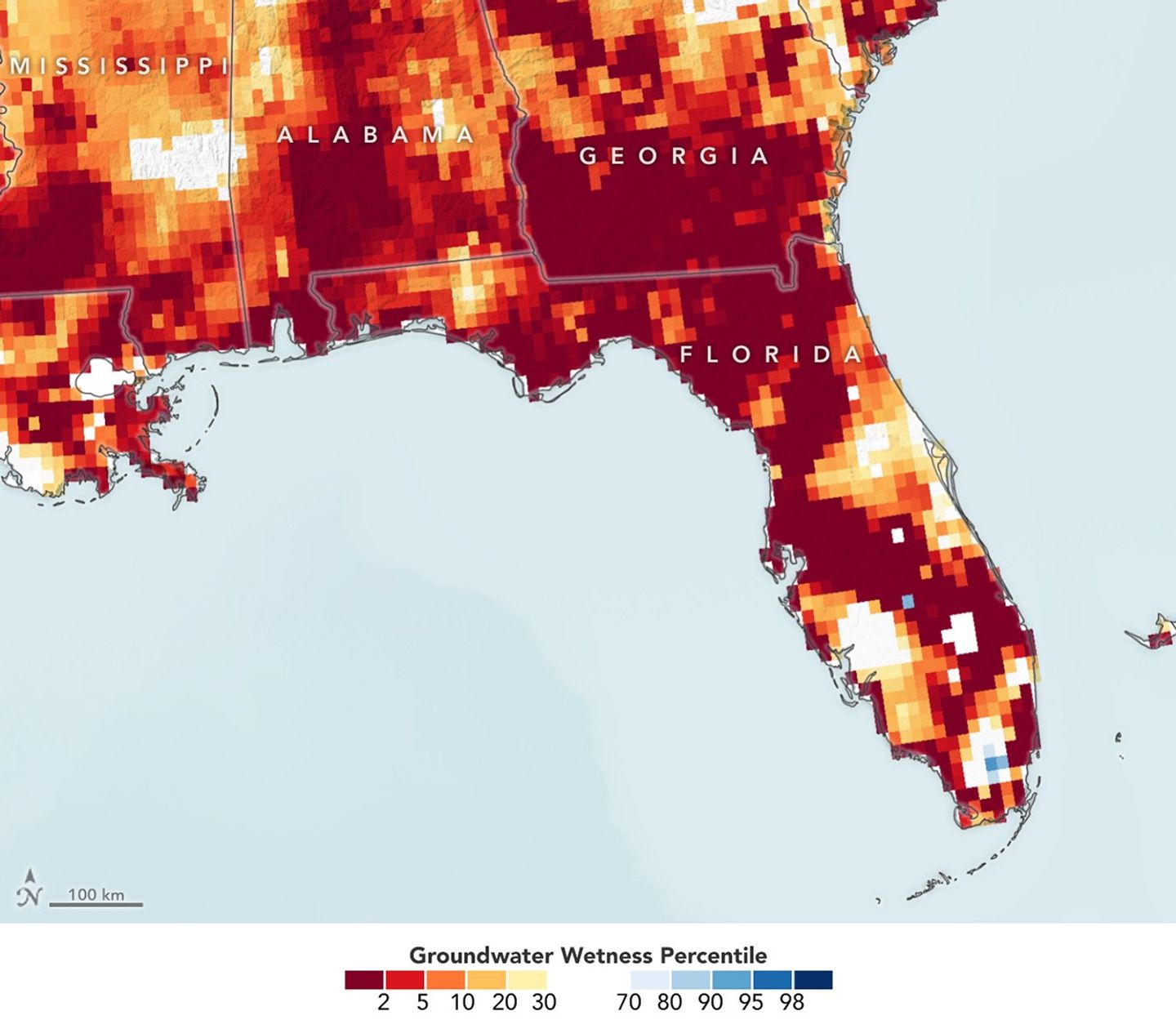
This year’s drought has dried up shallow groundwater aquifers across the southeastern United States, according to satellite data. That’s because more water than normal is being extracted from these aquifers to irrigate farmland and provide drinking water to people in extremely dry conditions.
In Florida, the northern and central aquifers are particularly dry. Aquifers do not recover quickly from drought. This is because rain must first wet the entire soil column before it can drip to replenish groundwater reserves.
“Aquifers are considered to be lagging indicators of drought because they degrade and take time to recover after a severe drought occurs at the surface,” Knox said.
Drought is occurring across Florida, and some water districts are imposing limits on water use for certain activities, such as irrigating lawns. The dried vegetation also provides enough fuel for wildfires, including one that started in February in the Big Cypress National Preserve, about 25 miles (40 km) east of Naples. And even the Everglades is facing unusually dry conditions, news reports show.
If the drought lasts longer, there could be more wildfires and even water shortages, Knox said.
Recovery from this drought could take weeks of rain and days of tropical storms. Ideally, precipitation is abundant, but not all at once. There is a limit to how much water soil can absorb, and the excess is likely to run off, Knox said.
“Florida soils are generally quite sandy, so if it’s really dry it could probably absorb a couple grains. [to] 3 inches [5 to 8 cm] “It’s easily absorbed in a few hours. Other parts of the Southeast, where we have a lot of clay soil, wouldn’t be able to absorb this much,” she said.
Farmers in particular are desperate for rain. “In all my years of farming, I have personally never experienced a spring as dry as this,” Shannon Nixon, a soybean and peanut farmer near Baker, Florida, told Farm Progress. “It’s very concerning to see it this dry this early in the spring.”
Mr Knox said droughts can take a huge toll on farmers’ incomes, with many likely delaying planting crops or deciding not to plant crops at all for fear of their crops dying. If such dry conditions continue, domestic food production will decline, and some of this production will no longer be covered by imports, which will have an impact on consumers.
“That means there will be shortages of some locally produced products, such as vegetables,” Knox said.