
Fraunhofer develops automatic recycling robot system for used batteries
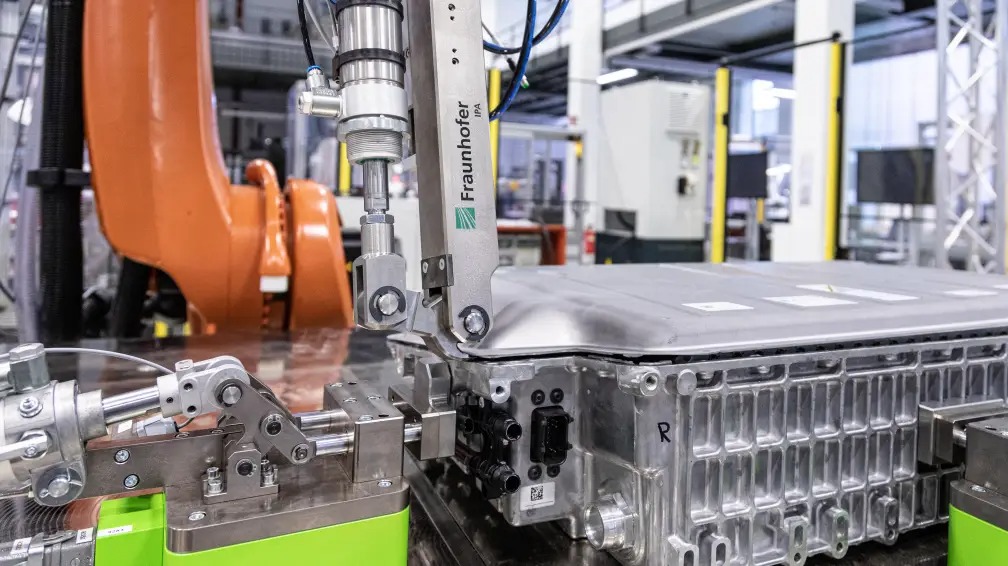
To recycle battery cells, the charge level must be determined to see if the battery can be recycled or reused. To be reused, the battery must have a sufficient charge level to remain functional. Batteries to be recycled must be completely discharged. Fraunhofer’s research team is currently developing a robotic system to automate this process.
Because battery cells can be reused, industrially reconditioned, or disassembled into components for further use in other products, there is a high demand for technologies that can speed up this process and redirect old batteries to their next purpose.
Robotic system helps sort batteries and prepare them for future use
Fraunhofer’s project “Automated Circular Economy Plant with Intelligent Discharge and Reconditioning of Battery Cells for a Circular Battery Value Chain – Rob@t2Cell” will run until the end of 2028 and will benefit from €5.09 million in funding provided by the Federal Ministry for Research, Technology and Space (BMFTR).
The system includes automatic contact, intelligent battery characterization and real-time decision-making regarding further usage, allowing charging/discharging to be performed as required.
According to IPA, recycled batteries will be automatically disassembled by robots that meet “the highest requirements for safety, high voltage and software technology”. After the development phase, the robot will be tested in industrial trials by recycling experts Umicore.
A water-based recycling process is used to recover raw materials from battery cells.
Collaboration across German industries
In addition to Fraunhofer IPA, Umicore and acp systems, the project includes the Fraunhofer Institute for Resource Management and Resource Strategy (IWKS) and the Institute for Industrial Manufacturing and Factory Management (IFF) at the University of Stuttgart.
Other partners include BorgWarner Battery Systems Technical Center and Siemens.
Source link

