
Mammoth bones reveal secrets of Ice Age hunters
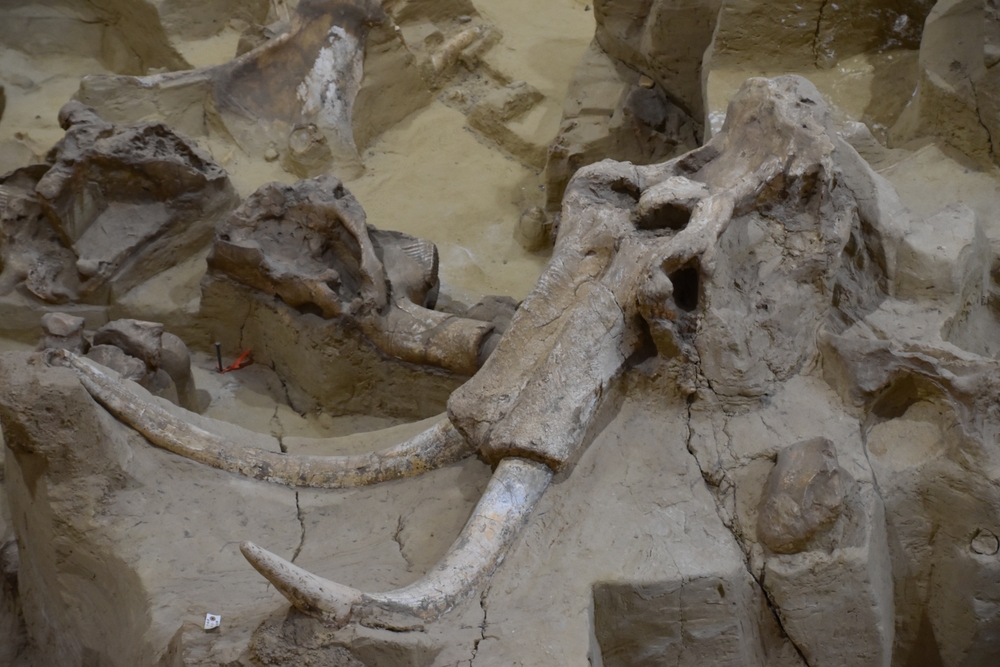
For more than a century, vast deposits of mammoth bones in central Europe have baffled scientists. Now EU-funded researchers have revealed what they can tell us about how humans hunted and survived during the Ice Age.
Shortly before the peak of the last ice age, herds of woolly mammoths roamed throughout central Europe following seasonal routes through vast, frigid terrains of steppe and tundra. Throughout the region, archaeologists have discovered astonishing accumulations of mammoth bones, sometimes numbering in the thousands.
These ruins have baffled researchers since the 19th century. Are these vast bone beds the result of hunting, natural deaths, or both? And what do they reveal about the people who lived alongside these giant animals?
A European research team, funded by the European Union, is carrying out new investigations at three of the most important archaeological sites: Cracow Spasista in Poland, Dolny Vestnice in the Czech Republic and Langmannersdorf in Austria. Their research is part of a five-year European Research Council-funded initiative called MAMBA, which will run until June 2027.
The research is led by Dr. Jarosław Wilczynski, an archaeologist and associate professor at the Institute of Zoological Systematics and Evolution of the Polish Academy of Sciences in Krakow.
He coordinates an international team working to piece together what these bone deposits can tell us about life between 35,000 and 25,000 years ago.
read the bones
To answer these questions, the team combines traditional archeology with a wide range of science and technology. The excavations are combined with laboratory analysis drawing on expertise in genetics, isotope chemistry, geoarchaeology, and paleoclimatology.
“We are integrating field work and laboratory research,” Wilczynski said. “We are collecting new materials, but we are also reexamining the museum’s collections using methods that were not previously available.”
By studying stable isotopes in bones, scientists can learn what mammoths ate, where they lived, and even the season they died. Ancient DNA (aDNA) extracted from mammoth remains helps researchers build a complete picture of these extinct mammoth populations: how big they were, how they were related, and how they changed over time.
To go further, the team led by Alex Pryor from the University of Exeter is also using isotopic analysis of strontium and oxygen. The ratios of these isotopes in teeth and bones act like natural geographic markers, allowing researchers to track where individual mammoths lived and moved during their lifetimes.
High-precision radiocarbon dating has refined the timeline of each site, helping to better understand past environments and uncover the landscape and climate of the time.
Wilczynski and his team are also careful to balance analysis and preservation. “Excavation and analysis techniques have improved over the years,” he said. “Samples can be more carefully preserved and, if possible, new material can be unearthed without damaging historic collections.”
Tracing ancient DNA
The MAMBA team’s aDNA research is led by David Diez del Molino, a researcher at the Stockholm Center for Paleogenetics, a joint research institute between Stockholm University and the Swedish Museum of Natural History.
He specializes in aDNA analysis and uses aDNA and computational methods to study extinct species and the evolution of past ecosystems. The MAMBA study posed certain challenges regarding sample preservation.
“Most of the aDNA we study comes from well-preserved mammoth samples in permafrost. However, all mammoth material in MAMBA comes from environments other than permafrost, which is much more difficult,” Diez del Molino said.
By developing improved DNA extraction methods tailored to degraded samples, the research team is unlocking genetic information from samples long thought unsuitable for analysis, opening museum collections to new types of research.
“We hope to analyze more than 400 samples by the end of the project,” Diez del Molino said. “Given our success rate, we have the potential to unlock thousands of historically overlooked specimens for DNA research.”
What the hunters knew
Emerging situations challenge previous assumptions about human behavior.

The people who lived with the mammoths appear to have been skilled, organized hunters rather than opportunistic scavengers. They were able to plan and coordinate complex hunting operations and handle large numbers of catches such as mammoths and other animals.
“They had a good understanding of animals and their environment,” says Dr. Dorothee Drucker, a researcher at the Senckenberg Center for Human Evolution and Paleoenvironment at the University of Tübingen in Germany. Drucker is an expert on ancient diets and ecosystems.
Ice Age hunters likely had a detailed understanding of mammoth migration routes, seasonal movements, and gathering places. They likely used this knowledge to strategically position themselves and increase their chances of success.
Such activities would have required cooperation, communication, and social organization. The bone deposits we find today are, in a sense, the material traces of that expertise.
Woolly mammoths were more than just a source of meat. It was a keystone species in its environment and shaped the surrounding landscape.
“The woolly mammoth is an iconic species that played a major ecological role. It is a large animal that crushes trees and bushes, alters the environment, and fertilizes the soil with its droppings,” Drucker said.
For humans, it provided a wide range of resources, including meat, fat, ivory, and bone for tools and ornaments.
Lessons from a changing world
The Late Ice Age (known to archaeologists as the Upper Paleolithic), from 35,000 to 25,000 years ago, was one of rapid environmental change. As the climate cooled and ice sheets expanded, ecosystems across Europe changed, affecting both animal populations and human societies.
“What we’re seeing is that humans have been extremely adaptable,” Drucker said. “They were able to leverage available resources while adapting to changing conditions.”
At the same time, researchers are investigating how human activities have contributed to the decline in mammoth populations.
“Mammoths exhibit unusually high levels of an isotopic marker called nitrogen-15, which is associated with diet,” Drucker explained. “Humans who ate a lot of mammoth meat also had higher levels of this marker. This suggests that mammoths were an important food source.”
Researchers are now using these isotopic signals in conjunction with genetic data to investigate how strongly human hunting, along with climate change, is contributing to mammoth population declines.
The decline and eventual extinction of mammoths is likely the result of multiple interacting pressures, including climate change, habitat change, and human activities. Disentangling these factors remains a key challenge.
Discoveries from these sites offer insights beyond archeology. By reconstructing how early humans adapted to extreme and rapidly changing conditions, researchers are developing a clearer understanding of human resilience over time – how societies respond to environmental stress, organize themselves and survive.
But what is becoming increasingly clear is that Ice Age humans were not passive observers of their environment. They actively shaped it and were shaped by it in return.
Mammoths are long gone. But in the bones they left behind, those who lived with them are beginning to speak.
This article was originally published in Horizon, EU Research and Innovation Magazine.
The research for this article was funded by the European Research Council (ERC).
Source link

