
DOE awards $94 million to advance U.S. light water SMR
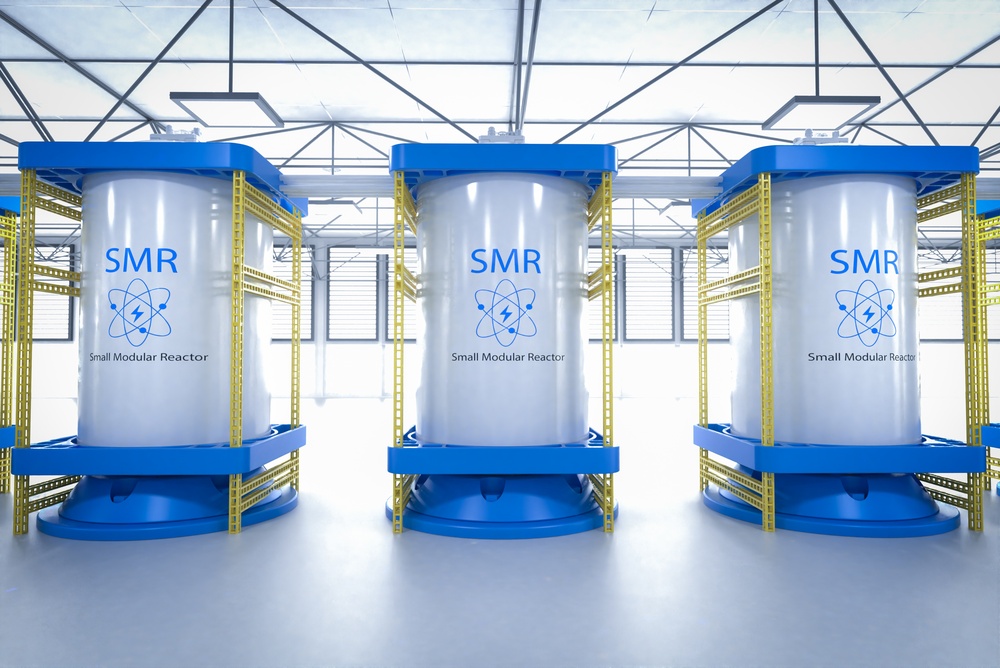
The U.S. Department of Energy (DOE) has selected eight companies to receive more than $94 million in federal funding to accelerate the nationwide deployment of advanced light water small modular reactors (SMRs).
This effort focuses on resolving long-standing barriers in nuclear licensing, manufacturing capacity, fuel production, and facility readiness.
The funding, issued through DOE’s Generation III+ SMR Deployment Pathway Program, is intended to strengthen the U.S. domestic nuclear supply chain and support the commercial deployment of next-generation nuclear reactors in the 2030s.
These awards also align with the Trump administration’s efforts to expand U.S. energy production and revive the nuclear sector through a series of executive orders focused on energy security and industrial growth.
The selected projects cover two main areas: early siting permits for future nuclear reactors and manufacturing upgrades needed to support the production of nuclear components and fuel.
DOE officials say the investment is aimed at building the industrial infrastructure needed for large-scale deployment of light water SMRs over the next 10 years.
Commenting on the investment, U.S. Energy Secretary Chris Wright said, “Advanced light water SMRs will provide our nation with the reliable, 24-hour power we need to fuel the President’s manufacturing boom, support the growth of data centers and AI, and strengthen a stronger, more secure power grid. These awards ensure we can deploy these reactors as quickly as possible.”
Site preparation project advances future reactor development
Two utility-backed projects have secured the bulk of a funding package to support early site approval efforts by the U.S. Nuclear Regulatory Commission.
Constellation SMR Development has received $17.3 million to obtain early site permitting for a future light water SMR project in New York. Meanwhile, the Nebraska Public Power District was awarded approximately $27.9 million to complete similar permitting work at proposed sites in Nebraska.
Early site permitting is considered an important step in nuclear power development because it allows companies to assess environmental, geological and safety conditions before starting construction of a reactor.
Industry analysts view the permitting process as one of the most significant bottlenecks slowing new nuclear deployments in the United States.
Manufacturing investments target gaps in nuclear supply chain
The majority of DOE funding will support upgrades to U.S. manufacturing infrastructure tied directly to light water SMRs.
BWXT Nuclear Energy has secured more than $21.4 million to expand capacity at its Mount Vernon, Indiana, facility. The project will help the company manufacture reactor pressure vessels and other large nuclear-grade components needed for future nuclear reactors.
Scott Forge Company received $12.3 million to install heavy industrial machining equipment at its Illinois facility, while American Forgemasters Company was awarded $2.9 million for a new furnace to support domestic production of large nuclear forgings for Generation III+ SMRs.
DOE also awarded small grants to companies focused on materials certification and component production. Container Technologies Industries received funding to expand its nuclear quality assurance certification at its Tennessee facility, enabling it to produce steel suitable for advanced reactor projects.
Expanding fuel production capacity for light water SMR
Several awards are aimed at strengthening the U.S. nuclear fuel supply chain, which remains heavily dependent on aging infrastructure and foreign sources.
Framatome US Government Solutions received $8.8 million to expand its fuel manufacturing operations in Richland, Washington. The company plans to add a new ceramic pellet production line that will increase its annual uranium fuel production capacity by approximately 200 tons.
Global Nuclear Fuel Americas has secured $3 million to install a second fuel rod production line for boiling water reactors at its North Carolina facility. The project also includes automated pellet inspection and an upgraded storage system aimed at improving manufacturing efficiency.
The DOE said expanding domestic fuel production is essential if the United States wants to expand the deployment of light water SMRs over the next decade.
Federal push signals long-term nuclear expansion
The latest award follows a broader DOE strategy announced earlier this year to accelerate the deployment of Generation III+ reactors.
Federal officials argue that light water SMRs are the fastest commercially viable route to adding new nuclear power capacity because they build on decades of operating experience with existing reactors while allowing for small, modular construction.
With electricity demand expected to skyrocket due to artificial intelligence infrastructure, manufacturing growth, and electrification, the administration is positioning light water SMRs as a core element of future U.S. baseload power generation.
Source link

