
Complete solution for automotive plastics
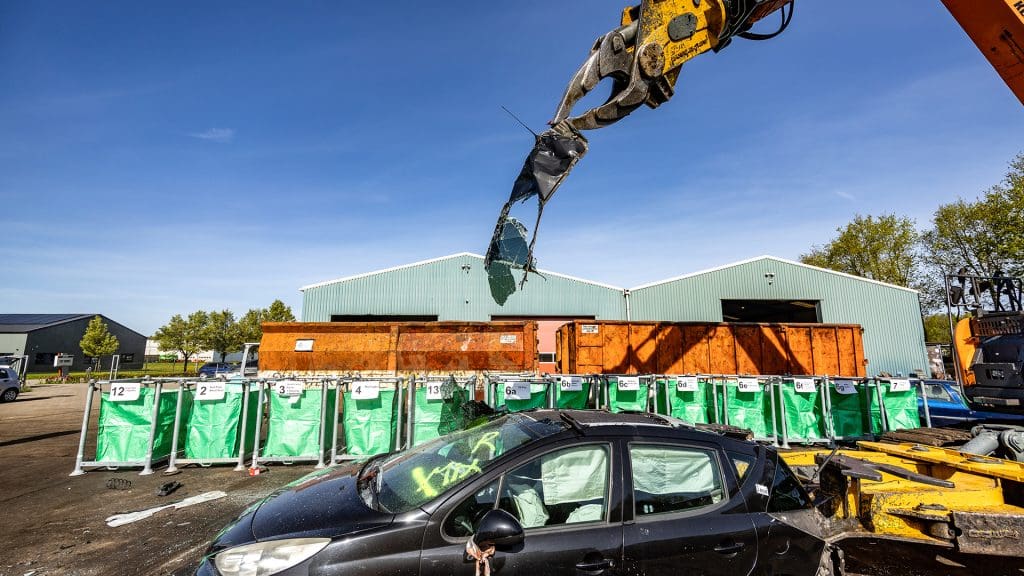
The Global Impact Coalition outlines the steps needed to help the chemical industry solve the auto plastics problem.
More than 800,000 tonnes of plastic from end-of-life (ELV) vehicles is incinerated or landfilled in Europe each year. The automotive industry accounts for approximately 10% of global plastic demand. However, despite decades of sustainability efforts, less than 2.5% of the plastic used in new cars comes from recycled sources. Currently, EU ELV regulations require this number to reach 25% by 2036.
This gap is not a technology issue. This is a value chain problem, and solving it requires pre-competitive cooperation between competitors, something the chemical industry has never attempted on a large scale.
In 2025, the Global Impact Coalition (GIC) launched the Automotive Plastic Circulation Project to do just that.
what the pilot did
Eight major chemical companies (BASF, Covestro, LG Chem, LyondellBasell, Mitsubishi Chemical Group, SABIC, SUEZ and Syensqo) collaborated through GIC to process 100 end-of-life vehicles through a complete dismantling, shredding and sorting chain. This project was designed to answer a question that no company would or could answer alone: Can plastic from end-of-life vehicles be recovered and processed into materials suitable for recycling at a scale that reflects real-world conditions?
The answer, published in GIC’s Phase 1 report, is yes. Approximately 8 tons of plastic was recovered from vehicles of various years, makes, models, and conditions. The pilot demonstrated that plastic parts can be extracted, sorted by polymer type, and processed into materials suitable for recycling. Technical pathways exist.
But this report equally illuminates what doesn’t yet exist: a commercially viable value chain that will enable this effort at scale.
Why technical proofs are just the beginning
The main barriers identified in the Phase 1 findings are not technical. They are structural. Demolition is complex and labor intensive. Sorting requires significant investment in automation and polymer identification technology, and importantly, there is no committed downstream demand and no mechanism to ensure that recycled material produced at one end of the chain is purchased and used at the other end.
This is a fundamental challenge for the circularity of automotive plastics. Value chains are long and fragmented. Never before have chemical manufacturers, dismantlers, waste managers, parts manufacturers, and automakers had to grapple with the same challenges at the same time. Each is located at a different point on the chain. Each has different incentives and none can solve the problem independently.

Phase 1 findings also identified specific technical barriers. The variety of plastic types across vehicle models and years makes consistent separation difficult, contamination rates vary widely depending on dismantling method, and the economics of collection deteriorate rapidly without large-scale automation.
These are not insurmountable walls. However, it requires a coordinated response across the value chain, rather than incremental actions by individual companies.
What will change in Phase 2?
Phase 2 of GIC’s Automotive Plastic Circulation Project represents a structural change. While Phase 1 was a pilot for the chemical industry, Phase 2 will involve automakers collaborating for the first time. Jaguar Land Rover and Valeo, a global car manufacturer and Tier 1 parts supplier, are currently working with chemical manufacturers and other industry players such as Siemens and Henkel to address the commercial viability of the entire value chain.
This is important for several reasons. OEMs and component manufacturers have two important levers that chemical manufacturers do not have. It is to determine the specifications for recycled plastics in new cars and to represent robust downstream demand that will enable financing of investment in recovery infrastructure.
Valeo’s participation is particularly important. Tier 1 suppliers like Valeo sit between chemical manufacturers and automakers, directly determining the design and specification of plastics in high-performance auto parts. Design decisions such as polymer selection, component geometry, and integration of various materials ultimately determine whether a plastic part can be economically recovered and reused at the end of its useful life.
Phase 2 will focus on multiple workstreams, including component-specific scenario modeling to establish retrieval economics at a detailed level, further automation efforts to reduce demolition cost and complexity, and design for circularity to understand how future component designs can improve both technical and economic viability at scale.
Why collective action is the only way
The pre-competitive model used by GIC is not just a practical convenience. There is a structural necessity to this kind of challenge.
No matter how large a company is, it cannot create demand for the recovery of automotive plastics on a large scale on its own. No OEM can rebuild the dismantling and sorting infrastructure to make recovery economical. Technology providers cannot redesign the value chain on their own. These are systemic challenges that require a systematic response.
GIC provides a legal and structural framework that allows otherwise competing companies to address common problems without compromising their commercial independence. Members share the costs and risks of pre-commercial research. The findings will be shared across the group, so that validated technical data, commercially relevant proof points and shared models will be available to all participants as a basis for their own commercial decisions.
The Phase 1 report provides the clearest indication of what this model will produce. Eight companies have collaborated to produce the first independently verified dataset on large-scale plastic recovery from end-of-life vehicles. Creating this dataset alone would have taken any company years and required significant capital. All in all, it delivered in that fraction of the time.
Regulatory background
The EU ELV regulation sets binding targets to raise the recycled plastic content of new cars to 15% by approximately 2030 and 25% by 2036, with at least 20% of this coming from closed-loop vehicle recycling. The current level remains at approximately 2.5%.
There is a wide gap between where the industry is and what regulations require, and the timeline is shorter than it appears. The vehicle product cycle means that the vehicles being designed and engineered today will be on the road when those goals come into effect. The decisions made during Phase 2 of the GIC project regarding component specifications, polymer types, and value chain economics will directly determine whether the industry can achieve these goals.
There is also parallel regulatory pressure from China, whose National Action Plan launched in December 2025 aims to increase the use of recycled materials in car manufacturing by 2030, and markets across Asia where Extended Producer Responsibility frameworks are being strengthened.
what happens next
Phase 2 is currently underway and the workstream is active. Chemical manufacturers, tier 1 suppliers, and automobile manufacturers are participating. The question has shifted from whether circularity in automotive plastics is technically possible to whether it is commercially viable at the scale the market demands.
The answer to that question doesn’t come from any single organization. It comes from the structured pre-commercial collaboration that GIC is built to enable. The Phase 1 report establishes the evidence base. Phase two is building the commercial case. The entire value chain is working together for the first time.
That’s no small feat. In fact, that is exactly what is needed to transition to a circular economy.
About the Global Impact Coalition
The Global Impact Coalition is a CEO-led coalition of leading chemical companies pre-competitively addressing net zero and circularity challenges that no single company can solve alone. GIC develops projects, pilots, and partnerships that deliver measurable results across raw material substitution, circularity, process emissions reduction, and chemical safety.
This article will be featured in an upcoming Circular Economy Special Focus Publication.
Source link

