
Expanding green hydrogen across sectors
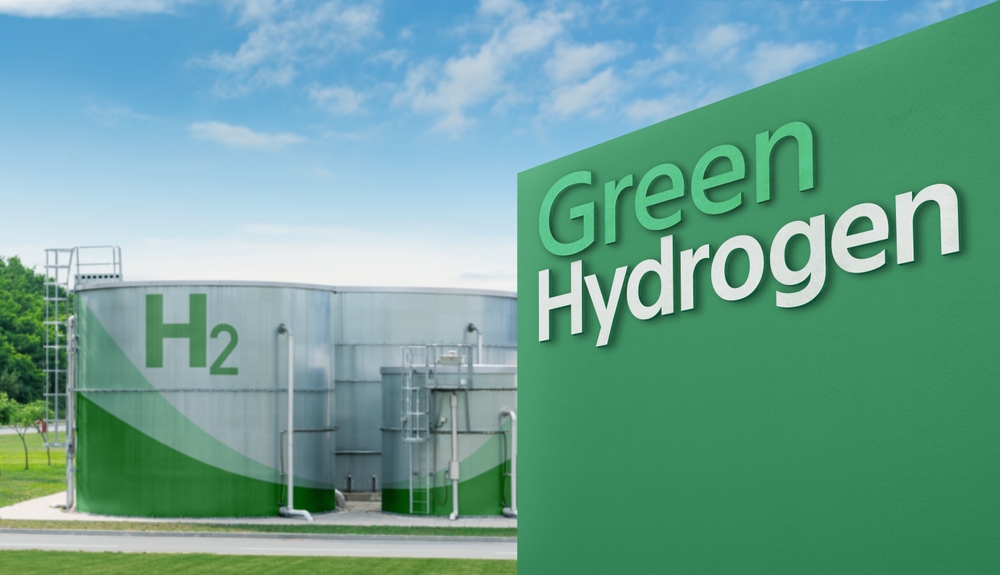
Operational pilots are already in place across production, maritime and transportation. NORHYWAY will now extend these into a fully integrated hydrogen value chain, connecting the Arctic and Europe with renewable energy at its core.
The total planned investment is approximately 963 million euros. Four sectors were developed in parallel across interconnected use cases: shipping, road transport, energy storage, and coastal industry. NORHYWAY is built on the clear proposition that green hydrogen can become commercially viable at scale across multiple sectors and competitive with fossil fuels on price.
NORHyWAY, led by RENERGY (Renewable Energy Cluster) and technical coordinator by SINTEF, has received support of €20 million from the EU’s Clean Hydrogen Partnership through Horizon Europe. The project will build on operational pilots already in place across hydrogen production, maritime applications and transportation and move these into large-scale deployment. At the same time, new pilots such as hydrogen-based grid flexibility are being developed and tested as part of the system.

What gives NORHyWAY credibility is its industry depth, combining the experience of partners already operating hydrogen infrastructure and four complementary use cases with independent off-takers. This includes strong maritime expertise, existing production and bunkering activities, and active developments in heavy-lift transport. Tight integration with SINTEF embeds research, performance monitoring and optimization directly into commercial operations, linking real-world implementation with continuous learning and improvement.
Vision: 37,081 tons by 2030
By 2030, NoHighway aims to produce 37,081 tonnes of green hydrogen per year using only renewable electricity. This equates to saving up to 345,000 tonnes of CO₂ per year, the same as reducing emissions from diesel by more than 109,000 tonnes.
“What we are doing now is building a market for green hydrogen by bringing together multiple off-takers across sectors. By linking real demand with production and infrastructure, we are testing whether the business case can be applied not in isolation but at scale simultaneously across shipping, transport and energy.” – Ida Kallmyr Lerheim, Project Manager, Nordic Highways.
4 markets, 1 system
NORHYWAY is structured around four use cases that form a single integrated system. That is, storage of production feeds, distribution through storage, and simultaneous servicing of four end-use markets through distribution. This integration will enable NORHYWAY to test the entire hydrogen value chain under real commercial conditions across sectors, rather than one at a time.

blue economy
The blue economy is an important sector in Norway, which is currently dominated by fossil fuels.
This use case will develop a complete hydrogen infrastructure for production, storage and refueling at six strategic coastal hubs on the Norwegian coast.
GreenH will start with the development of a 12.5MW power plant in Kristiansund, with modularization and replication designed from scratch in other locations such as Slagentangen in the south, Hammerfest, Rogaland and Sandnesjon in the Arctic Circle.
The goal is to provide gaseous compressed hydrogen to the maritime, local industry and transport sectors at a price competitive with fossil fuels.
NEVEL offers industrial waste heat recovery expertise to improve overall system efficiency.
Maritime H2
Marine hydrogen faces significant market, technical and regulatory challenges. For the shipping industry, the transition involves considerable uncertainty related to cost, standardization, and approval processes. This use case aims to address these barriers by accelerating market maturation and contributing to the development of standardized hydrogen infrastructure on the Norwegian coast.
NORHyWAY maps regulatory and permitting bottlenecks for maritime hydrogen infrastructure and applications and develops a roadmap for a more efficient and predictable approval process. A key element is the establishment of a collaboration platform that connects shipyards, shipowners and bunkering operators, ensuring collaboration across the value chain and enabling more efficient deployment.
This use case is built on the aquaculture industry’s first hydrogen-powered work vessel, operating on compressed hydrogen supplied from a dedicated pilot production and offshore bunkering solution. This represents one of the earliest demonstrations of a complete maritime hydrogen value chain in Europe. The experience gained by Moen Marine through this first vessel will be used to design a new generation of hydrogen-powered service vessels adapted to North Sea conditions, while contributing to a safer, more efficient and reproducible approval process across the industry.

road transport
The road transport use case focuses on the implementation of hydrogen in heavy goods transport by combining infrastructure, vehicles and real demand along defined corridors. Nordhighway is establishing a hydrogen transport corridor between Trondheim and Oslo, and a replica corridor is planned to connect the Arctic Circle with European markets, north to Bodø and east to Sweden.
Hydrogen refueling infrastructure is being developed along the corridor through a combination of upgrades and new stations. ASKO is upgrading existing refueling stations and VIREON is responsible for developing four new stations operating at 700 bar to service heavy trucks. On the demand side, ASKO brings experience operating hydrogen-fueled trucks in live logistics since 2020. The partners will work with NH Transport to deploy additional hydrogen-fueled Scania trucks and integrate hydrogen directly into daily freight transport.
This use case demonstrates how hydrogen performs under commercial conditions in long-haul transportation by bringing together infrastructure providers, transport operators, and actual off-takers. The corridor approach will enable a coordinated deployment between partners, increasing infrastructure utilization and contributing to the development of a scalable hydrogen market in heavy road transport.
flexible grid
With the expansion of renewable power generation, grid bottlenecks and periods of surplus power are becoming increasingly challenging. Flexible grid use cases consider how hydrogen can be used as a stranded renewable energy off-taker, a medium for energy storage, and a source of on-demand power during peak loads.
The first step is to assess the commercial feasibility of hydrogen-based electricity storage and reconversion across a variety of potential pilot configurations. This includes evaluating the business model, identifying the best location, and selecting the most appropriate technology solution for the demonstrator. Based on this work, the use case will move towards a final investment decision (FID) for a pilot installation.
In the proposed system, surplus renewable electricity is converted to hydrogen via electrolysis, stored, and then reconverted to electricity using fuel cells to provide grid balancing services that can be traded on energy markets. Nedstack will supply the proton exchange membrane fuel cell system, Siemens AS will lead the grid integration and SINTEF will provide technical and commercial analysis. The pilot installation will be operated and monitored for two years to validate the business case for large-scale deployment.
Safety, digitalization and sustainability
Underpinning the four use cases is a set of cross-cutting activities that ensure that NORHYWAY operates safely, efficiently, and in a manner that is replicable across Europe. Vysus Group will lead safety planning and compliance across all use cases, and TEKY will develop a standardized data model and common SCADA infrastructure to enable remote monitoring, integrated automation, and more efficient deployment across sites.
A key element is the development of the H2 Marketplace, a platform designed to aggregate demand and increase visibility of supply and demand across sectors. By connecting producers, infrastructure and end users, the platform supports market transparency and contributes to the establishment of a hydrogen market that works beyond individual use cases.
The University of Vigo carries out life cycle and sustainability assessments to ensure compliance with EU environmental standards. SINTEF Energi will lead the dissemination efforts, while HyEnergy and LC Innoconsult International will focus on replicating and leveraging the results. HySTAR will contribute to capacity building and Trøndelag Fylkeskommune will support local engagement and connections with local communities across the use case locations. HySTAR and Trøndelag Fylkeskommune are relevant partners of the project.
Built to be replicated
NORHyWAY is connected to the Clean Hydrogen Partnership, Hydrogen Europe and the wider EU hydrogen ecosystem through Horizon Europe. The project is also the initiator of the North Sea Circle Collaboration, a network set up by NORHyWAY to connect hydrogen valleys across Europe, including HiWhyV, HYCELAND, CONVEY and SH2AMROCK.
But Europe’s ambitions go beyond joining the network. The business cases being developed, including maritime bunkering, long-distance hydrogen transport, grid flexibility and coastal industrial hubs, are designed to be transferable from the outset. Other regions, other operators, other valleys: The goal is to make sure that what works for NORHyWAY doesn’t stay for NORHyWAY.
NORHYWAY Consortium Partner
RENERGY / Fremtidens Industri (Project Coordinator) · SINTEF (Technical Coordinator, Research and Development) SINTEF Energi (Dissemination) · GreenH (H₂ Manufacturing) · Moen Marin (Ship Design) · NEVEL (Waste Heat Recovery) · Siemens (Technology Development) · Nedstack (Fuel Cell Systems) · VIREON (H₂ Refueling Station) · ASKO (Heavy Transport) · NH Transport (Heavy Transport) · Universiade de Vigo (sustainability assessment) · Vysus Norway (safety) · TEKY (digital integration) · HyEnergy (replication) · LC Innoconsult International (exploitation) · Associated partners: HySTAR (capacity development) · Trøndelag Fylkeskommune (regional cooperation)

Disclaimer
 The project is supported by the Clean Hydrogen Partnership and co-funded by the European Union. The views and opinions expressed are those of the authors alone and do not necessarily reflect the views and opinions of the European Union or any licensing authority. Neither the European Union nor the licensing authorities can be held responsible for them.
Please note: This is a commercial profile
This article will also be published in the quarterly magazine issue 26.
Source link

