

Close Menu
  • Home
  • Identity
  • Inventions
  • Future
  • Science
  • Startups
  • Spanish
What's Hot

OpenAI announces GPT-5.4-Cyber ​​with expanded access for security teams

Anthropic’s rise is causing some OpenAI investors to have second thoughts

Someone has put a backdoor into dozens of WordPress plugins used by thousands of websites.

Facebook X (Twitter) Instagram
  • Home
  • About Us
  • Advertise with Us
  • Contact Us
  • DMCA
  • Privacy Policy
  • Terms & Conditions
  • User-Submitted Posts
Facebook X (Twitter) Instagram
Fyself News
  • Home
  • Identity
  • Inventions
  • Future
  • Science
  • Startups
  • Spanish
Fyself News
Home » A rare “planetary parade” returns to the evening sky this week
Science

A rare “planetary parade” returns to the evening sky this week

By February 22, 2026No Comments3 Mins Read
Share Facebook Twitter Pinterest Telegram LinkedIn Tumblr Email Copy Link
Follow Us
Google News Flipboard
Share
Facebook Twitter LinkedIn Pinterest Email Copy Link

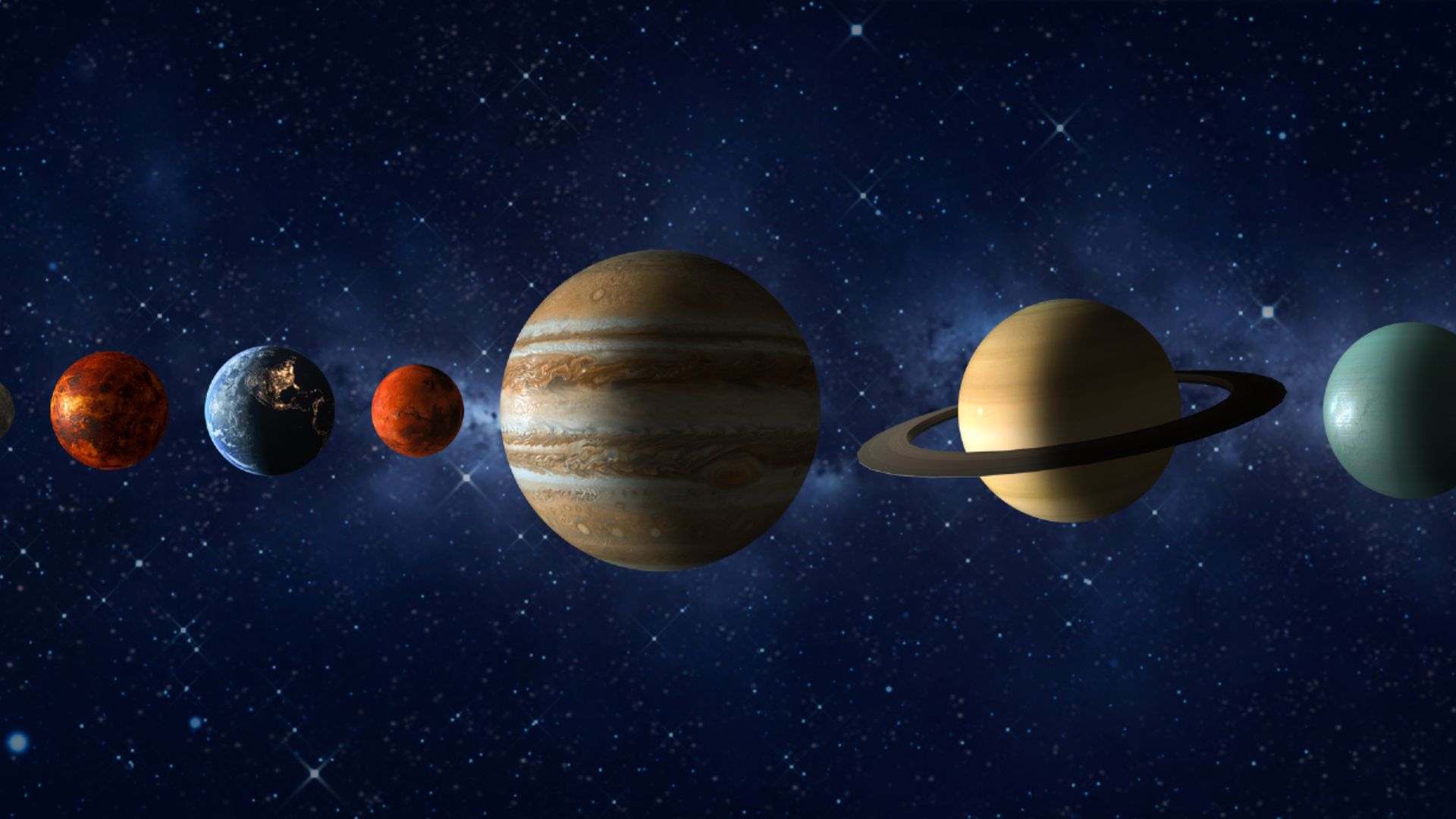
A parade of planets is about to take six of Earth’s neighbors into the night sky at once. But it’s not easy to see.

According to NASA, if you have a clear, unobstructed sky looking due west on Saturday, February 28, Saturn’s two inner planets, Venus and Mercury, will be visible in the night sky, and Neptune, Uranus and Jupiter may also be visible.

The window is narrow, and Venus, Mercury, Saturn, and Neptune only appear briefly after sunset. Venus, Mercury, and Saturn should all be visible to the naked eye, but a pair of stargazing binoculars will come in handy. Venus and Mercury are closest to the horizon at dusk, with Saturn visible above them.

you may like

Neptune is right next to Saturn, but you’ll need a 6-inch (15-centimeter) sky-gazing telescope to get a good look at Neptune (even that isn’t possible at dusk). These four planets appear in the sky about 30 minutes after sunset and remain so for about 45 minutes.

After observing Venus, Mercury, Saturn, and Neptune, look for Jupiter in Gemini high in the south. It should be easy to find as it will shine very brightly. The three stars in Orion’s belt are located approximately halfway between the other four planets and Jupiter. This giant planet also appears as a steady whitish light that doesn’t twinkle like a star.

Uranus, Pleiades, total lunar eclipse

The seventh planet, Uranus, is also in the night sky, but is best seen with binoculars or a small telescope. To find it, use Orion’s belt again and follow its three stars, Alnitak, Alnilam, and Mintaka, upwards until you reach the shimmering sight of the Pleiades Open Cluster (also known as the “Seven Sisters” or M45). Uranus is located in the constellation Taurus, just below the Pleiades star cluster.

As a bonus, the moon will also appear in the night sky on February 28th, along with another famous star cluster. The giant waxing moon, at about 92% brightness, will approach the Beehive Cluster (also known as M44 and NGC 2632), a bright star cluster of about 1,000 stars located about 577 light-years from our solar system.

Get the world’s most fascinating discoveries delivered straight to your inbox.

When the planetary parade disappears, something perhaps more spectacular will take its place. There will be a total lunar eclipse on March 3rd, when the full “worm moon” will pass through Earth’s dark shadow. The event, also known as the “Blood Moon,” will see the moon’s surface turn a coppery red for 58 minutes, offering the best views of the entire eclipse sequence from the western United States (including Alaska and Hawaii), the Pacific Islands, New Zealand, Australia, and East Asia.


Source link

#Biotechnology #ClimateScience #Health #Science #ScientificAdvances #ScientificResearch
Follow on Google News Follow on Flipboard
Share. Facebook Twitter Pinterest LinkedIn Tumblr Email Copy Link
Previous ArticleA 9,000 pound monster that I don’t want to give back.
Next Article Powerful software can reduce the time required to simulate large molecule reactions from weeks to just minutes.

Related Posts

Homo erectus’ tools contained impressive geodes and fossils, perhaps as a way to connect with the universe, study finds

April 13, 2026

Physicists entangle two moving helium atoms for the first time to test ‘spooky’ quantum theory

April 13, 2026

‘We still haven’t processed what we just did’: Artemis II astronauts tell all at first press conference after splashdown

April 13, 2026
Add A Comment
Leave A Reply Cancel Reply

Latest Posts

OpenAI announces GPT-5.4-Cyber ​​with expanded access for security teams

Anthropic’s rise is causing some OpenAI investors to have second thoughts

Someone has put a backdoor into dozens of WordPress plugins used by thousands of websites.

Anthropic co-founder confirms company briefed Trump administration on Mythos

Trending Posts

Subscribe to News

Subscribe to our newsletter and never miss our latest news

Please enable JavaScript in your browser to complete this form.
Loading

Welcome to Fyself News, your go-to platform for the latest in tech, startups, inventions, sustainability, and fintech! We are a passionate team of enthusiasts committed to bringing you timely, insightful, and accurate information on the most pressing developments across these industries. Whether you’re an entrepreneur, investor, or just someone curious about the future of technology and innovation, Fyself News has something for you.

Castilla-La Mancha Ignites Innovation: fiveclmsummit Redefines Tech Future

Local Power, Health Innovation: Alcolea de Calatrava Boosts FiveCLM PoC with Community Engagement

The Future of Digital Twins in Healthcare: From Virtual Replicas to Personalized Medical Models

Human Digital Twins: The Next Tech Frontier Set to Transform Healthcare and Beyond

Facebook X (Twitter) Instagram Pinterest YouTube
  • Home
  • About Us
  • Advertise with Us
  • Contact Us
  • DMCA
  • Privacy Policy
  • Terms & Conditions
  • User-Submitted Posts
© 2026 news.fyself. Designed by by fyself.

Type above and press Enter to search. Press Esc to cancel.