

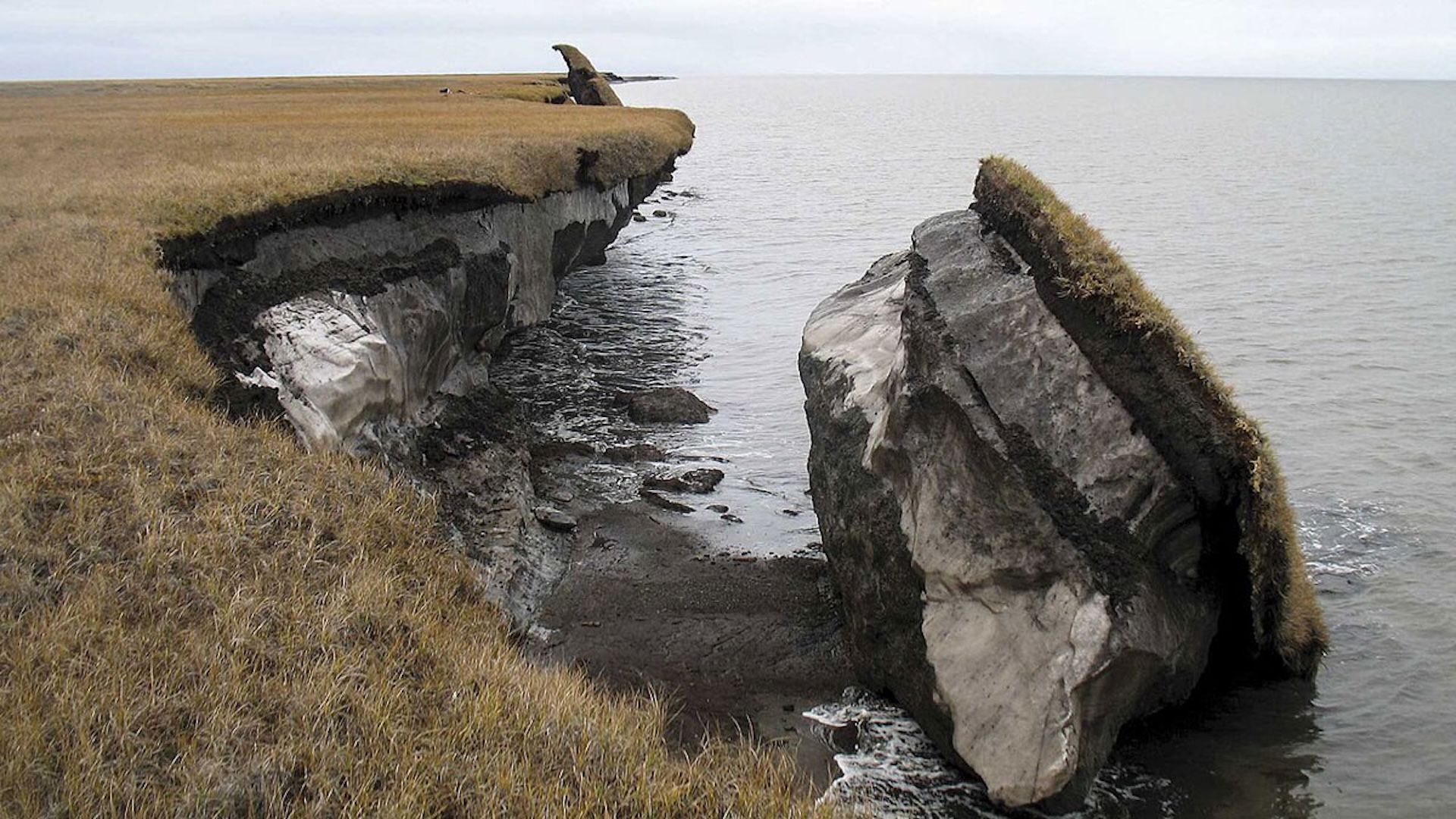
In the Arctic, the key variables of future climate change lie beneath the surface.
Microbes in the soil layer just above the frozen permafrost metabolize carbon, turning it into carbon dioxide and methane, a much more potent greenhouse gas. As these soils warm, more carbon is released, potentially setting off a warming feedback loop also known as the “methane bomb.” Now, new research on microbes living in Arctic soil shows that such a vicious cycle may be inevitable.
you may like
“For a variety of reasons, these systems may not actually be producing the methane that we believe they can produce,” said microbiologist Jessica Buser Young of the University of Alaska Anchorage, who was not involved in the study.
Microorganisms and methane
Since 2010, a consortium of European scientists has been collecting permafrost samples in the Arctic, digging into the topsoil and subsoil, and digging into the permafrost beneath. Collecting these samples in the vast, remote and frozen northern regions of the world is difficult, but the group collected samples from across Canada, Greenland and Siberia.
In a new paper, researchers conducted a microbiome analysis of eight Arctic permafrost and soil samples near Fairbanks, Alaska, as well as samples of intact and degraded permafrost. They focused specifically on microorganisms, both bacteria and archaea, that emit or consume methane, a greenhouse gas 30 times more potent than carbon dioxide.
When the researchers examined the data, the first thing that struck them was the lack of diversity in both methane-producing microorganisms (methanogens) and methane-consuming microorganisms (methanotrophs), said study co-author Tim Urich, a microbiologist at the University of Greifswald in Germany.
Among methanotrophic organisms, a single genus, Methylobacter, was predominant in samples from all locations. These bacteria are found throughout the Arctic, often living in the soil layer directly above their methanogen counterparts and consuming methane that wells up from below. We still don’t know why this single genus is so successful, Yurich said.
The analysis “really requires a more detailed study of the representatives of this particular clade in order to understand their ecophysiology and their response to changing conditions in the soil,” Urich said.
Could defuse a methane bomb
Urich and his co-authors also studied areas where the permafrost had thawed and compared wet and dry areas. More methanogenic microorganisms were present in areas with moist soil and thrived in oxygen-deficient conditions. In contrast, in arid places, methanotrophic microorganisms, especially varieties with the unique ability to extract methane from the air and turn it into less potent carbon dioxide, won out. The researchers noted that although these facultative methanotrophs have the ability to metabolize atmospheric methane, they are not necessarily able to do so in reality.
you may like
“It really depends on the hydrological fate of these soils.”
Tim Urich, University of Greifswald
Either way, the result could be a warmer, drier Arctic, which could be a boon for climate change, Urich said.
“It really depends on the hydrological fate of these soils,” he said.
If the Arctic eventually reaches an arid region, its soil could become a net sink (albeit modest) of methane as microorganisms begin to suck the gas from the air. Potential negative methane feedback loops are not the only mechanism described by Urich et al. In a recent paper published in AGU Advances, Vassar-Young and her co-authors found that microbes in Alaska’s Copper River Delta that use iron for their metabolism are beginning to outcompete methane-producing microbes, potentially reducing methane emissions.
“We believe this could potentially be happening anywhere in the world with glaciers,” Vassar-Young said.
Christian Knoblauch, a biogeochemist at the University of Hamburg who was not involved in the study, says studies like Jülich’s and his colleagues show that while thawing Arctic permafrost is a clear sign of climate change, its contribution to warming is less obvious.
“There were a lot of papers about this methane bomb,” he said. “I think this was an oversimplification or overestimation of methane emissions.”
The future of methane remains uncertain
Researchers continue to struggle with a lack of data about the changing Arctic.
High on Urich’s list of potentially valuable datasets is work on the ecophysiology of methane-associated microorganisms that he and his colleagues discovered in Arctic soil. Such studies would provide more data on how microbial metabolism changes in response to rising temperatures and changes in oxygen levels, among other things.
Urich also cautioned that his study did not measure the levels of methane emissions or uptake from Arctic soils, leaving questions about the actual impact of microbes on the environment unanswered.
Knoblauch said it is still not possible to say with certainty whether the future Arctic will be wetter or drier, and therefore what methane emissions will be, and reiterated the need for more data.
“We have a lot of models, we have a lot of simulations, but we don’t have a lot of data on the ground,” he said. “I think the big question is how quickly does the material break down, how much does it dissolve and how long does it take?” [what] how long it takes to break down and be released, and how the system is affected by changes in vegetation. ”
This article was originally published on Eos.org. Read the original article.
Source link
