

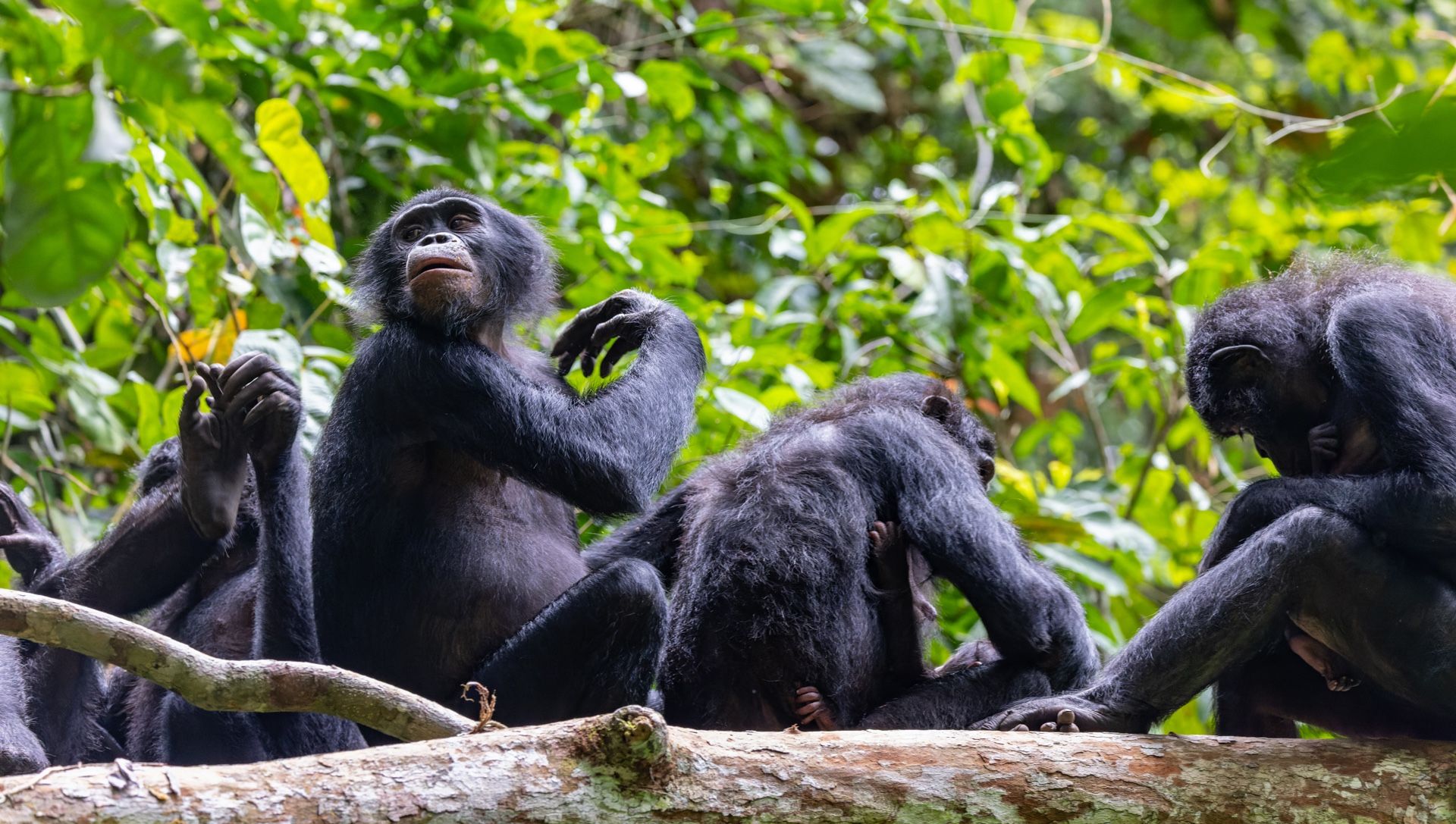
Five wild female bonobos in the Democratic Republic of the Congo viciously attacked a male member of their group, disfiguring his face to the point of being almost unrecognizable, ripping off one of his ears, and biting his testicles in an unprecedented attack for the species, scientists have reported.
Researchers arrived at the scene several minutes late, so it’s not entirely clear what triggered the brutal act, which lasted about 30 minutes. But the male bonobo may have tried to harm one of their infants, the authors report in the October 6 issue of the journal Current Biology.
you may like
She explained that only one other such attack had been recorded in another bonobo population, about 300 kilometers away, and that it appeared to be punishment for attempted infanticide.
This latest assault, which occurred on February 18th in the Luikotale bonobo community in Salonga National Park, is the most extreme case of violence against a wild bonobo population to date, and challenges the stereotype of bonobos as the non-violent “hippies” of the primate world.
Bonobos (Pan paniscus), along with chimpanzees (Pan troglodytes), are our closest living relatives. But unlike chimpanzees, bonobos have a reputation for making love, not war, and frequently use sex to relieve tension.
However, aggression between males is still common, and female bonobos have been known to team up to fight males that threaten them or their young. This female “association” behavior appears to underpin the female dominance hierarchy in this species and may explain the “lack of lethal aggression and infanticide” in bonobo society, the authors say in their study.
There were no problems on the morning of the attack. “It was a normal data collection day,” Pashchevskaya said. The team, which included local field and research assistants, was tracking a small subgroup of bonobos from the Ruikotare community, consisting of about 60 people, through the forest.
Suddenly, a bonobo scream came from about 0.5 km (0.3 miles) away. Pashchevskaya thought the high-pitched screech was the small antelope’s excitement when it caught prey.
“All the bonobos that were with me at the time just fell out of the tree and started sprinting towards it,” she said. She was in hot pursuit, arriving on the scene just minutes after it all started.
you may like
“The first thing that happened immediately was that I smelled blood,” Pashchevskaya recalled. When researchers discovered a group of five females trampling, punching and biting a male lying head down on the ground, they realized they weren’t talking about hunting antelope.
The victim, a 19-year-old man named Hugo, lost most of his hair as a result of the assault, as well as several fingers, part of his ear, and the flesh of his knuckles. The attackers then licked his blood off their fingers.
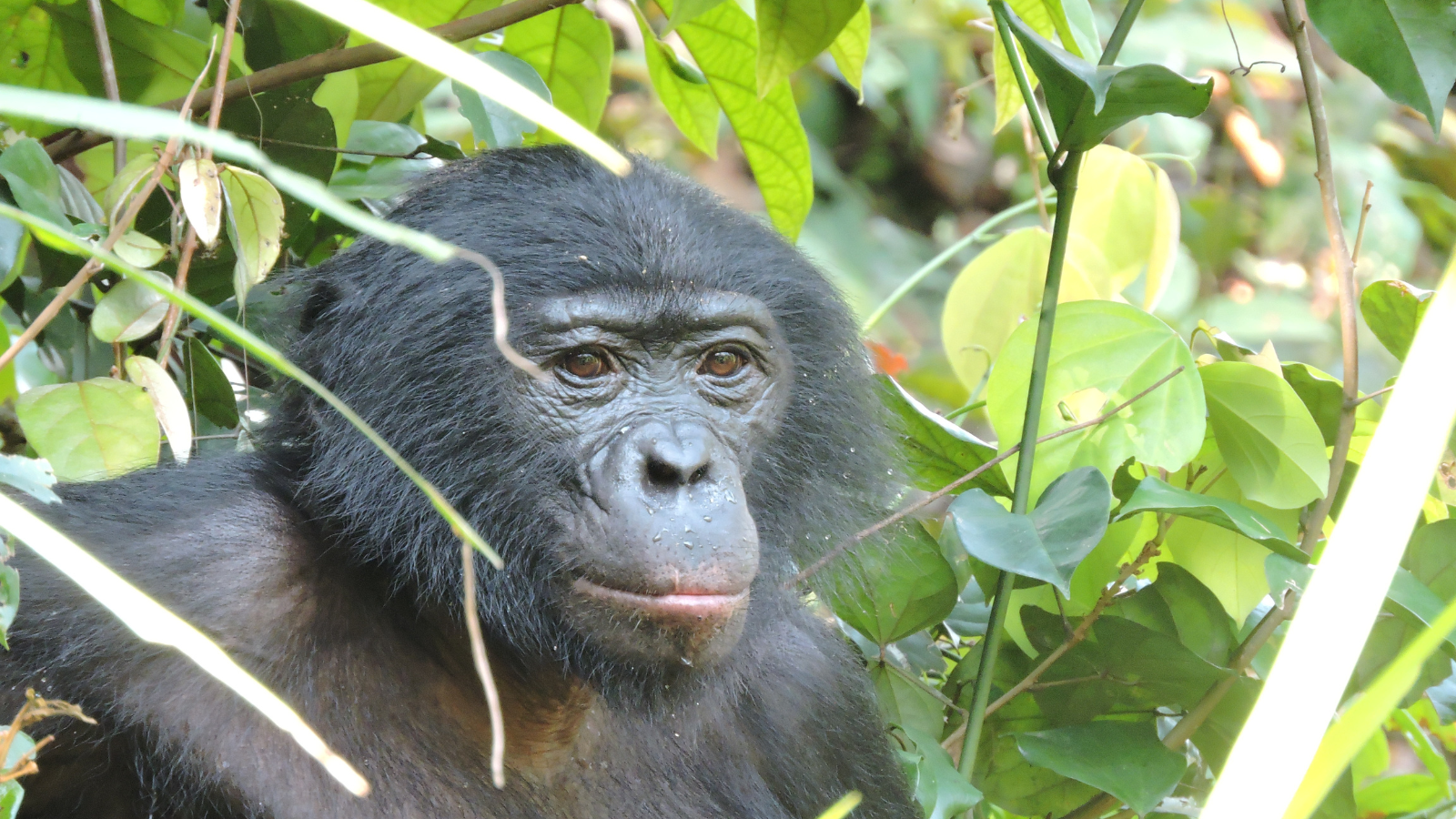
Although the entire community was involved, no member of the group attempted to intervene. “Everyone is so quiet. It’s like the forest with bonobos has never been so quiet,” Pashchevskaya said. “This is something I’ve never seen before.”
Two days earlier, Pashchevskaya noticed Ugo trying to grab one of the attackers’ young children, leading her team to speculate that he may have provoked the attack as an act of retaliation.
“Of course, this is just one observation two days ago, but if this continued it could potentially have triggered an attack,” she said. “Other women may also be a part of this, because this person can also be recruited.” [in the future]. ”
Hugo eventually managed to walk away, but has not been seen since and the team suspects he may have died from his injuries. “There is no way he will survive,” Pashchevskaya said.
Nahoko Tokuyama, a primatologist who studies bonobos at Japan’s Chuo University and was not involved in recent studies documenting the attacks, said she was not surprised by the gang assault, but did not expect such serious injuries.
“I’ve always believed that female bonobos in the wild, although they can be violent at times, don’t seriously injure their opponents,” Tokuyama told Live Science in an email.
However, she warned that Hugo might still be alive. “Bonobos have a fission/fusion society, which allows males to spend long periods of time alone,” she says. “The question of whether Hugo died needs to be considered more carefully, as in our long-term study, there were cases in which males returned to the herd after being absent for several months.”
Source link
