

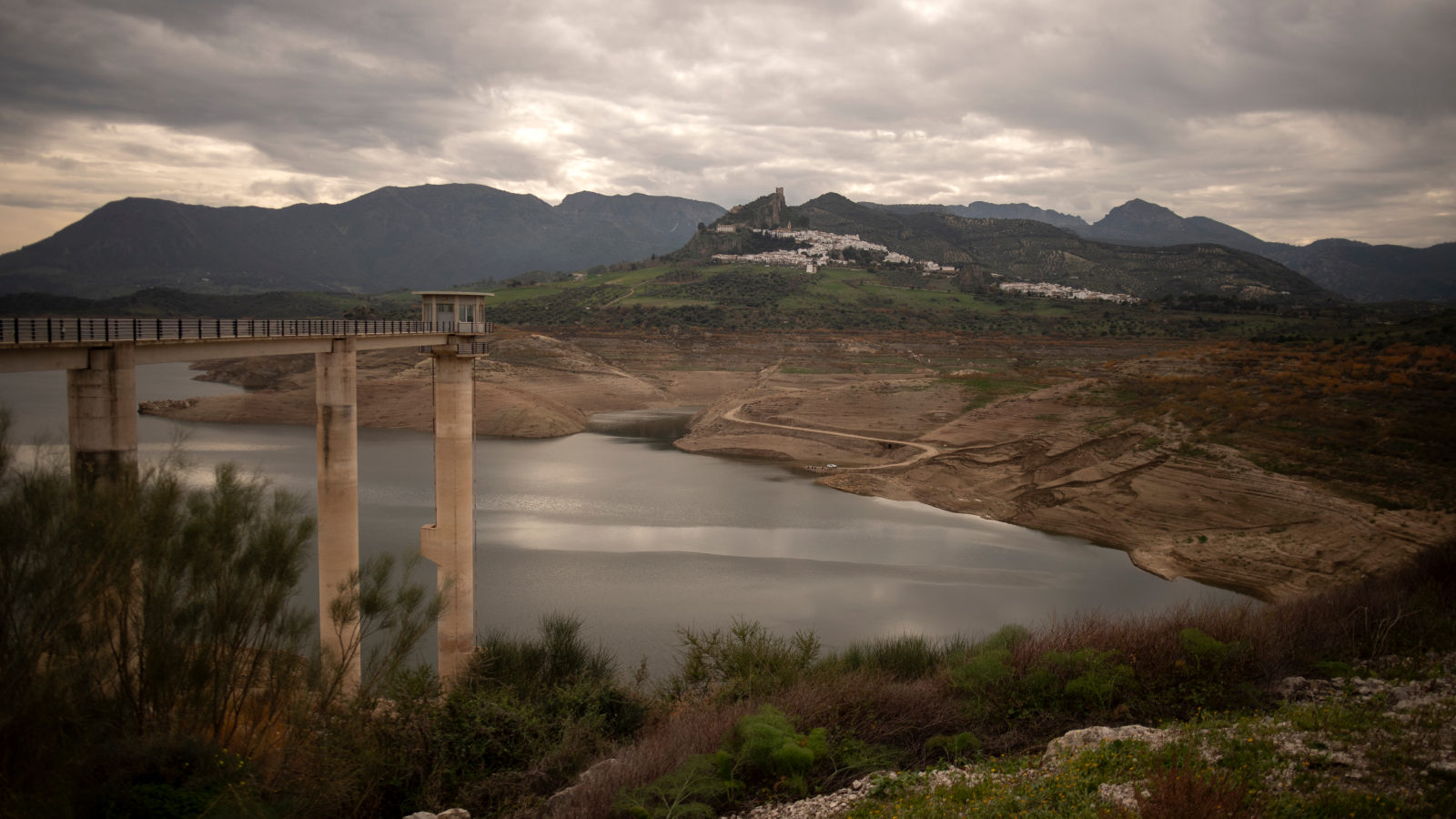
Southern Europe’s already scorching dry summers could worsen over the next 1,000 years due to increased extreme droughts and longer dry seasons if major ocean current systems collapse, a new study suggests.
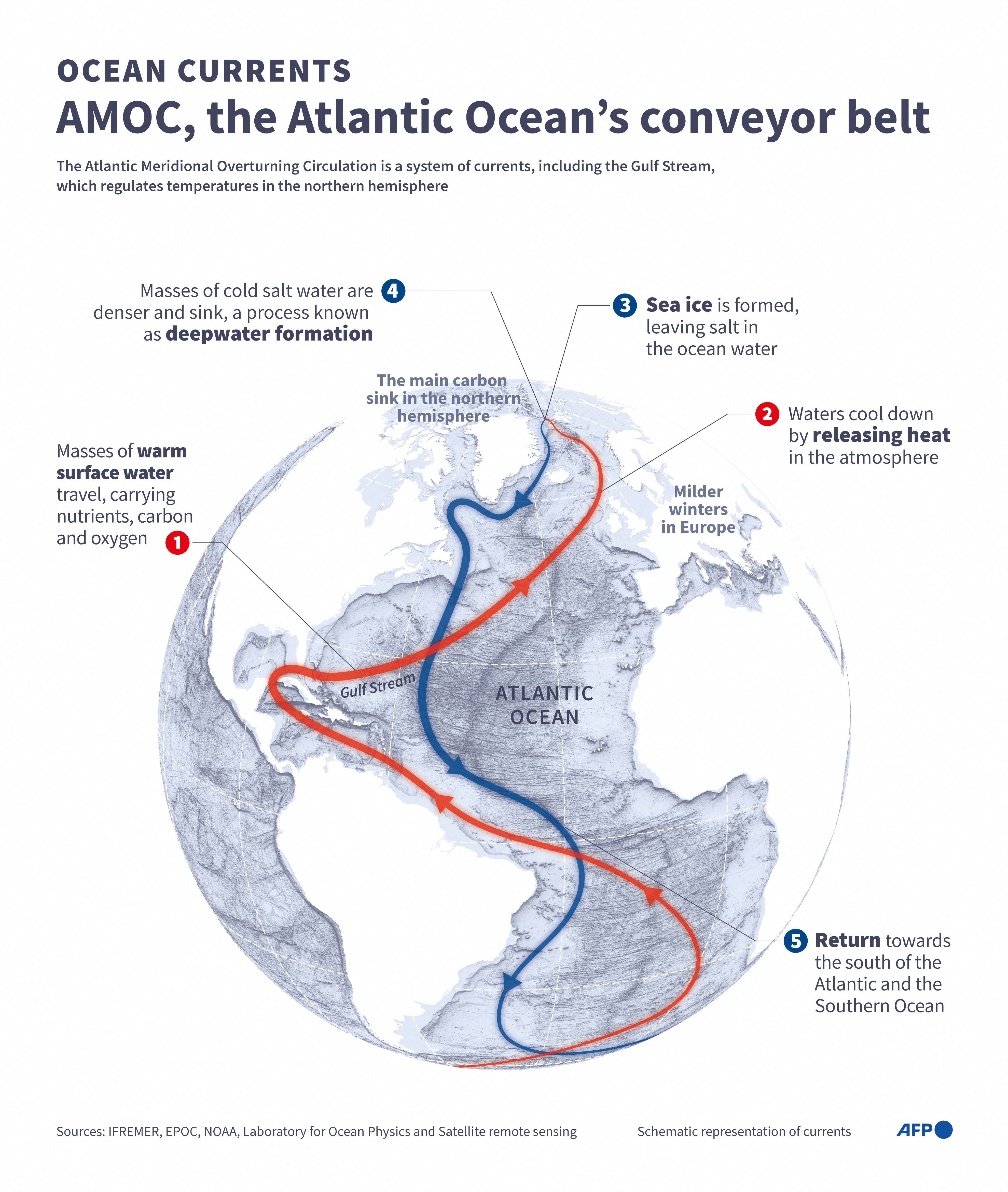
This is the first time researchers have compared what would happen to summer precipitation in Europe under different climate scenarios if the Atlantic Meridional Circulation (AMOC) were to collapse.
you may like
“The AMOC is actually shaping our global climate system,” Rene van Westen, lead author of the new paper and a postdoctoral researcher in ocean and atmospheric sciences at Utrecht University in the Netherlands, told Live Science.
These currents, he said, are why northwestern Europe has a relatively mild climate compared to southern Canada at the same latitude. The collapse of the AMOC is expected to lead to even colder winter temperatures across Europe. However, the AMOC also brings large amounts of moisture to the continent. “Europe’s climate is influenced not only by temperature but also by precipitation,” Van Westen said.
In the new study, researchers ran eight simulations spanning more than 1,000 years. The four simulations mimicked pre-industrial greenhouse gas levels, but these were theoretical because the world had already surpassed these atmospheric carbon levels.
Two of the remaining four simulations looked at what would happen to precipitation if human carbon emissions peaked mid-century and then began to decline (known as RCP4.5), flooding the Atlantic with small or large amounts of fresh water.
When large amounts of fresh water flood the ocean (such as from melting ice sheets), it changes the water’s salinity, density, and the way water transports energy. In the RCP4.5 model, large amounts of fresh water eventually caused the AMOC to collapse, but the AMOC recovered when small amounts of fresh water were present.
The final two simulations modeled a high-emissions scenario (known as RCP8.5) in which carbon emissions are three times higher than today. AMOC collapsed in both freshwater scenarios.
Of the eight scenarios, Van Westen said two RCP4.5 options are the most realistic. It is already widely known that “under climate change, evaporation will increase and dry seasons will become drier,” he said. “Add to this the collapse of the AMOC, and we will see an even more extreme drought.”
you may like
Across Europe, the intensity of the dry season (the difference between the amount of water evaporating from the land and the amount of precipitation) increases by 8% in the RCP4.5 scenario with the AMOC unchanged. But when it collapses, its strength increases by 28%.
There are also significant differences between northern and southern Europe. For example, in Sweden, the dry season increases by 54% with AMOC and by 72% without AMOC. Spain is already suffering from extreme drought, and the number of dry seasons is expected to increase by 40% with AMOC and 60% without it.
These different scenarios reflect a stable climate rather than the current situation where global temperatures are rising rapidly. “We’re interested in what the average response is in the context of different types of AMOC states,” Van Westen said.
Carsten Haustein, a climate scientist at the University of Leipzig in Germany, welcomed the analysis of future climate stability. “The great thing about these simulations is that you can see things hundreds of years in the future, when everything has changed,” he told Live Science.
“Transitional scenarios, which plan for the next 100 years, are different from equilibrium scenarios. Just because conditions will become drier over the next 50 or 100 years does not mean that this will continue forever, depending on the scenario,” he said.
Looking at a stable situation over the long term, he added, the paper is “very exciting and interesting because it gives us so much more to work with.”
But John Robson, professor of climate science at the National Center for Atmospheric Science at the University of Reading, who was not involved in the study, warned against using the study’s theoretical results to predict future climate. “To cause the AMOC to ‘collapse’ in this particular model, the authors would need to add large amounts of additional freshwater to the North Atlantic.” [and] “That’s not realistic,” he told Live Science, “but this may be taken as a warning of what could happen under the rather extreme scenario of AMOC’s ‘collapse’.”
Stefan Rahmstorff, co-director of the Earth System Analysis Research Unit at Germany’s Potsdam Institute for Climate Impact Research, told Live Science that the overall message is clear.
“In any case, the predicted increase in drought problems due to global warming will be exacerbated by a significant weakening of the AMOC, and the latter is becoming increasingly likely,” said Rahmstorff, who was not involved in the study.
“If AMOC were to close, it would have repercussions for at least the next 1,000 years. This is a huge responsibility for today’s decision-makers.”
Source link
