


Death Valley has held the record for the hottest temperature ever measured near Earth’s surface for 112 years, but now scientists are calling for that title to be revoked.
According to data from the National Weather Service, temperatures at Greenland Ranch in Death Valley reached a scorching 134 degrees Fahrenheit (56.7 degrees Celsius) on July 10, 1913. This remains the highest temperature on record, although its authenticity is debated by meteorologists and climatologists. That’s because, despite global warming, temperatures here rarely reach 130 degrees (54.4 degrees Celsius). 1913.
For the study, Spencer and colleagues analyzed July temperatures recorded at stations within 155 miles (250 kilometers) of Greenland Ranch between 1923 and 2024. The researchers adjusted the data for altitude, since the observatory was between 3,000 and 3,700 feet (910 and 1,130 meters) above sea level, while the Greenland ranch was at 178 feet (54 meters) above sea level. (These were the stations closest to the ranch and provided the most reliable long-term data.) The team then compared those values and looked at high-altitude July temperatures from 1913 to estimate the temperature at the Greenland ranch on that day.
They found that the temperature at the Greenland Ranch on July 10, 1913 was about 120°F (48.9°C), not even close to 134°F. “The unusually high temperatures measured at Greenland Ranch in early July 1913 were shown to be inconsistent with temperatures at surrounding stations,” they wrote in a research paper published Sept. 24 in the Journal of the American Meteorological Society.
Spencer said many scientists had previously been skeptical of Death Valley’s temperature records, but because the World Meteorological Organization (WMO) accepted the records and there was a lack of observations from the early 1900s to scrutinize the Greenland Ranch data, few actually questioned it.
“All deserts are hot in the summer, but Death Valley is especially hot because it’s below sea level,” he said. “The Death Valley record has more entertainment value than climatological value and contains an element of ‘bragging rights’ from a tourism perspective.”
The U.S. Weather Bureau established an observatory at Greenland Ranch in 1911 to measure temperatures. According to the investigation, the shelter was originally placed on the edge of an irrigated alfalfa field, but subsequent photos suggest ranch manager Oscar Denton moved it to a hotter location on bare land without official approval or documentation.
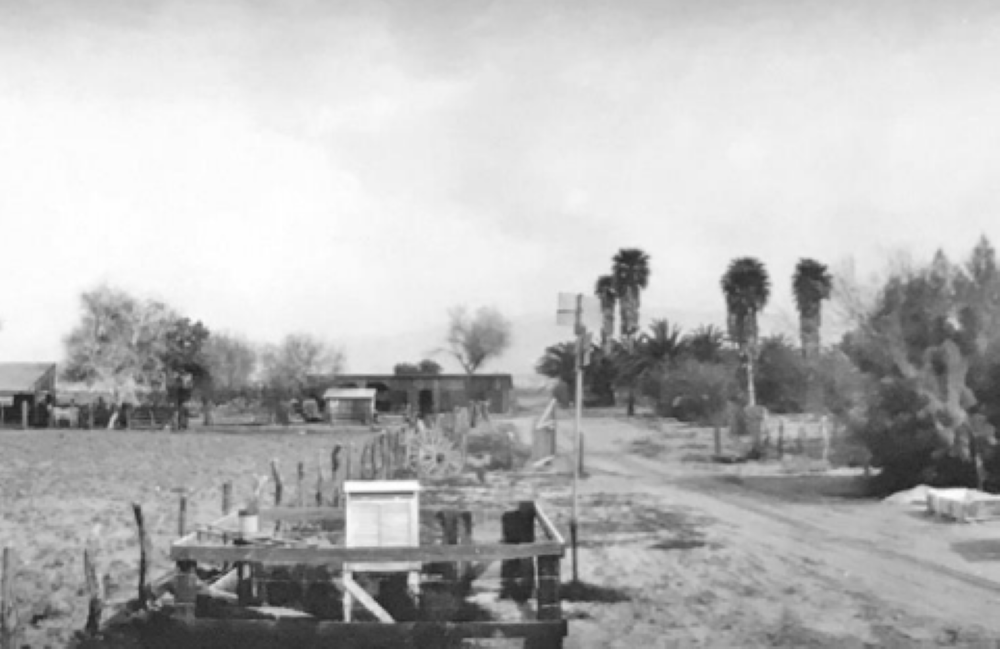
The researchers wrote that Denton may have done this because ranch employees were accustomed to measuring higher temperatures on ranch balconies than the bureau recorded, and he wanted the data to reflect their experience. The balcony had a double roof, which may have allowed hot air to escape onto the balcony, researchers said.
“While the distance of the station from irrigated fields does not explain the excessively hot temperature measurements, especially during the first two weeks of July 1913, it does support a pattern of deviations from proper observation protocols,” the researchers wrote.
Spencer said Denton may have substituted some of the department’s readings for the thermometer on his balcony. “Contemporary newspaper, magazine, and book accounts, and even correspondence with the San Francisco Weather Bureau, indicate that temperatures in excess of 135 degrees Fahrenheit were measured from that balcony using one or more thermometers of unknown origin,” he said.
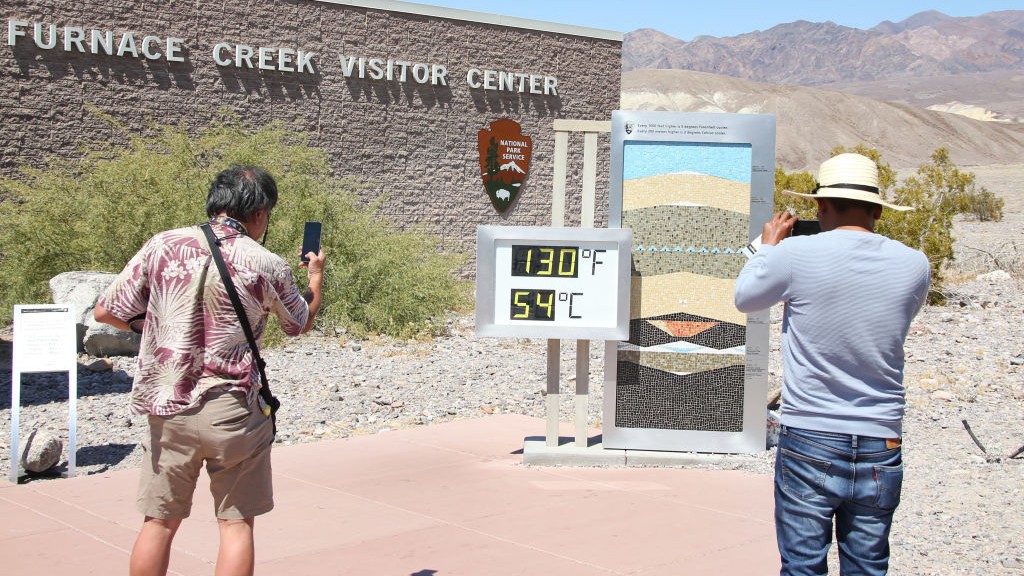
The findings suggest Death Valley’s world record should be revoked, but the 130°F temperatures recorded in 2020 and 2021 could help Death Valley maintain the record, Spencer said. The period from July 2 to 18, 1913, as well as other years on record, also exhibit unusually high temperatures that should be scrutinized, researchers noted in their study.
“I support further research by WMO and NOAA’s National Center for Environmental Information,” said Dan McEvoy, associate research professor of climatology at the Desert Research Institute, who was not involved in the study.
Although the real story behind the value recorded on July 10, 1913 may never be known, the study’s conclusion that 134 F is wrong is convincing and based on solid historical evidence, McEvoy told Live Science in an email.
“Rather than cherry-picking one location, they sample from many surrounding stations,” he says.
Source link
