
EU approves €1.3 billion to boost renewable hydrogen production
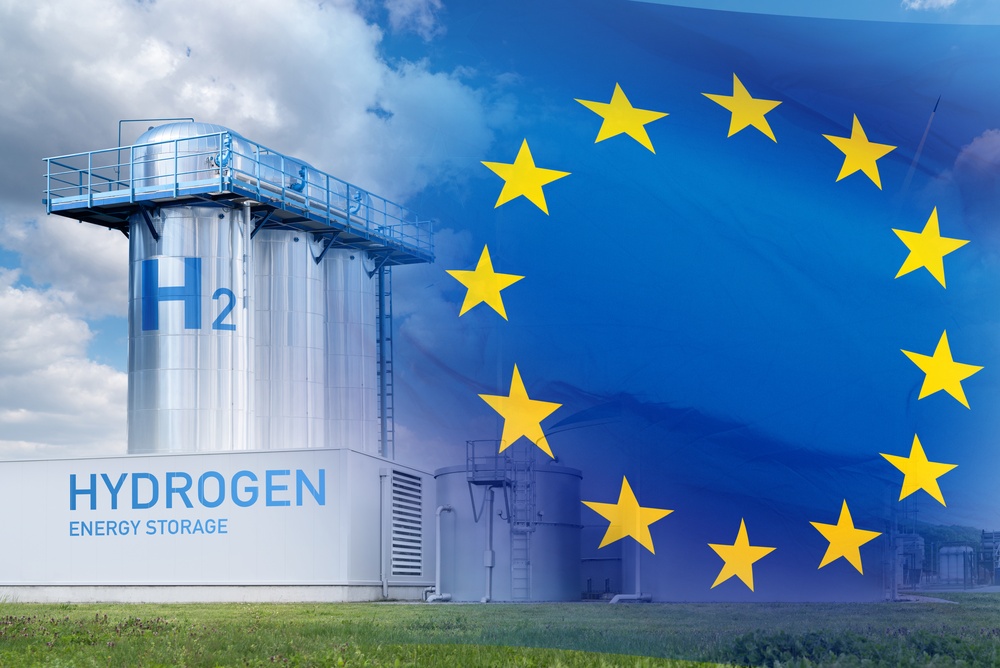
The European Commission has approved a €1.3 billion German state aid program to expand renewable hydrogen production across Europe.
The funding, authorized under EU state aid rules, will support selected projects through the European Hydrogen Bank’s “auction-as-a-service” mechanism after the 2026 auction round.
Germany’s plan is designed to fund new hydrogen infrastructure and large-scale electrolyzer projects connected to both Denmark’s Hydrogen Backbone 1 pipeline and Germany’s Hydrogen Core Network.
The initiative is expected to build up to 1,000 MW of electrolyser capacity and produce 10 million tonnes of renewable hydrogen, while avoiding an estimated 55 million tonnes of CO2 emissions.
The approval marks another major step in the EU’s efforts to scale up renewable hydrogen production as part of a broader decarbonization strategy.
Brussels considers hydrogen to be central to reducing industrial emissions, reducing Russia’s dependence on fossil fuels under the REPowerEU plan, and achieving climate neutrality targets by 2050.
Teresa Rivera, Executive Vice President of Clean, Fair and Competitive Transition, explained: “This investment in renewable hydrogen production is a step towards Europe’s decarbonization goals.
“This plan will increase the supply of clean hydrogen and also support the creation of cross-border infrastructure that connects production in the North Sea with industrial users in other regions.”
Germany expands role in Europe’s hydrogen strategy
The plan forms part of the European Hydrogen Bank, an EU-backed initiative set up to boost domestic renewable hydrogen production and imports across the bloc.
The program is funded by revenues generated by the EU Emissions Trading System and managed by the Innovation Fund.
The European Hydrogen Bank was designed to fill the investment gap that is slowing hydrogen adoption in Europe.
By supporting both producers and infrastructure developers, the initiative aims to create a functioning hydrogen market that can supply heavy industry, transport and energy-intensive sectors.
EU policymakers have set a target of reaching 20 million tonnes of renewable hydrogen by 2030. Half of that amount is expected to come from domestic production, while the rest will be imported from international partners.
How the auction-as-a-service model works
The “Auction as a Service” framework allows EU member states to use the European Hydrogen Bank’s auction platform to allocate national funds in parallel with EU-level support.
The projects will compete in a central EU auction process overseen by the European Climate, Infrastructure and Environment Enforcement Agency (CINEA). If a project scores well but cannot obtain funding from the EU due to budget constraints, participating member states can intervene with state subsidies.
The Commission says the model will simplify administration, improve transparency and create a more consistent support mechanism across Europe’s hydrogen sector. It will also allow governments to more effectively compare subsidy levels, reducing complexity for developers seeking funding.
Focus on infrastructure and industrial demand
The program approved by Germany focuses on linking renewable hydrogen production with cross-border transport infrastructure and industrial demand centers.
The supported companies will build new electrolyzers that will supply renewable hydrogen to Denmark’s Hydrogen Backbone 1 pipeline, before supplying industrial buyers connected to Germany’s hydrogen core network.
The cross-border approach reflects the EU’s broader strategy to build integrated hydrogen markets rather than isolated national projects.
Officials believe that linking the North Sea’s renewable energy resources with Germany’s industrial regions could accelerate deployment while improving energy security.
Aid under this scheme is distributed as a direct subsidy associated with each kilogram of renewable hydrogen produced. Financing can last for up to 10 years, ensuring developers long-term returns in a sector that still faces high production costs and investment risks.
EU sustainability rules apply
Projects supported under this program must comply with the EU regulations governing renewable fuels of non-biological origin (RFNBO), i.e. the EU certification standards for green hydrogen.
The standard aims to ensure that renewable hydrogen production truly delivers emissions reductions and relies on renewable electricity sources, rather than indirectly increasing fossil fuel demand elsewhere in the energy system.
The European Commission said Germany’s plan complies with EU state aid rules to support climate change targets while limiting market distortions.
Brussels also concluded that financial support is necessary and proportionate given the current cost gap between renewable hydrogen and fossil fuel-based alternatives.
For Europe’s hydrogen industry, the decision is another signal that public funds will continue to be at the heart of expanding renewable hydrogen production in the next phase of the energy transition.
Source link

